Saturday, August 04, 2012

Benevolent lecturer and scholar who was an authority on Islam in Africa

Benevolent lecturer and scholar who was an authority on Islam in Africa The Irish Times August 4, 2012 

DONAL CRUISE O’Brien, who has died aged 71, was Emeritus Professor of Political Studies (Africa) at the School of Oriental and African Studies, University of London and a leading authority on Islam in Africa.
His interest in Africa was sparked by holidays he spent as a student in Katanga, where his father Conor was the UN representative. When his father served as vice-chancellor of the University of Accra, he visited Ghana.
He chose for his PhD thesis the political situation of the Sufi Muslims in Senegal. He was attracted by the idea of dealing with religious communities, with believers, and reaching people whose organisation had little or nothing to do with European principles.
Also, since the leadership of Senegal’s Sufi communities, marabouts, had established their hierarchies in parallel with the structure of the colonial state, he saw the possibility of a comparison with the role of Christian monasteries in Ireland.
And, in terms of nationalist politics, he was intrigued by the question as to whether the marabouts were lackeys of colonialism or defenders of their own turf.
In Paris he outlined his ideas to the eminent anthropologist Georges Balandier, who suggested that he confine his study to the Muridiyya (Mouride brotherhood): “They are the most interesting ones.” O’Brien adopted Balandier’s suggestion; it made his career, he later said.
The thesis was published as The Mourides of Senegal: a descriptive and analytical study of a Muslim brotherhood (1971). It focuses on the origin and development of the order among the Wolof peoples, the largest and most powerful of Senegal’s “tribal groups”. It examines its structure as well as its economic and political significance.
Read more here

Thursday, August 02, 2012

Kashmir: A Breeding Ground for Spirituality


Shrine

Kashmir: A Breeding Ground for Spirituality
 Free Press Kashmir 2 Aug 2012
by Sahar-ul-Nisa Haroon

In Kashmir a large number of great Sufis have lived and now we have shrines dedicated to them thronged by thousands; Kashmir is Peer Waer, a land of saints. This paradise on earth is bestowed not only with the beauty of nature but also with religious wealth.

The Sufi tradition has played a great role in the lives of people living in this region ringed by lofty snow-clad mountains. The earliest known Sufi in Kashmir was a thirteenth Century Suhrawardi saint from Turkistan, Syed Sharfuddin Abdur Rahman, fondly remembered as Bulbul Shah. Click here to read more of this excellent article.

Monday, July 30, 2012

Masnavi to be read in different languages

Masnavi to be read in different languages

Hurriyet Daily News KONYA - Anatolia News Agency

Masnavi has been translated into 20 languages and ibeing translated into Russian.
The famous work Masnavi has been translated into 20 languages and is currently being translated into Russian and Malaysian.

Konya Metropolitan Municipality Mayor Tahir Akyürek told Anatolia news agency the Persian text was first translated into Turkish, and currently they are supporting other translation projects. The work has been translated into French, Spanish, English, Chinese and Greek and translation projects are still continuing, said Akyürek.

Half of the world’s population can read Masnavi, Akyürek said. “We have also presented the work to state presidents and officials.”

Masnavi is an epic poem written in Persian by Mevlana Celaddiin-i Rumi, the celebrated Persian Sufi saint and poet. It is one of the best known and most influential works of both Sufism and Persian literature. The Masnavi is a series of six books of poetry that each amount to about 25,000 verses or 50,000 lines. It is a spiritual writing that teaches Sufis how to reach their goal of being in true love with God.
July/30/2012

Sufis and Scholars of the Sea

Sufis and Scholars of the Sea - Book ReviewYemen Post Staff 28th July 2012
There is a need to understand the Indian Ocean area as a cultural complex which should be analyzed beyond the geographical division of Africa, the Middle East, the Indian Subcontinent, and South-East Asia, as its coastal population intermingled constantly. Family networks in East Africa (1860 – 192, originating in the South Yemeni region of Hadhramawt, the Alawi tariqa, mainly spread along the coast of the Indian Ocean. The book discusses the renowned scholar, Ahmed b. Sumayt. The "Alawis" are portrayed as one of several cultural mediators in the multi-ethnic, multi- religious Indian Ocean world in the era of European colonialism.

*
Indian Ocean had a profound influence on the lives of the people who lived on its shores. Fishermen, sailors, and merchants traveled its waters linking the world`s earlier civilizations from Africa to East Asia in a complex web of relationship.
Trade under-pinned these relationships but the Ocean was also a highway for the exchange of religions cultures and technologies, giving the Indian Ocean an identity as a largely self-contained world. It was the expansion of Hinduism Buddhism, and Islam helped to define the boundaries of the "world" which by the fourteenth and fifteenth centuries was one of the most prosperous and culturally complex regions on earth.
By the sixteenth century, Europeans were part of this "world" as partners in trade with the indigenous peoples. But from eighteenth century this economic relationship changed as the economies of the Indian Ocean "world" integrated with the capitalist economies of the West. The change from commercialism to capitalism ended the insularity of the Indian Ocean "world" and began its integration, as region, into the global economy and its territorial division among various European powers. This transition altered the ancient web of regional cultures. The Ocean was no longer a major force binding the peoples on its shores in a self-conscious entity, but the legacy of the past is still evident in their common religious, cultural and historical experience.
Mwambao is the Swahili name for the East African Coast, the chosen habitat of the Swahili people. The Swahili were called Coast People by the Arabs, and the Swahili Coast was being referred to as "Murudi al Dahab" or Golden Pastures. Numerous bays, creeks, and inlets resulting from coral rock being eaten away by the sea, providing excellent harbors e.g. near Mtwapa, Kilifi, Mombasa and Vanga while the majority of the rivers are in Mozambique. The entire coast is composed of coral rock and most of it provides soft beaches, useful for landing of small crafts. The presence of water in Lamu, for example, helped to cool the hot coast climate; the choice of site ensured a maximum of fresh breeze from the sea upon the sandstone rock.
Regular rainfall has given the coast and the islands south of Equator rich vegetation, unlike the arid Somali coast north of it. Regular trade winds brought sailors and traders in search of resins, and gums for carpentry furniture making, cosmetics, perfume etc. Mangrove poles growing abundantly in the Lamu archipelago were used for ship building and roof beams. Of the animal products, ivory, rhino horn and tine cat perfume were the most sought artifacts already in antiquity. Of mineral products it has been export market for gold, while Ethiopia exported gems such as emeralds, and after year 1100 also coffee.
Arabs were traveling to East Africa with the monsoon from South Arabia and Gulf even in pre-Christian times. The earliest inscriptions were found on the island of Zanzibar c. 1070 AD. There is also the oldest datable discovered mosque in East Africa. Arabs continued to visit the Coast and to settle there throughout the centuries as individual traders, or as empire builders accompanied by large families, or establishing themselves as independent rulers. The Arab were known by their family names, some of which they have planted in African soil. They were identified by the region, Yemen, Oman, Hadhramawt or even by the name of towns, Muscat, Shihr, Mukelle, Aden from which they sprang, even though they may have lived in Africa for generations. They made Pate, Lamu, Malindi, Mombasa and other towns their home.
Mombasa, in the land of the Zanji, boasted wonderful orchards, which contained lemons and banana trees, all of which still grow, and rose apples. Carpets lay on the floors of the guest house. The meal consisted of rice, cooked or fried in butter, dishes of meat, fowl, fish and vegetables, pickles, lemons, bananas, ginger, and mangoes. Similar meals are still served in the Swahili tows today. There were mosques built in coral stones. The Arabs functioned as teachers and preachers, traders or rulers on all parts along the Swahili Coast bringing their own Arabic textbooks for prayer sessions, and hymns to be sung in the mosques.
The numerous elegant dhows connected the colorful ports of the Swahili Coast. Then the creeks were filled with dhows blown down by the monsoons, dhows of all shapes and rigs from Lamu, Bombay, Persian Gulf and from Arabia, some high and dry, some in repair. The dhows, known also as the Silent Wanderers of the sea, were patiently awaiting the southern breezes to blow them back to their homes.
Long ago before petroleum was discovered in the Middle East, incense, fragrant resins, spices and perfumed wood dominated Arab trade. Southern Arabia as the centre of trade prospered and its maritime history is the subject of tales. The talk would be incomplete without mentioning "the Yemeni era", which was an intensely human and cultural civilization that promoted and enriched various facets of social, economic and political life of East Africa. They participated actively in various dimensions of the emerging civilization, including domestic and international trade, underpinned by their vast experience in traveling the world seas.
"Sufis and Scholars of the Sea" is an important text which synthesizes chronological and historic graphical range into its compact frame. The work researches the directly relevant histories of Hadhramawt, Oman and East Africa during 1860 – 1925 through the life of one of the most influential Hadhrami East African scholar of that period Ahmed B. Sumayt.
Zanzibar`s future, an island off the coast of present day Tanzania, thus was shaped by its geographical position, right in the middle of the Indian Ocean trade routes. It is a place of winding alleys, bustling bazaars, mosques and grand Arab houses, whose original owners viewed each other over the extravagance of their dwellings. It boasts not only natural beauty, rich culture, and breathtaking architecture. Zanzibar during Ibn Sumayt`s time emerged as an important centre of learning in East Africa eclipsing previous centers such as Lamu and Mombasa.
Today Zanzibar is also the name of a town in southern Yemen while Yemeni jewelry is sold in the shops of Zanzibar. Unlike Oman, Hadhramawt (a governorate in the present Republic of Yemen) does not have a history of a colonial power in the Indian Ocean. Hadhramawt is known for its continuous export of people to the land of the Indian Ocean, including the East African coast. They were religious scholars, traders, cultural brokers, whose impact on both recipient and home country is a topic which has aroused much interest in recent years.
To them, the Ocean was no barrier rather a long established arena for cultural and intellectual exchange. With them traveled goods and ideas, word of mouth, and word in writing, fashion, habits, linguistic patterns, and seeds for new agricultural crops. They left their imprint on the place, the most notable being the religion of Islam, and absorbed cultural elements that were not Arab in origin. The Indian Ocean ports were not distant exotic cities but actual real places, and where the human chain, the "silsila", extended through space and time. This is the "world" into which we enter with A.K Bang`s "Sufis and Scholars of the Sea".
The topic of this fine scholarly study is the scholarly exchange of ideas between Hadhramawt and East Africa. It is the history of Islam during the nineteenth and early twenties century. The study beautifully reconstructs the channels through which "Alawis", a Sufi tariqa, originated in the South Yemeni region of Hadhramawt spread along the coast of the Indian Ocean. It discusses and focuses on life of one of the most influential Hadhrami – East African scholars of the period Ahmed B. Sumayt. Thru Ibn Sumayt`s life, it explores how links were maintained, reinforced, and how their "world" related to other ideas emerging at the same time. How they formed a tight knit, a transoceanic network of individuals linked together by blood, and common experience, which remained open until well into the twentieth century when colonial frontiers came to be decisive factors, when the peoples actually transformed themselves into nations.
It researches what the "Alawis" actually thought in East Africa, what inspired their teachings, its explores their scholarly links, and further the impact of Hadhrami Alawis on nineteenth century East African scriptural Islam. It places the highly scriptural widely traveled and deeply learned tradition of Hadhramawt in East Africa in the frame work of Islamic learning.
The Alawis were traveling widely for seeking out knowledge beyond their local communities, and in Ibn Sumayt`s case, in his mature years he traveled equally wide to spread knowledge. As result families became not only transoceanic, but also trans-regional. Time flies and things change: as nineteenth century drew closer, the Alawis in East Africa, like their fellow residents in the Indian Ocean shores, were exposed to European colonialism.
The central figure of this research, Ahmed B. Abo Bakr b. Sumayt (1860– 1925)-
was one of the most prominent Hadhrami-East African scholars of that period. Born in the Comoro Islands, to a father who had immigrated from Hadramawt, Ibn Sumayt returned to his father’s homeland. But he achieved his greatest fame in East Africa, as a pious man, a scholar, and qadi in Zanzibar. As East Africa came under colonial rule he earned great respect from those British administrators who came into contact with him. It was he - who made them appreciate the true Arab reactions - to foreign rule.
.
Through focusing on the life of Ibn Sumayt and his life within a network, it presents the life "in the middle", of a "man in the middle". Ibn Sumayt is the link between sail ships and oil tankers, between the empires of the monsoon, via the period of European imperialism, and the ear of the notion states. Especially the later half of the nineteenth century when he saw European influence in East Africa and British influence in Zanzibar.

Ibn Sumayt was also a reformer and teacher, at the same time fully aware of developments in the Middle East. We meet him as propagator of improved agricultural methods, and even discussing new breed of crops with friends. However, Ibn Sumayt`s importance lays in his work as qadi and how the Ulama found their place in the "colonial space" as active partners. Ibn Sumayt is presented here as pious and learned man - yet intensely human, who possessed a reputation which extended far beyond the limits of Zanzibar.
"Sufis and Scholars of the Sea" is well researched, focused in excellent presented. It will be of interest to scholars, researchers, students but also as general reading to all those interested in the role and contribution of the Yemeni Hadhrami Arab scholars to the history and culture of the Indian Ocean.
Book Reference
Anne K Bang – Sufis and Scholars of the Sea, Published by RoutledgeCurzon
ISBN 0-415-31763-0
About Anne K Bang
Is Postdoctoral Research Fellow at the University of Bergen, Norway. Historian of Islamic societies with a special focus on Arabia and the Muslim communities of Eastern Africa as well as the wider Indian Ocean rim. Her research has primarily focused on factors that cause ritual and devotional life, intellectual discourses and political ideologies to change in different Muslim societies. Focusing on the Muslim societies of the Indian Ocean (east/southeast Africa) and Southeast Asia her research has mainly focused on migration and cosmopolitan Muslim societies and the ensuing family- trade- and scholarly networks. She has also worked on Islamic education and on the transmission of scriptural cultural heritage in Africa. In addition, she has worked on the role of Norwegian traders in during the colonial era. She has published several books and articles on these topics.
Irena Knehtl, Sana`a, Yemen

Something Sufi about this comic!

Daily News and Analysis Published: Friday, Jul 27, 2012  By Shilpa Bansal
Some months ago, Sufi comics were promoted at Comic Con International San Diego — one of the biggest comic conventions in the world. And now, Mocha TRIP, in association with Comic Con, is presenting an exclusive workshop with Sufi Comics this weekend. The authors, the Vakil brothers will share their experience of participating at Comic Con San Diego 2012 and will give the audience a sneak peek into the stories from their upcoming book and an exclusive preview of the book’s miniature art and calligraphy.
What more? Also, participate in exciting script writing and drawing competition to win fabulous prizes!
What adds to this whole Sufi experience is the venue, Mocha TRIP, always known for its ambience. And this time, it just perfectly blends with the theme. Be it comics, comedy, music, books or cycling— Mocha Trip as the young Bangaloreans call, is the place where you can do the things you love and share stuff with others who share the same interest as yours.
Go ahead, go on a Sufi trip!
Be at Mocha, 577, Kalyana Mantapa Road, 80ft Road, 8th Block, Opposite to Bethany High School, Koramangala Main Road, Koramangala, on July 28, 12pm onwards, call 30224711

"Jesus (AS) and Maryam (SA) in Islamic Mysticism" Published in Russia

Ahlul Bayt News Agency 2012/07/27
 "Jesus (AS) and Maryam (SA) in Islamic Mysticism" Published in Russia

 "Jesus (AS) and Maryam (SA) in Islamic Mysticism" Published in Russia (Ahlul Bayt News Agency) -  A Russian translation of "Jesus (AS) and Maryam (SA) in Islamic Mysticism" by Annemarie Schimmel has been published by Iran's Cultural Center in Russia.

The Iranian center has published the book in cooperation with the Center for Interfaith Dialogue of the organization. It mainly highlights the strong relationship between Islam and Christianity. The writer is a well known and influential German Orientalist and scholar, who is proliferate writer of Islamic books.

Referring to verses of the Holy Quran and Nabawi Sunnah as well as mystical texts and works of Attar, Mowlavi, Sanayi and Nezami, she has tried to feature the characteristic of Jesus and Maryam in Islam in the book. The book has been rendered into Russian language by Dmitry Babayev from its Persian copy by Mohammad Hussein Khajezadeh published by Amir Kabir Publications.

Nauchnaya Kniga Publications in Russia has published the translation in 1000 copies.

Friday, July 20, 2012

Ahad Bab: Mystique of a Mystic

Book review by Muhammad Maroof Shah

Author: Syed Habib, Publisher: Shifa Publications, Year: 2012, Pages: 203

Greater Kashmir, SRINAGAR, MONDAY, 18 SHAABAN 1433 AH ; 09 JULY 2012 CE
The book under review is by far the best book on mysticism by any Kashmiri scholar. It has succeeded in celebrating one of our greatest mystics in a language that is worthy of the great man it seeks to bring to public gaze. Publication of the book is an event that should lift the spirits of all devotees of mysticism. It brings about the mystery and profundity of a man whom many knew only through hearsay but who commanded great respect. It highlights beauty of the man whom many knew and feared as a jalali mystic only. It introduces some pages of the great life that lighted the mystical horizon of Kashmir for decades. This book will make its author, like its hero, immortal in the history of mystics and mystical literature of the subcontinent. Exquisitely and cryptically designed to represent the beautiful and profoundly symbolic life and work of much misunderstood or unknown spiritual genius – the glory of Sopore and Kashmir – the book is destined to be a classic piece of spiritual biography.
Habib is not merely a biographer but a poet and a scholar of mysticism who lives and breathes spirituality. He may not be very exact academic at times –  he confounds nafs and ruh, misreads the question of transcendence in relation to evil that is best approached at metaphysical plane with the tools of a metaphysician and occasionally may not hesitate to use some terms loosely –  but he has mastered both the tools and the qualifications required to write on a  complex and sensitive issue in a style that may occasionally overuse alankaras but generally moves, transports and overpowers the reader with its sheer brilliance and magic. Deftly using his tools and resources he succeeds in creating an ambience that helps us appreciate the wonder and the sublime heights and depths of the man who had mastered the art of concealment as malamitis or qalandars often do.
I have been highly impressed by Ghulam Hasan Nahvi’s  biography on Merrak Saeb. But I think Ahad Bab has found, in the form of Habib, a greater man and a superior medium to speak to us from the other shore. As Khalil Jibran had attempted to offer the best he could in the form of The Prophet, Habib, as a mark of respect and love for the great Bab, has given us his best – his life blood – in the form of the book. He has exposed many and hinted at many more great secrets of the great man whom many of us loved only from a distance fearing to approach the spiritual dynamite that blasted the egos of many brave and fortunate souls to lift them into empyreal realms.  Almost every sentence is chiseled and much of the book appears to be simply inspired and I would  characterize it as yet another posthumous karamat of Bab.
Bab’s life has been an open miracle – he was weather proof, usually unprovokable, never using takya or support for sitting, never extending his legs on floor, had great power of mind reading and scanning of hearts besides precognizance and helped to heal all kinds of diseases – witnesses of  these and many other “stories” can be found in almost every nook and corner of Kashmir. The book recounts in a style that can only be envied but hardly imitated Bab’s long and hard period of spiritual apprenticeship, his almost superhuman adventures in jungles, his abandoning of family house and sacrifice of family interests for the sake of larger human family as he spent 11 years outside his home at a stage when his children were very young and the family had great economic hardships,  his jihad against nafs and world, his spiritual exploits despite the rigour of police nokri, his visits to peers and qalandars of all sorts, his family background that gave him solid spiritual base, symbolism of his “slangy” language, spiritual connections of his family and his inheritors, his love and compassion for his visitors and the unique ways he used to communicate with the insiders and even outsiders, his moral virtues like doing his own work himself, his love for children, his fascination with Sufi music, the misery of flesh fed by worms but the grandeur of the soul that had supreme confidence in himself and his mission, his refined aesthetic sense coupled with deep sensitivity to art and culture and access to perception of metaphysical symbolism and transparency of natural phenomena, his wonderful acumen as an interpreter of the Quran and unique methods of teaching lessons to his disciples, his extreme humility that prevented him to spread his legs on floor and many more inspiring and revealing hues of his colourful personality that many mistook for simply a majzoob among other majzoobs (For his devotees he was more conscious than those who are proud of their sobriety). This gripping narrative helps us to better appreciate the depths and heights of this spiritual genius from Sopore.
The book is studded with profound insights and Sufi interpretation of scripture and history. The fact that the Prophet of Islam received soothing winds from India is interpreted as his recognition of the treasures of gnosis in India.  There are cryptic allusions to a host of verses which defy usual commentators and are best understood through Sufi exegesis.
For Habib Ahad Bab is everything as Shams Tabriz was for Rumi – he uses the choicest metaphors and epithets for him. He is Shahanshah, the king of kings who rules the hearts of not only his thousands of mureeds but aam kashmiri. Darbar-i-Ahad used to be a great meeting hall where all and sundry would come and go and Bab disbursed his spiritual blessings. No king of Kashmir can dream of such a darbar where people from all walks of life would come and stand in absolute awe of the great man.
Sahib knew hearts and minds of all and sundry and helped countless people in his own way. He showers his praise and devotion on almost every aspect of his personality. He interprets his conceding the wishes of visitors or sayils who implored him to sit in their cars or visit them or sick persons as a variety of mujahida. Even in cars he used to sit in a typical posture that involved tucked  up legs perhaps indicating humility.
 Almost all pages have powerful passages that deserve to be quoted in full and as there are too many I can’t reproduce even one but hope our magazines/newspapers carry them on weekly basis. That would be a contribution to Kashmir literature, art and mysticism. It is treat to read his long prose “odes” to Sufi music, to nun chai, to local craftsmen, to love, to moral and spiritual beauty of Bab.
Ahad Bab is a legend and the book has admirably presented the same for us. After reading it one comes to appreciate the mystery and beauty of the man with which Sopore shall be proudly identified forever. The book is a gift to Kashmiris in general and the people of Sopore in particular. The author has put his everything in it and that explains why its price has been kept open or optional. There can be no price for devotion and love that has been poured in writing and designing this book. It is a privilege to read it and readers can understand only to the extent that they can participate in the great cosmic dance, the dance of the soul that the life of Bab symbolizes. The book throws a lot of challenges to scholars or critics who want to approach mystical literature or mystical life. The appropriations of mystical literature which include author’s own moving and beautiful poetry and Quranic verses that help to elucidiate life and work of Bab add to the rich tapestry of soul’s journey – the journey of you and me, of all the children of Adam – that the book tries to depict.  The book is a spiritual biography of modern Kashmir and the way it comments upon diverse cultural expressions from samawar and nun chai to pashmeen sazi or Islamic architecture it appears to be a unique contribution to both aesthetics and mysticism of Kashmir. A letter to Samawar and musings on nun chai, for instance, shows how mysticism can be aesthetically read in cultural expressions.
 It is not easy to write on mysticism and that too on such mystics as Ahad Bab whose very name or presence sent shivers in many  souls. Bab is a spiritual dynamite with which feeble minds or weak souls can’t afford to play. One has to observe all the aadab of a salik to write it. The book is dedicated to Bab in a touching manner. It reads “laghye waendith.”
The book is feast for the senses as well as the soul. It is recommended  for reading to all those interested in Kashmir and its mysticism, its literature and its culture. For those whose third eye has opened to certain extent it is a tabarruq. The book is also recommended for all those for whom Ahad Bab life’s was a “scandal” of spiritual propriety as they will come to understand something from the other side or inside of the sanctuary to which only few had access though all were invited. The point of certain mainstream Sufis/ulama regarding the manners of visiting apparently intoxicated souls who don’t care for clothes and don’t talk “decently” deserved more nuanced and detailed treatment.
Habib combines virtues and qualifications of a rare scholar of mystic literature with a rare command over Urdu language and huge poetic talent  besides the key qualification of discipleship and thus being an insider – bapeer – allowing him to do justice to a topic which deserves not only great scholarship or academic credentials but also grace from the great Bab. The author is a good translator also as shown by his Urdu rendering of many important Persian and Kashmiri verses in the book. He deserves our gratitude. Urdu literature is richer after the event of this publication.

Good Day :US and the Confusion between the "Two Extremes"!

http://news.sudanvisiondaily.com/details.html?rsnpid=211533

logo

Issue #: 2701, Issue Date: 19th July, 2012 
 by Mekki Elmograbi
Lastly, Egypt has chosen - what so called by secular intellectuals - political Islam. The Military Council and the Constitutional Court are trying to put obstacles and impediments on the road for more advancement of Muslim Brotherhood. Game is over! Islamists are trusted because people have had enough of bloody years of corrupt military authoritarian regimes backed and supported by US and other Western countries. Islamists in Egypt has been long-sufferingly waiting for this moment for nearly seven decades. Moreover, they did not take over power by a coup or through cheating and violence. Many Egyptians voted for Islamists because they have the flourishing Turkish model in mind.
US Administration at the beginning of the "Arab Spring" launched a diplomatic campaign against Muslim Brotherhood in Egypt but after a while Obama "turned the official mode" and said very positive statements about the "Democratic Role" of Egyptian Islamists. US from the time of September 11 till now is moving between the extremes; combating and supporting "Islamic movements" in Middle East and in Africa.  In Sudan, US – according Natsios' article – promised the Sudanese Government four times to start the process of "Normalization" and broke its promises. World wide, US financed Sufi Orders and now they are looking for a deal with Muslim Brotherhood in Egypt.
Do you remember the statements of the deputy of the American diplomatic mission in Sudan Mr. Denis Hankinson. It was about the American appreciation for the role of Sufism in Sudan and I was shocked with it.  He mentioned the positive role of Sufism in
Counterterrorism in Sudan. He did not mention the American support for some of Sufi Orders, but this fact was documented in the article: (hearts, minds and dollars) published in US news and reports, written by By David E. Kaplan.
First of all, the term (terrorism) is not clear yet in the Islamic mentality, and the definition is still a controversial issue. Western governments consider Hamas and Hizbullah as terrorist parties. In contrast, Sufis themselves – Dear Mr. Denis Hankinson - people see these groups (Freedom fighters or Mujahideen). The said article was a good layout for the biggest intellectual strategic plan related to religions. The strategy titled (Muslim World Outreach).
The strategy stated clearly that US will support Sufi Orders and classified them as the pacific side of Islam.
This is a piece of the article: (Records drawn from the State Department, USAID, and elsewhere reveal a striking array of Islamic projects bankrolled by American taxpayers since 9/11, stretching to at least 24 countries. In nine of them, U.S. funds are backing restoration of Muslim holy sites, including historic mosques in Egypt, Pakistan, and Turkmenistan. In Kirgizstan, embassy funding helped restore a major Sufi shrine. In Uzbekistan, money has gone to preserve antique Islamic manuscripts, including 20 Korans, some dating to the 11th century. In Bangladesh, USAID is training mosque leaders on development issues. In Madagascar, the embassy even sponsored an inter-mosque sports tournament. Also being funded: Islamic media of all sorts, from book translations to radio and TV in at least a half-dozen nations. Often the aid doesn't need an explicit Islamic theme, as in what boosters are calling Muppet Diplomacy.)

Thursday, July 19, 2012

Mystical music enthrals audience at Sufi Night

The Nation by: APP | July 19, 2012
ISLAMABAD  - Renowned classical and folksingers mesmerised the classical music lovers here on Wednesday on a Sufi Night at Pakistan National Council of the Arts (PNCA).
The performers presented Sufi traditions and Islamic verses having a mystical school of thought, which depict divine love and messages connected to folk sayings.
Folk artists including Shaukat Manzoor, Mohammed Ali, Rukhsana Murtaza and Rizwana Khan performed on the poetry of Sufi saints and staged the Sufi traditions.
According to the organisers, Sufi teachings play a significant role in dissemination of the divine messages through mystical music that carry unique expressions.
The event focused on the message of peace, love and harmony through the teachings of Sufi saints in soul soothing performances that include poetry recitation and Sema traditional dance. The show was arranged by the Ministry of National Heritage and Integration to promote the cultural activities, entertainment and awareness related to Sufis with the theme based on peace, harmony and brotherhood among the young generation.
“The performances of the festival were reflective of the message of peace and harmony to the mankind and the mystic Sufi traditions that serve as a binding force to bring people of diverse cultures together,” while commenting on the event said an official of PNCA.

Friday, July 13, 2012

Songs of the soul

Sohini Chakravorty, Hyderabad,July 13, 2012

There is always a bit of apprehension when an evening has nothing to do with film music and is solely dedicated to some of the purest form of music — ghazals and Sufi. But the turnout at the musical night Boondon Ka Paigham showed that Hyderabad audience have preserved and cultivated these musical genres which thrived and were patronised greatly during the days of the Nizams. Ghazal singer Jaswinder Singh and Sufi performer Kavita Seth set the mood for an intoxicating evening of music with commanding and melodious voice.
Second generation ghazal singer Jaswinder Singh is the son of music composer Kuldip Singh. His choice of songs, soothing deep voice and his rhythmic interaction with the musicians brought the audience closer and involved in the music. Taking lines from poets like Dushyant Kumar and Mirza Ghalib, his singing was infused with good music which carried the audience with the musical flow. There were interludes of upbeat jugalbandi between the singer and his musicians. Jaswinder Singh is not only a good singer but also a Sardar with a sense of humour. Every singer has their own version of Aaj Jaane Ki Zidd Na Karo and this singer chose to sing it only when he saw a member of the audience get up. He also sang his father’s compositions like Tumko Dekha Toh Khayal Aaya and a few Jagjit Singh hits like Tum Itna Jo Muskura Rahe Ho, Hoton Se Chu lo Tum. The only complaint against him would be that he didn’t sing the complete songs.
Known for popular songs like Tumhi Ho Bandhu and Iktara, Kavita Seth is essentially a Sufi singer. She started the concert with a slow rendition and gradually raised the tempo taking the audience on a high. Her concert had a bit of both old and new Sufi flavours. Rendition of songs like Amir Khusro’s Chhap Tilak Sab had the power to engage and create a mehfil even for a reluctant audience.
With the audience bursting into applause and encouraging the artiste with their wah wah, it only proves that the Hyderabad audience knows how to appreciate these kind of musical mehfils. The only deterrent in such concerts are unnecessary felicitations and prolonged speeches by the organisers which puts a break into the musical flow.
RENDITIONS OF LOVE Jaswinder Singh
A concert by Jaswinder Singh and Kavita Seth set the mood for a mesmerising evening of music

Sufi Studios the first Indian publisher ever to participate in the Comic-Con International at San Diego

http://www.indiaprwire.com/pressrelease/books/20120710124740.htm

Brothers Mohammed Ali Vakil& Mohammed Arif Vakil invited at the multigenre convention from July 12th-July 15th to showcase their book "40 Sufi Comics"
New Delhi, Delhi, July 10, 2012 /India PRwire/ -- Mohammed Ali Vakil, the co-author & illustrator of 40 Sufi Comics, the short comic strips that illustrate the eternal spiritual truths in the teachings of Islam today will be participating at the Comic-Con International to be held in San Diego from July 12th to July 15th, 2012. Sufi Studios- the publishing company for Sufi Comics will be the first Indian publisher ever to participate in Comic Con International. 40 Sufi Comics received rave reviews at the Comic-Con India which was held in New Delhi in March this year for its simple rendition of the eternal teaching of Islam with a touch of classy humor.
Speaking on the occasion, Mohammed Ali Vakil, Co-Author of 40 Sufi Comics said "We're excited to be a part of Comic-Con International. India has a rich tradition of narrating stories in varied visual formats. Outside India not many people are aware that we've been producing comics for around 50 years. It's about time we showcase our work & talents at various Comic Conventions around the world. I hope this is a beginning for more Indians to participate at such events."
"Sufi Comics are short comics that illustrate the eternal spiritual truths in the teachings of Islam. It expresses values that are found common with other faiths and all people in general. Our comics have been very well received in India, and we're looking forward to showcase them at a global platform."
Mr. Jatin Verma, CEO and Founder, Comic-Con India said "Sufi Comics is a novel concept; Ali & Arif have created something truly remarkable. Sufi comics are the perfect example to showcase the accessibility and power of the graphic art form, clearing the misconceptions about Islam and spreading the soulful teachings of the Quran. These comics need to be shared with readers not only in India, but across the world. They will most certainly and deservedly get a tremendous response at Comic-Con International, we all at Comic Con India wish the Sufi Comics team all the very best."
Life's lessons are taught in a perceptive, subtle and humorous way in these comics. A short comic is a preferable medium these days for many to read and assimilate new subjects. One can go back to it as often as one wants because they are not boring. They convey esoteric philosophy in simple language and cartoons without compromising on content or quality. These comic strips are now being used as teaching material in Madrasahs around the world.
San Diego Comic-Con International is a multigenre convention held yearly in San Diego, California, United States. It was founded as the "Golden State Comic Book Convention" in 1970 by a group of San Diegans, which included Shel Dorf, Richard Alf, Ken Krueger and Mike Towry; later, it was called the "San Diego Comic Book Convention".
Notes to Editor
About 40 Sufi Comics
Sufi Comics are short comic strips that illustrate the eternal spiritual truths in the teachings of Islam. These comics were published on the Arif & Ali's Blog over the last two years. 40 Sufi Comics is a collection of these comics in the form of a book. Alongside each of the comics are verses from the Holy Quran & Traditions from the Prophet & the Ahlul Bayt, related to the topic of the comic. Some of the titles included in the book::
The Truth about Lies
* Mother
* Where does Wisdom come from?
* Where is God's Treasure?
* No Problem!
* How far is Heaven?
* A Visit to Hell
* Can I see God?

Thursday, July 12, 2012

Children Convey Sufi Message of Love

Children Convey Sufi Message of Love
PTI | 11:07 AM,Jul 09,2012
New Delhi, Jul 9 (PTI) A 'sufi' message of love, tolerance and pluralism echoed in the bylanes of Nizamuddin Basti when local children took the initiative to preserve their heritage through an improvised form of 'dastangoi'. An open air setting in the heart of the Basti, with a view of families in the neighbourhood in their balconies and windows and children up in the roofs flying colourful kites, Chausath Khamba provided an ambience apt for a theatre performance of 'Qissa Baoli ka' (The Story behind the Baoli). It also served another objective – the reuse of a dilapidated space for cultural events centred on themes associated with the Basti. Around 40 children from the Basti, who were shortlisted after auditions by the Urdu Academy, tried to make the story of the construction of Hazrat Nizamuddin Baoli, built in the 14th century despite objections from king Ghiyasuddin Tughlaq, came alive last weekend in a culmination of a 45-day theatre workshop. The 50-minute play was an Aga Khan Trust for Culture initiative in the form of Urban Renewal project that aims at improving the quality of life of residents and collaboration between AKTC and Urdu Academy for past two years has seen children and youth from the Basti getting trained in theatre. The baoli -- protected by the Archaeological Survey of India (ASI) -- miraculously still holds water and water levels have increased significantly following the recent restoration by AKTC following partial collapse in 2008. "The water from the baoli is considered holy by millions of pilgrims who visit the Basti annually to pay their respects at the Dargah of (Sufi saint) Hazrat Nizamuddin Aulia", Ratish Nanda, Project Director, AKTC said told PTI. "The (Urban Renewal) project has distinct conservation, health, education, vocational training, sanitation, urban improvement components in addition to cultural revival. Hazrat Nizamuddin Basti boasts of a 700-year living culture which has sadly been gradually forgotten and no longer remains the hallmark of the Basti", he said. At the outset of the project, the dilapidated courtyard of Chausath Khamba was landscaped as part of the project to create a performance space. It was the same place where AKTC held 'Jash-e-Khusrau' in 2010 after the 14th century Sufi legend Amir Khusrau. In the play, first-timer young actors made their entry from anywhere -- from near the audience to suddenly emerging from a dark corner -- with soulful sufi music playing in the background and kept a large crowd engaged as they spoke dialogues heavily influenced by dialects. A special corner from where the revered sufi saint Hazrat Nizamuddin's voice emanated amid smoke and light drew a huge applause. Director of the play Nadeem Khan and script-writer Anis Azmi narrated the story through a journalist who comes to the Basti to investigate and gets information through an elderly 'Chacha Maqsood'. The whole format simplified the history, making it easy for any person to retain it. Kiran Walia, Delhi Social Welfare Minister, who was present as the Chief Guest advocated for a "collective effort" from "not only by the government but by the people to protect heritage".

Saturday, July 07, 2012

Sacred Spin

Sacred Spin

Nirmika Singh, Hindustan Times, Mumbai, July 05, 2012
 
If you’ve been enchanted by the stirring sight of whirling Sufi devotees entranced in a deep state of meditation as they dance, here’s your chance to experience the joy firsthand. Sufi Calling, a workshop in the city, will introduce participants to this mystical dance form practiced by Dervish ascetics.
“Turning is a part of every dance discipline,” says instructor Zia Nath, a danseuse who specialises in Sufi whirling, Gurdjieff movements (a form of sacred dance conceptualised by spiritual leader GI Gurdieff) and Odissi classical.

Since the dance style arose out of the Sufi principles of meditation, Nath informs that one can’t separate the two. “Many students come because they are already interested in the Sufi principles, while for others, the dance acts like an introduction,” she says.

The workshop will be held on July 8 from 10 am to 3 am at Temperance, Bandra (W), and is open to beginners as well as advanced-level students above the age of 16. In the first three-and-a-half hours, they will be taught dance movements and centering exercises from the ancient Sufi tradition, followed by turning techniques.

And if you fear that the dance might induce dizziness, Zia allays such worries. “You don’t just start turning right away. First, we focus on finding the body’s longitude of stillness and establish the centre. Then we move to the whirling,” she informs.

The next hour-and-a-half will be spent over a lunch of Mediterranean and Middle Eastern cuisine, and group activities that will engage students in the tenets of Sufi meditation.

Tuesday, July 03, 2012

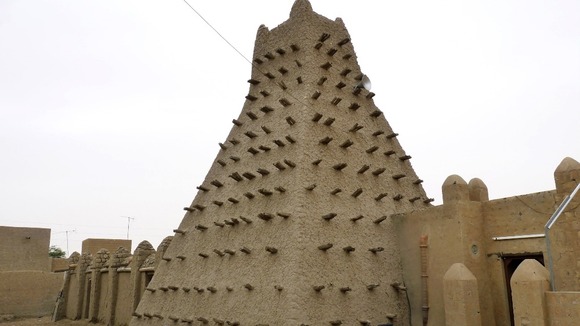
ICC: Attacks on Sufi shrines in Timbuktu constitute war crimes

http://www.itv.com/news/update/2012-07-02/icc-attacks-on-sufi-shrines-in-timbuktu-constitute-war-crimes/12:04pm, Mon 2 Jul 2012 A prosecutor for the International Criminal Court (ICC) has said that the attacks on Sufi mausoleums in the Malian capital Timbuktu at the weekend constitute war crimes.

Witnesses reported that militants from the al Qaeda-linked Ansar Dine group used Kalashnikovs and pick-axes to destroy several of the mausoleums at the UNESCO world heritage site.
The mausoleums are shrines to saints of the local Sufi version of Islam, and are considered idolatrous by the salafist Ansar Dine. ICC prosecutor Fatou Bensouda told AFP that "deliberate attacks against undefended, civilian buildings which are not military objectives" constitute war crimes.
She added: "This is a war crime which my office has authority to fully investigate."

Friday, June 29, 2012

Sufi Love, a Journey to the Divine


By Loubna Flah, Morocco World News, Casablanca June 25, 2012
It is not easy for the believer to grasp the concept of “wholeness” in Islam. The Islamic creed remains at the centre of every Muslim’s heart , regardless of their piety, not because Muslims choose to make of it a priority but mainly because it is designed to permeates all aspects of life. In some instances, Islam stands frank and dauntless. In other occasions it slides towards the heart of the believer like a rampant celestial light yet subtle and ethereal.
It is unfortunate that the adherence to the Islamic faith has become for many a mechanistic and soulless process. The slow metamorphosis towards this religious callousness among Muslims did not happen overnight. Besides, it is of no use to blame history, society, the economic order, for religion can be a binding factor for large communities, yet its foundations are purely individual, since religiosity pertains more to the believer’s choices.
Yet, we must admit that the mainstream perception about Islam nowadays is either overpowered by negative narratives promoted by westerners or radical secularists or totally distorted by the hard line Islamists who consider Islam as a mere balance sheet with two columns of deeds and misdeeds disregarding the fact that Islam is a journey , that everyone embarks on its own venture , and that the ways to “God” are so numerous.
In her book “Love in Muslim Countries” Fatima Mernissi deplores the decline of “love” in modern Muslim societies despite a miscellaneous historic legacy of love sagas rich in manifestations and in words. In her survey of Muslim lovers’ itinerary, Fatima Mernissi does not miss the conjecture with the Sufis, “The greatest lovers” of all times. Mernissi wonders why Muslims are not taught the art of love through the spectacles of those Sufis who lived in the margins of society buzz, who even risked their life for God’s sake.
In the information age and with the overdose of pragmatism and utilitarianism pumped into our veins, these refined feelings and uplifting journeys seem highly utopian and even look irrelevant to us. In addition, the journey back to the essence of divine love is not a sine qua none to the affiliation to Islam. It is only a path among a ramification of lanes that leads the believer to the safe shores of faith.
Once upon the time, there was a young man who was totally desperate and immersed in worldly concerns. While he was sitting on a bench engrossed in his thoughts, he was approached by an old man whose jilbab, hat and white beard mirrored piety and wisdom. The old man cast a quick glance at his neighbor and said “Are you fine my son?” The young man replied automatically’ it’s Ok, just some problems to solve”. The old man turned to him with a smirk on his face and said” Then why don’t you turn to your beloved, pointing his finger at the blue firmament”.
Abashed, the young man asked “beloved, Allah? How can Allah be a “beloved? To my knowledge, the beloved is someone you can talk to, someone you look at in the eyes and someone you can tenderly touch”.
You may wait restlessly for the old man’s answer, yet there are many answers to that legitimate question. There are many possibilities, and copious versions to the journey towards the creator. Between the passionate Sufis who sought the unification with the beloved through meditation and Zikr to those who secluded themselves in remote taverns in fear of temptation and distraction and those who relished the feeling of death in their life mumbling “ My death is to remain alive. My life is to die”, the divine love seekers have many examples, not to follow literally but to guide them in their pursuit of wholeness.
If Sufism revolves around the love of “God” then we are all Sufis at some point or another. Women and Men’s genius lies within their ability to adjust. In the effort of adjustment comes novelty and with novelty comes innovation. The will and effort to refine one’s beliefs is by no mean mandatory, yet the adventure is highly gratifying for those who dare.
© 2012 Morocco World News. All Rights Reserved

Sanam Marvi to represent Pakistan in international Sufi festival

"Sanam Marvi to represent Pakistan in international Sufi festival" By Fareeha Khalid - Jun 4th, 2012, in The News Tribe. Lahore: Pakistan’s Sindhi folk and sufi singer Sanam Marvi will represent Pakistan in Sufi music festivals that would be held at Morocco, France and Japan.

“Almost 200 singers from 70 nations are expected to participate in the festivals and it is an honour for me to represent Pakistan in such a big event,” Local Pakistani Urdu news paper Nai Baat reported.

“Pakistan is my identity and I will continue to bring fame to the country,” she added.

Sanam Marvi debuted at ‘Virsa Heritage’, a programme on PTV. She became popular after her performance at Coke Studio, a Pakistani television series featuring live music performances. She has since appeared in two seasons of the Coke studio.

Wednesday, June 27, 2012

Sufism and Art: Amr Fekry

"Sufism and Art: Amr Fekry"

Egyptian photographer Amr Fekry reflects on Egypt's Islamic, Coptic, and ancient identities in his new book 'Holy of Holies' by Farah Montasser, Al-Ahram Online,

Sunday 3 Jun 2012

As he celebrates the release of his first photography book, Egyptian photographer Amr Fekry describes himself as a traditional and non-traditional artist who hopes to connect with the beauties of the ancient world and share these experiences with the public.

After graduating from the Cairo University faculty of arts in 2001, Fekry spent a year searching for true beauty, and during this time he found Sufism, which has become an essential part of his identity and a major feature of his work.

Sufism is the essence of Islam. Sufis are often known as the dervishes or the people of the truth whose spirituality, modisty and refraining from materiallism inorder to purify their souls in search of the utmost truth, have and continues to attract millions of followers.

"Through Sufism I realised my true senses and intellect," he says. "I acknowledged the true language of religion, unlike the traditional sense of religion we are exposed to from childhood. I rediscovered I had some spiritual talents as well," he explains.

He admires Islamic architecture, especially mosques built in the Fatimid era inspired by Sufi numerology and shapes.

"I kept taking photos of such buildings and my belief grew," he smiles as he recalls his journey of self-discovery. Fekry held several photo exhibitions of the Turkish Dervishes where he encouperated Sufi poetry in his composition.

"I tend to question the true relationship between the creator and the created, which is based on love rather than fear of punishment or pursuit of reward," Fekry states.

According to Fekry, Sufism has no boundaries and no limitations. "I use figurines as many Sufi artists and architects did in the past. Figures of people and animals tend to build belief in God and strengthen it as well. This was seen in Egypt during the Fatimid era, for example," he says.

Fekry admires ancient Egypt and he has also applied this in his art. "In art, I am inspired by ancient Egyptian art," he says.

"Sufism introduces interaction between one's self by speaking to the human brain," he says.

Its ideas and teachings are witnessed in our daily life and tend to change by the hour and produce something different and exciting each day, according to Fekry.

Learning a different lesson each day brings a new colour, and pattern to our daily living, says Fekry and it is this concept that shapes or identifies his art.

"I spent five years of my life delving into nature and taking photographs of the world around me before I started making art and exhibiting my work," he tells Ahram Online.

He also visited galleries to see modern art but could not relate to what he saw.

"I always felt that it didn't reflect Egyptian society… Yes I have seen new concepts, techniques, and taken inspiration, but I've never found it reflecting on the regular Egyptian or addressing him," he says, and that is why he found Sufism and his own version of Islamic art that relates to the Egyptian identity.

Being a Sufi has given Fekry another characteristic as well. He initially works for himself without any intention of exhibiting his work. "To produce art, I target myself first," he says.

Instead of having deadlines and exhibition dates and schedules, "I wander around in search of beauty and more natural interactions that inspire me," he explains.

Fekry holds frequent exhibitions but without boundaries. "I keep exhibiting what I want, when I want," he tells Ahram Online.

It is the method he finds best to critically value his art and later on publically display what he believes worthy. "Not all of my work has been exhibited, but all that matters is that I am pleased with what I do," he comments.

In 2004, Fekry completed his graduate studies in Zurich, where he devoted himself to finding himself and acknowledging his space and surroundings. "Zurich is very systematic and financial and it's where I discovered my own space," he states.

He translated his experience into Holy of Holies, a book about his art using his Sufi methods. "The first part of the book is somewhat inspired by my experience in Zurich in which I translate my own time and space in this modern city into art," he recalls.

By looking at the changing daily patterns of life, he identifies patterns and the "holy architecture" of shapes and consequences of the ancient world. "I implemented the relationship of emotions, colours, images and the holy shapes," he explains.

Furthermore, in his Holy of Holies, Fekry reflects on quotes that describe Sufism and his art, including 'the relationship between seeing and sight', 'cover vs. uncover' and an 'artist's unity within place'.

Amr Fekry presents a one of a kind ideology in his art that reflects on his Egyptian identity with its Islamic, Coptic, and Ancient Egyptian background and sums it up in his 'Holy of Holies'.

Holy of Holies with be released on 9 June. Sufi Bookstore,12 Sayed Bakry, Zamalek

Wednesday, June 13, 2012

"Faith. Knowledge. Life."

By Staff Reporter, *Kazakh Public Religious Organization Declared Extremist* - Radio Free Europe/Radio Liberty - Prague, Czech Republic; Friday, June 8, 2012

Kazakh Public Religious Organization Declared Extremist

Kazakh authorities have announced that the "Faith. Knowledge. Life." educational organization has been officially defined as extremist.

The decision on June 7 by a regional court in eastern Kazakhstan was made public a day later by Kazakhstan's prosecutor-general.

The organization says it promotes Sufism -- a mystical interpretation of Islam -- and denies it has anything to do with any form of extremism.

The court ruled that the organization has to be closed down and any form of membership in it is considered a crime.

In October 2011, 10 leaders and activists of "Faith. Knowledge. Life." were sentenced to prison terms between two and 14 years by a court in Almaty.

Tuesday, June 12, 2012

Meaningful Songs

By Osama Jalali, *Music flows on* - The Hindu - India; Sunday, June 3, 2012

Music flows on: Pakistani band Raeth will soon make its Bollywood debut

Thankfully enough one aspect the oft-sparring neighbours India and Pakistan have never allowed to affect is the cultural exchange between the two countries. Musicians, poets, actors continue to cross over from one side to another for films, albums and concerts and entertain people to the hilt.

Raeth, a Pakistani Sufi Rock band, continues the tradition, set by the likes of Nusrat Fateh Ali Khan, Junoon and the rest. The band makes its Bollywood debut with Marksheet, a film that caught the public attention before the release. “It's a film for the youth, based on the education scams in India and I was looking out for a voice that represents the youth and Raeth does it the best,” says Rakesh Ranjan Kumar, director of the film.

Raeth consists of three talented musicians — Wajhi Farouqui, lead vocalist, Hassan Farabi, guitarist and Sunny Ghansham, bass guitarist. Farabi, who is down with dengue, couldn't accompany his fellow musicians on this trip. Raeth released the first album in 2006 and since then the team members have not looked back. Songs such as Bhulado and Dur Jag Ka Tara had garnered success.

Inspired by the legend Nusrat Fateh Ali Khan, Wajhi wants to spread the message of Sufism that's love through his music. “Love has no boundaries. And it has got an attraction and here we are debuting in Bollywood. Indian audience has loved our music in the past and we hope that their support continues.”

“We are a band which makes music collectively, each one of us plays our part and every part is equally important. But how often you find that in giving music for a film only the playback is given importance but we are very thankful that while making music for Marksheet the director has allowed us to create our own sound, which is really very supportive,” expresses Sunny.

The lead vocalist of the band, Wajhi adds, “We are loved in India because we create music in their own language. I try to write meaningful songs so that we are also able to communicate and give a message with each song. Giving music in a movie is a big thing for us we are really very excited about it. Films increase your spectrum and take you to a much larger audience.”

Monazir Alam has written the script of the movie and has added a romantic angle to it as well which will help Raeth to bring some soul with their songs. The film will be released early next year.

Picture: Raeth musicians Wajhi Farouqui, Hassan Farabi and Sunny Ghansham.

Monday, June 11, 2012

Full of Life and Joy

By Mahmoud El-Wardani, *Book Review: Journey to the Egyptian Sufi desert* - Ahram Online - Cairo, Egypt; Sunday, June 3, 2012

Book Review: Journey to the Egyptian Sufi desert. Abu-Khunayger visits the shrine of Sufi leader Abul-Hassan Al-Shazly and discovers a world of spirituality, love and common humanity deep in the Egyptian desert.

Fi Rehab Al-Saharaa (In the Bliss of the Desert) by Ahmed Abu-Khunayger, Cairo: General Organisation for Cultural Palaces, 2012. 160pp.

It’s unusual for Egyptian novelists to venture into non-classified genres, and even less common for them to write about their own spiritual experiences with so much purity and depth.

Together with Abu-Khunayger’s other novels in his unique style, this latest book about the Sufi leader Abul-Hassan Al-Shazly adds to his experience as a writer.

Al-Shazly was born in the Hijri year 593, roamed around the Islamic cities of the east and west, fought the Crusaders, and when he felt near death, departed to the Egyptian desert and died there, buried now in the place he chose.

After his death, his followers started an annual festival celebrating him in this remote location, and this festival is held annually just before Bayram.

Egyptian festivals of Christian and Muslim saints are important because they are the common thread for farmers throughout Egypt, and are an important economic component in the livelihoods of many people, especially for the major holy men like Al-Sayed Al-Badawy, Al-Sayeda Zeinab, Ibrahim Al-Desuki and for Christians, Saint Demyna and Saint Mary, which are attended by both Christians and Muslims. They’re mostly linked with the crop cycle and are a significant element in the process of buying and selling goods.

However, Al-Shazly is a special case, being situated in the middle of the desert, unreachable except by driving hundreds of miles on unpaved roads among the mountains and valleys, with his admirers making the difficult trip once a year.

Abul-Khunayger lives in Upper Egypt, and makes the trip every year. His testimony is the result of many trips, but most importantly, it’s not the result of a prior judgment or biased point of view, but rather the result of watching, learning, asking and facing the world that is miraculous in nature. Millions of Egyptians believe in this world and come faithfully and dutifully for the trip, both Muslims and Christians.

Al-Shazly’s festival is full of life and joy; thousands come together, and the common factor is love for Al-Shazly, and willingness to serve others: eating, drinking, celebrating.

Abu-Khunayger writes:

Outside the shrine, some people sat down to become part of the general crowd that never ends across the whole area. One woman sat there combing her hair and adding touches of eyeliner, blush and lipstick in front of everyone. A barber was shaving a man while others waited their turn. Some were drinking tea in a little corner, and sitting on the rocks or a small mat. Booksellers, perfume sellers and herb sellers were next to stands selling cheap toys and books and pictures about saints, but the majority were beggars.

Most interestingly, Abu-Khunayger doesn’t act like a tourist who is amazed by what he sees, but rather he keeps a high degree of honesty, not acting like a ‘dervish’ involved emotionally with what he sees.

He tells of a dance during the Zikr (Sufi ritual of whirling or dancing), where the large, long-haired dancer was holding long nails in his hands and dancing on his toes with ecstasy and lightness, making Abu-Khunayger wonder how such a huge body could be so agile and light. He would stick the nails in the bodies of audience members and dancers and bring it out without a drop of blood or a scream of pain. During the sword dance, visitors, some of them children, sleepwalk over them without pain or a scar.

The masses act like a huge family, sharing whatever they have, serving and volunteering to help each other, preparing food and drink for everyone. A man could be a university professor, a rich businessman or a retired general, but at the festival of Al-Shazly, he’s a servant for the admirers of the holy man and for those who made the trip to pay him their respect.

Saturday, August 04, 2012

Benevolent lecturer and scholar who was an authority on Islam in Africa

No comments:

Benevolent lecturer and scholar who was an authority on Islam in Africa The Irish Times August 4, 2012 

DONAL CRUISE O’Brien, who has died aged 71, was Emeritus Professor of Political Studies (Africa) at the School of Oriental and African Studies, University of London and a leading authority on Islam in Africa.
His interest in Africa was sparked by holidays he spent as a student in Katanga, where his father Conor was the UN representative. When his father served as vice-chancellor of the University of Accra, he visited Ghana.
He chose for his PhD thesis the political situation of the Sufi Muslims in Senegal. He was attracted by the idea of dealing with religious communities, with believers, and reaching people whose organisation had little or nothing to do with European principles.
Also, since the leadership of Senegal’s Sufi communities, marabouts, had established their hierarchies in parallel with the structure of the colonial state, he saw the possibility of a comparison with the role of Christian monasteries in Ireland.
And, in terms of nationalist politics, he was intrigued by the question as to whether the marabouts were lackeys of colonialism or defenders of their own turf.
In Paris he outlined his ideas to the eminent anthropologist Georges Balandier, who suggested that he confine his study to the Muridiyya (Mouride brotherhood): “They are the most interesting ones.” O’Brien adopted Balandier’s suggestion; it made his career, he later said.
The thesis was published as The Mourides of Senegal: a descriptive and analytical study of a Muslim brotherhood (1971). It focuses on the origin and development of the order among the Wolof peoples, the largest and most powerful of Senegal’s “tribal groups”. It examines its structure as well as its economic and political significance.
Read more here
Read More

Thursday, August 02, 2012

Kashmir: A Breeding Ground for Spirituality

No comments:

Shrine

Kashmir: A Breeding Ground for Spirituality
 Free Press Kashmir 2 Aug 2012
by Sahar-ul-Nisa Haroon

In Kashmir a large number of great Sufis have lived and now we have shrines dedicated to them thronged by thousands; Kashmir is Peer Waer, a land of saints. This paradise on earth is bestowed not only with the beauty of nature but also with religious wealth.

The Sufi tradition has played a great role in the lives of people living in this region ringed by lofty snow-clad mountains. The earliest known Sufi in Kashmir was a thirteenth Century Suhrawardi saint from Turkistan, Syed Sharfuddin Abdur Rahman, fondly remembered as Bulbul Shah. Click here to read more of this excellent article.
Read More

Monday, July 30, 2012

Masnavi to be read in different languages

No comments:

Masnavi to be read in different languages

Hurriyet Daily News KONYA - Anatolia News Agency

Masnavi has been translated into 20 languages and ibeing translated into Russian.
The famous work Masnavi has been translated into 20 languages and is currently being translated into Russian and Malaysian.

Konya Metropolitan Municipality Mayor Tahir Akyürek told Anatolia news agency the Persian text was first translated into Turkish, and currently they are supporting other translation projects. The work has been translated into French, Spanish, English, Chinese and Greek and translation projects are still continuing, said Akyürek.

Half of the world’s population can read Masnavi, Akyürek said. “We have also presented the work to state presidents and officials.”

Masnavi is an epic poem written in Persian by Mevlana Celaddiin-i Rumi, the celebrated Persian Sufi saint and poet. It is one of the best known and most influential works of both Sufism and Persian literature. The Masnavi is a series of six books of poetry that each amount to about 25,000 verses or 50,000 lines. It is a spiritual writing that teaches Sufis how to reach their goal of being in true love with God.
July/30/2012
Read More

Sufis and Scholars of the Sea

No comments:
Sufis and Scholars of the Sea - Book ReviewYemen Post Staff 28th July 2012
There is a need to understand the Indian Ocean area as a cultural complex which should be analyzed beyond the geographical division of Africa, the Middle East, the Indian Subcontinent, and South-East Asia, as its coastal population intermingled constantly. Family networks in East Africa (1860 – 192, originating in the South Yemeni region of Hadhramawt, the Alawi tariqa, mainly spread along the coast of the Indian Ocean. The book discusses the renowned scholar, Ahmed b. Sumayt. The "Alawis" are portrayed as one of several cultural mediators in the multi-ethnic, multi- religious Indian Ocean world in the era of European colonialism.

*
Indian Ocean had a profound influence on the lives of the people who lived on its shores. Fishermen, sailors, and merchants traveled its waters linking the world`s earlier civilizations from Africa to East Asia in a complex web of relationship.
Trade under-pinned these relationships but the Ocean was also a highway for the exchange of religions cultures and technologies, giving the Indian Ocean an identity as a largely self-contained world. It was the expansion of Hinduism Buddhism, and Islam helped to define the boundaries of the "world" which by the fourteenth and fifteenth centuries was one of the most prosperous and culturally complex regions on earth.
By the sixteenth century, Europeans were part of this "world" as partners in trade with the indigenous peoples. But from eighteenth century this economic relationship changed as the economies of the Indian Ocean "world" integrated with the capitalist economies of the West. The change from commercialism to capitalism ended the insularity of the Indian Ocean "world" and began its integration, as region, into the global economy and its territorial division among various European powers. This transition altered the ancient web of regional cultures. The Ocean was no longer a major force binding the peoples on its shores in a self-conscious entity, but the legacy of the past is still evident in their common religious, cultural and historical experience.
Mwambao is the Swahili name for the East African Coast, the chosen habitat of the Swahili people. The Swahili were called Coast People by the Arabs, and the Swahili Coast was being referred to as "Murudi al Dahab" or Golden Pastures. Numerous bays, creeks, and inlets resulting from coral rock being eaten away by the sea, providing excellent harbors e.g. near Mtwapa, Kilifi, Mombasa and Vanga while the majority of the rivers are in Mozambique. The entire coast is composed of coral rock and most of it provides soft beaches, useful for landing of small crafts. The presence of water in Lamu, for example, helped to cool the hot coast climate; the choice of site ensured a maximum of fresh breeze from the sea upon the sandstone rock.
Regular rainfall has given the coast and the islands south of Equator rich vegetation, unlike the arid Somali coast north of it. Regular trade winds brought sailors and traders in search of resins, and gums for carpentry furniture making, cosmetics, perfume etc. Mangrove poles growing abundantly in the Lamu archipelago were used for ship building and roof beams. Of the animal products, ivory, rhino horn and tine cat perfume were the most sought artifacts already in antiquity. Of mineral products it has been export market for gold, while Ethiopia exported gems such as emeralds, and after year 1100 also coffee.
Arabs were traveling to East Africa with the monsoon from South Arabia and Gulf even in pre-Christian times. The earliest inscriptions were found on the island of Zanzibar c. 1070 AD. There is also the oldest datable discovered mosque in East Africa. Arabs continued to visit the Coast and to settle there throughout the centuries as individual traders, or as empire builders accompanied by large families, or establishing themselves as independent rulers. The Arab were known by their family names, some of which they have planted in African soil. They were identified by the region, Yemen, Oman, Hadhramawt or even by the name of towns, Muscat, Shihr, Mukelle, Aden from which they sprang, even though they may have lived in Africa for generations. They made Pate, Lamu, Malindi, Mombasa and other towns their home.
Mombasa, in the land of the Zanji, boasted wonderful orchards, which contained lemons and banana trees, all of which still grow, and rose apples. Carpets lay on the floors of the guest house. The meal consisted of rice, cooked or fried in butter, dishes of meat, fowl, fish and vegetables, pickles, lemons, bananas, ginger, and mangoes. Similar meals are still served in the Swahili tows today. There were mosques built in coral stones. The Arabs functioned as teachers and preachers, traders or rulers on all parts along the Swahili Coast bringing their own Arabic textbooks for prayer sessions, and hymns to be sung in the mosques.
The numerous elegant dhows connected the colorful ports of the Swahili Coast. Then the creeks were filled with dhows blown down by the monsoons, dhows of all shapes and rigs from Lamu, Bombay, Persian Gulf and from Arabia, some high and dry, some in repair. The dhows, known also as the Silent Wanderers of the sea, were patiently awaiting the southern breezes to blow them back to their homes.
Long ago before petroleum was discovered in the Middle East, incense, fragrant resins, spices and perfumed wood dominated Arab trade. Southern Arabia as the centre of trade prospered and its maritime history is the subject of tales. The talk would be incomplete without mentioning "the Yemeni era", which was an intensely human and cultural civilization that promoted and enriched various facets of social, economic and political life of East Africa. They participated actively in various dimensions of the emerging civilization, including domestic and international trade, underpinned by their vast experience in traveling the world seas.
"Sufis and Scholars of the Sea" is an important text which synthesizes chronological and historic graphical range into its compact frame. The work researches the directly relevant histories of Hadhramawt, Oman and East Africa during 1860 – 1925 through the life of one of the most influential Hadhrami East African scholar of that period Ahmed B. Sumayt.
Zanzibar`s future, an island off the coast of present day Tanzania, thus was shaped by its geographical position, right in the middle of the Indian Ocean trade routes. It is a place of winding alleys, bustling bazaars, mosques and grand Arab houses, whose original owners viewed each other over the extravagance of their dwellings. It boasts not only natural beauty, rich culture, and breathtaking architecture. Zanzibar during Ibn Sumayt`s time emerged as an important centre of learning in East Africa eclipsing previous centers such as Lamu and Mombasa.
Today Zanzibar is also the name of a town in southern Yemen while Yemeni jewelry is sold in the shops of Zanzibar. Unlike Oman, Hadhramawt (a governorate in the present Republic of Yemen) does not have a history of a colonial power in the Indian Ocean. Hadhramawt is known for its continuous export of people to the land of the Indian Ocean, including the East African coast. They were religious scholars, traders, cultural brokers, whose impact on both recipient and home country is a topic which has aroused much interest in recent years.
To them, the Ocean was no barrier rather a long established arena for cultural and intellectual exchange. With them traveled goods and ideas, word of mouth, and word in writing, fashion, habits, linguistic patterns, and seeds for new agricultural crops. They left their imprint on the place, the most notable being the religion of Islam, and absorbed cultural elements that were not Arab in origin. The Indian Ocean ports were not distant exotic cities but actual real places, and where the human chain, the "silsila", extended through space and time. This is the "world" into which we enter with A.K Bang`s "Sufis and Scholars of the Sea".
The topic of this fine scholarly study is the scholarly exchange of ideas between Hadhramawt and East Africa. It is the history of Islam during the nineteenth and early twenties century. The study beautifully reconstructs the channels through which "Alawis", a Sufi tariqa, originated in the South Yemeni region of Hadhramawt spread along the coast of the Indian Ocean. It discusses and focuses on life of one of the most influential Hadhrami – East African scholars of the period Ahmed B. Sumayt. Thru Ibn Sumayt`s life, it explores how links were maintained, reinforced, and how their "world" related to other ideas emerging at the same time. How they formed a tight knit, a transoceanic network of individuals linked together by blood, and common experience, which remained open until well into the twentieth century when colonial frontiers came to be decisive factors, when the peoples actually transformed themselves into nations.
It researches what the "Alawis" actually thought in East Africa, what inspired their teachings, its explores their scholarly links, and further the impact of Hadhrami Alawis on nineteenth century East African scriptural Islam. It places the highly scriptural widely traveled and deeply learned tradition of Hadhramawt in East Africa in the frame work of Islamic learning.
The Alawis were traveling widely for seeking out knowledge beyond their local communities, and in Ibn Sumayt`s case, in his mature years he traveled equally wide to spread knowledge. As result families became not only transoceanic, but also trans-regional. Time flies and things change: as nineteenth century drew closer, the Alawis in East Africa, like their fellow residents in the Indian Ocean shores, were exposed to European colonialism.
The central figure of this research, Ahmed B. Abo Bakr b. Sumayt (1860– 1925)-
was one of the most prominent Hadhrami-East African scholars of that period. Born in the Comoro Islands, to a father who had immigrated from Hadramawt, Ibn Sumayt returned to his father’s homeland. But he achieved his greatest fame in East Africa, as a pious man, a scholar, and qadi in Zanzibar. As East Africa came under colonial rule he earned great respect from those British administrators who came into contact with him. It was he - who made them appreciate the true Arab reactions - to foreign rule.
.
Through focusing on the life of Ibn Sumayt and his life within a network, it presents the life "in the middle", of a "man in the middle". Ibn Sumayt is the link between sail ships and oil tankers, between the empires of the monsoon, via the period of European imperialism, and the ear of the notion states. Especially the later half of the nineteenth century when he saw European influence in East Africa and British influence in Zanzibar.

Ibn Sumayt was also a reformer and teacher, at the same time fully aware of developments in the Middle East. We meet him as propagator of improved agricultural methods, and even discussing new breed of crops with friends. However, Ibn Sumayt`s importance lays in his work as qadi and how the Ulama found their place in the "colonial space" as active partners. Ibn Sumayt is presented here as pious and learned man - yet intensely human, who possessed a reputation which extended far beyond the limits of Zanzibar.
"Sufis and Scholars of the Sea" is well researched, focused in excellent presented. It will be of interest to scholars, researchers, students but also as general reading to all those interested in the role and contribution of the Yemeni Hadhrami Arab scholars to the history and culture of the Indian Ocean.
Book Reference
Anne K Bang – Sufis and Scholars of the Sea, Published by RoutledgeCurzon
ISBN 0-415-31763-0
About Anne K Bang
Is Postdoctoral Research Fellow at the University of Bergen, Norway. Historian of Islamic societies with a special focus on Arabia and the Muslim communities of Eastern Africa as well as the wider Indian Ocean rim. Her research has primarily focused on factors that cause ritual and devotional life, intellectual discourses and political ideologies to change in different Muslim societies. Focusing on the Muslim societies of the Indian Ocean (east/southeast Africa) and Southeast Asia her research has mainly focused on migration and cosmopolitan Muslim societies and the ensuing family- trade- and scholarly networks. She has also worked on Islamic education and on the transmission of scriptural cultural heritage in Africa. In addition, she has worked on the role of Norwegian traders in during the colonial era. She has published several books and articles on these topics.
Irena Knehtl, Sana`a, Yemen

Read More

Something Sufi about this comic!

No comments:
Daily News and Analysis Published: Friday, Jul 27, 2012  By Shilpa Bansal
Some months ago, Sufi comics were promoted at Comic Con International San Diego — one of the biggest comic conventions in the world. And now, Mocha TRIP, in association with Comic Con, is presenting an exclusive workshop with Sufi Comics this weekend. The authors, the Vakil brothers will share their experience of participating at Comic Con San Diego 2012 and will give the audience a sneak peek into the stories from their upcoming book and an exclusive preview of the book’s miniature art and calligraphy.
What more? Also, participate in exciting script writing and drawing competition to win fabulous prizes!
What adds to this whole Sufi experience is the venue, Mocha TRIP, always known for its ambience. And this time, it just perfectly blends with the theme. Be it comics, comedy, music, books or cycling— Mocha Trip as the young Bangaloreans call, is the place where you can do the things you love and share stuff with others who share the same interest as yours.
Go ahead, go on a Sufi trip!
Be at Mocha, 577, Kalyana Mantapa Road, 80ft Road, 8th Block, Opposite to Bethany High School, Koramangala Main Road, Koramangala, on July 28, 12pm onwards, call 30224711

Read More

"Jesus (AS) and Maryam (SA) in Islamic Mysticism" Published in Russia

No comments:
Ahlul Bayt News Agency 2012/07/27
 "Jesus (AS) and Maryam (SA) in Islamic Mysticism" Published in Russia

 "Jesus (AS) and Maryam (SA) in Islamic Mysticism" Published in Russia (Ahlul Bayt News Agency) -  A Russian translation of "Jesus (AS) and Maryam (SA) in Islamic Mysticism" by Annemarie Schimmel has been published by Iran's Cultural Center in Russia.

The Iranian center has published the book in cooperation with the Center for Interfaith Dialogue of the organization. It mainly highlights the strong relationship between Islam and Christianity. The writer is a well known and influential German Orientalist and scholar, who is proliferate writer of Islamic books.

Referring to verses of the Holy Quran and Nabawi Sunnah as well as mystical texts and works of Attar, Mowlavi, Sanayi and Nezami, she has tried to feature the characteristic of Jesus and Maryam in Islam in the book. The book has been rendered into Russian language by Dmitry Babayev from its Persian copy by Mohammad Hussein Khajezadeh published by Amir Kabir Publications.

Nauchnaya Kniga Publications in Russia has published the translation in 1000 copies.
Read More

Friday, July 20, 2012

Ahad Bab: Mystique of a Mystic

No comments:
Book review by Muhammad Maroof Shah

Author: Syed Habib, Publisher: Shifa Publications, Year: 2012, Pages: 203

Greater Kashmir, SRINAGAR, MONDAY, 18 SHAABAN 1433 AH ; 09 JULY 2012 CE
The book under review is by far the best book on mysticism by any Kashmiri scholar. It has succeeded in celebrating one of our greatest mystics in a language that is worthy of the great man it seeks to bring to public gaze. Publication of the book is an event that should lift the spirits of all devotees of mysticism. It brings about the mystery and profundity of a man whom many knew only through hearsay but who commanded great respect. It highlights beauty of the man whom many knew and feared as a jalali mystic only. It introduces some pages of the great life that lighted the mystical horizon of Kashmir for decades. This book will make its author, like its hero, immortal in the history of mystics and mystical literature of the subcontinent. Exquisitely and cryptically designed to represent the beautiful and profoundly symbolic life and work of much misunderstood or unknown spiritual genius – the glory of Sopore and Kashmir – the book is destined to be a classic piece of spiritual biography.
Habib is not merely a biographer but a poet and a scholar of mysticism who lives and breathes spirituality. He may not be very exact academic at times –  he confounds nafs and ruh, misreads the question of transcendence in relation to evil that is best approached at metaphysical plane with the tools of a metaphysician and occasionally may not hesitate to use some terms loosely –  but he has mastered both the tools and the qualifications required to write on a  complex and sensitive issue in a style that may occasionally overuse alankaras but generally moves, transports and overpowers the reader with its sheer brilliance and magic. Deftly using his tools and resources he succeeds in creating an ambience that helps us appreciate the wonder and the sublime heights and depths of the man who had mastered the art of concealment as malamitis or qalandars often do.
I have been highly impressed by Ghulam Hasan Nahvi’s  biography on Merrak Saeb. But I think Ahad Bab has found, in the form of Habib, a greater man and a superior medium to speak to us from the other shore. As Khalil Jibran had attempted to offer the best he could in the form of The Prophet, Habib, as a mark of respect and love for the great Bab, has given us his best – his life blood – in the form of the book. He has exposed many and hinted at many more great secrets of the great man whom many of us loved only from a distance fearing to approach the spiritual dynamite that blasted the egos of many brave and fortunate souls to lift them into empyreal realms.  Almost every sentence is chiseled and much of the book appears to be simply inspired and I would  characterize it as yet another posthumous karamat of Bab.
Bab’s life has been an open miracle – he was weather proof, usually unprovokable, never using takya or support for sitting, never extending his legs on floor, had great power of mind reading and scanning of hearts besides precognizance and helped to heal all kinds of diseases – witnesses of  these and many other “stories” can be found in almost every nook and corner of Kashmir. The book recounts in a style that can only be envied but hardly imitated Bab’s long and hard period of spiritual apprenticeship, his almost superhuman adventures in jungles, his abandoning of family house and sacrifice of family interests for the sake of larger human family as he spent 11 years outside his home at a stage when his children were very young and the family had great economic hardships,  his jihad against nafs and world, his spiritual exploits despite the rigour of police nokri, his visits to peers and qalandars of all sorts, his family background that gave him solid spiritual base, symbolism of his “slangy” language, spiritual connections of his family and his inheritors, his love and compassion for his visitors and the unique ways he used to communicate with the insiders and even outsiders, his moral virtues like doing his own work himself, his love for children, his fascination with Sufi music, the misery of flesh fed by worms but the grandeur of the soul that had supreme confidence in himself and his mission, his refined aesthetic sense coupled with deep sensitivity to art and culture and access to perception of metaphysical symbolism and transparency of natural phenomena, his wonderful acumen as an interpreter of the Quran and unique methods of teaching lessons to his disciples, his extreme humility that prevented him to spread his legs on floor and many more inspiring and revealing hues of his colourful personality that many mistook for simply a majzoob among other majzoobs (For his devotees he was more conscious than those who are proud of their sobriety). This gripping narrative helps us to better appreciate the depths and heights of this spiritual genius from Sopore.
The book is studded with profound insights and Sufi interpretation of scripture and history. The fact that the Prophet of Islam received soothing winds from India is interpreted as his recognition of the treasures of gnosis in India.  There are cryptic allusions to a host of verses which defy usual commentators and are best understood through Sufi exegesis.
For Habib Ahad Bab is everything as Shams Tabriz was for Rumi – he uses the choicest metaphors and epithets for him. He is Shahanshah, the king of kings who rules the hearts of not only his thousands of mureeds but aam kashmiri. Darbar-i-Ahad used to be a great meeting hall where all and sundry would come and go and Bab disbursed his spiritual blessings. No king of Kashmir can dream of such a darbar where people from all walks of life would come and stand in absolute awe of the great man.
Sahib knew hearts and minds of all and sundry and helped countless people in his own way. He showers his praise and devotion on almost every aspect of his personality. He interprets his conceding the wishes of visitors or sayils who implored him to sit in their cars or visit them or sick persons as a variety of mujahida. Even in cars he used to sit in a typical posture that involved tucked  up legs perhaps indicating humility.
 Almost all pages have powerful passages that deserve to be quoted in full and as there are too many I can’t reproduce even one but hope our magazines/newspapers carry them on weekly basis. That would be a contribution to Kashmir literature, art and mysticism. It is treat to read his long prose “odes” to Sufi music, to nun chai, to local craftsmen, to love, to moral and spiritual beauty of Bab.
Ahad Bab is a legend and the book has admirably presented the same for us. After reading it one comes to appreciate the mystery and beauty of the man with which Sopore shall be proudly identified forever. The book is a gift to Kashmiris in general and the people of Sopore in particular. The author has put his everything in it and that explains why its price has been kept open or optional. There can be no price for devotion and love that has been poured in writing and designing this book. It is a privilege to read it and readers can understand only to the extent that they can participate in the great cosmic dance, the dance of the soul that the life of Bab symbolizes. The book throws a lot of challenges to scholars or critics who want to approach mystical literature or mystical life. The appropriations of mystical literature which include author’s own moving and beautiful poetry and Quranic verses that help to elucidiate life and work of Bab add to the rich tapestry of soul’s journey – the journey of you and me, of all the children of Adam – that the book tries to depict.  The book is a spiritual biography of modern Kashmir and the way it comments upon diverse cultural expressions from samawar and nun chai to pashmeen sazi or Islamic architecture it appears to be a unique contribution to both aesthetics and mysticism of Kashmir. A letter to Samawar and musings on nun chai, for instance, shows how mysticism can be aesthetically read in cultural expressions.
 It is not easy to write on mysticism and that too on such mystics as Ahad Bab whose very name or presence sent shivers in many  souls. Bab is a spiritual dynamite with which feeble minds or weak souls can’t afford to play. One has to observe all the aadab of a salik to write it. The book is dedicated to Bab in a touching manner. It reads “laghye waendith.”
The book is feast for the senses as well as the soul. It is recommended  for reading to all those interested in Kashmir and its mysticism, its literature and its culture. For those whose third eye has opened to certain extent it is a tabarruq. The book is also recommended for all those for whom Ahad Bab life’s was a “scandal” of spiritual propriety as they will come to understand something from the other side or inside of the sanctuary to which only few had access though all were invited. The point of certain mainstream Sufis/ulama regarding the manners of visiting apparently intoxicated souls who don’t care for clothes and don’t talk “decently” deserved more nuanced and detailed treatment.
Habib combines virtues and qualifications of a rare scholar of mystic literature with a rare command over Urdu language and huge poetic talent  besides the key qualification of discipleship and thus being an insider – bapeer – allowing him to do justice to a topic which deserves not only great scholarship or academic credentials but also grace from the great Bab. The author is a good translator also as shown by his Urdu rendering of many important Persian and Kashmiri verses in the book. He deserves our gratitude. Urdu literature is richer after the event of this publication.
Read More

Good Day :US and the Confusion between the "Two Extremes"!

No comments:
http://news.sudanvisiondaily.com/details.html?rsnpid=211533

logo

Issue #: 2701, Issue Date: 19th July, 2012 
 by Mekki Elmograbi
Lastly, Egypt has chosen - what so called by secular intellectuals - political Islam. The Military Council and the Constitutional Court are trying to put obstacles and impediments on the road for more advancement of Muslim Brotherhood. Game is over! Islamists are trusted because people have had enough of bloody years of corrupt military authoritarian regimes backed and supported by US and other Western countries. Islamists in Egypt has been long-sufferingly waiting for this moment for nearly seven decades. Moreover, they did not take over power by a coup or through cheating and violence. Many Egyptians voted for Islamists because they have the flourishing Turkish model in mind.
US Administration at the beginning of the "Arab Spring" launched a diplomatic campaign against Muslim Brotherhood in Egypt but after a while Obama "turned the official mode" and said very positive statements about the "Democratic Role" of Egyptian Islamists. US from the time of September 11 till now is moving between the extremes; combating and supporting "Islamic movements" in Middle East and in Africa.  In Sudan, US – according Natsios' article – promised the Sudanese Government four times to start the process of "Normalization" and broke its promises. World wide, US financed Sufi Orders and now they are looking for a deal with Muslim Brotherhood in Egypt.
Do you remember the statements of the deputy of the American diplomatic mission in Sudan Mr. Denis Hankinson. It was about the American appreciation for the role of Sufism in Sudan and I was shocked with it.  He mentioned the positive role of Sufism in
Counterterrorism in Sudan. He did not mention the American support for some of Sufi Orders, but this fact was documented in the article: (hearts, minds and dollars) published in US news and reports, written by By David E. Kaplan.
First of all, the term (terrorism) is not clear yet in the Islamic mentality, and the definition is still a controversial issue. Western governments consider Hamas and Hizbullah as terrorist parties. In contrast, Sufis themselves – Dear Mr. Denis Hankinson - people see these groups (Freedom fighters or Mujahideen). The said article was a good layout for the biggest intellectual strategic plan related to religions. The strategy titled (Muslim World Outreach).
The strategy stated clearly that US will support Sufi Orders and classified them as the pacific side of Islam.
This is a piece of the article: (Records drawn from the State Department, USAID, and elsewhere reveal a striking array of Islamic projects bankrolled by American taxpayers since 9/11, stretching to at least 24 countries. In nine of them, U.S. funds are backing restoration of Muslim holy sites, including historic mosques in Egypt, Pakistan, and Turkmenistan. In Kirgizstan, embassy funding helped restore a major Sufi shrine. In Uzbekistan, money has gone to preserve antique Islamic manuscripts, including 20 Korans, some dating to the 11th century. In Bangladesh, USAID is training mosque leaders on development issues. In Madagascar, the embassy even sponsored an inter-mosque sports tournament. Also being funded: Islamic media of all sorts, from book translations to radio and TV in at least a half-dozen nations. Often the aid doesn't need an explicit Islamic theme, as in what boosters are calling Muppet Diplomacy.)
Read More

Thursday, July 19, 2012

Mystical music enthrals audience at Sufi Night

No comments:
The Nation by: APP | July 19, 2012
ISLAMABAD  - Renowned classical and folksingers mesmerised the classical music lovers here on Wednesday on a Sufi Night at Pakistan National Council of the Arts (PNCA).
The performers presented Sufi traditions and Islamic verses having a mystical school of thought, which depict divine love and messages connected to folk sayings.
Folk artists including Shaukat Manzoor, Mohammed Ali, Rukhsana Murtaza and Rizwana Khan performed on the poetry of Sufi saints and staged the Sufi traditions.
According to the organisers, Sufi teachings play a significant role in dissemination of the divine messages through mystical music that carry unique expressions.
The event focused on the message of peace, love and harmony through the teachings of Sufi saints in soul soothing performances that include poetry recitation and Sema traditional dance. The show was arranged by the Ministry of National Heritage and Integration to promote the cultural activities, entertainment and awareness related to Sufis with the theme based on peace, harmony and brotherhood among the young generation.
“The performances of the festival were reflective of the message of peace and harmony to the mankind and the mystic Sufi traditions that serve as a binding force to bring people of diverse cultures together,” while commenting on the event said an official of PNCA.

Read More

Friday, July 13, 2012

Songs of the soul

No comments:
Sohini Chakravorty, Hyderabad,July 13, 2012

There is always a bit of apprehension when an evening has nothing to do with film music and is solely dedicated to some of the purest form of music — ghazals and Sufi. But the turnout at the musical night Boondon Ka Paigham showed that Hyderabad audience have preserved and cultivated these musical genres which thrived and were patronised greatly during the days of the Nizams. Ghazal singer Jaswinder Singh and Sufi performer Kavita Seth set the mood for an intoxicating evening of music with commanding and melodious voice.
Second generation ghazal singer Jaswinder Singh is the son of music composer Kuldip Singh. His choice of songs, soothing deep voice and his rhythmic interaction with the musicians brought the audience closer and involved in the music. Taking lines from poets like Dushyant Kumar and Mirza Ghalib, his singing was infused with good music which carried the audience with the musical flow. There were interludes of upbeat jugalbandi between the singer and his musicians. Jaswinder Singh is not only a good singer but also a Sardar with a sense of humour. Every singer has their own version of Aaj Jaane Ki Zidd Na Karo and this singer chose to sing it only when he saw a member of the audience get up. He also sang his father’s compositions like Tumko Dekha Toh Khayal Aaya and a few Jagjit Singh hits like Tum Itna Jo Muskura Rahe Ho, Hoton Se Chu lo Tum. The only complaint against him would be that he didn’t sing the complete songs.
Known for popular songs like Tumhi Ho Bandhu and Iktara, Kavita Seth is essentially a Sufi singer. She started the concert with a slow rendition and gradually raised the tempo taking the audience on a high. Her concert had a bit of both old and new Sufi flavours. Rendition of songs like Amir Khusro’s Chhap Tilak Sab had the power to engage and create a mehfil even for a reluctant audience.
With the audience bursting into applause and encouraging the artiste with their wah wah, it only proves that the Hyderabad audience knows how to appreciate these kind of musical mehfils. The only deterrent in such concerts are unnecessary felicitations and prolonged speeches by the organisers which puts a break into the musical flow.
RENDITIONS OF LOVE Jaswinder Singh
A concert by Jaswinder Singh and Kavita Seth set the mood for a mesmerising evening of music
Read More

Sufi Studios the first Indian publisher ever to participate in the Comic-Con International at San Diego

No comments:
http://www.indiaprwire.com/pressrelease/books/20120710124740.htm

Brothers Mohammed Ali Vakil& Mohammed Arif Vakil invited at the multigenre convention from July 12th-July 15th to showcase their book "40 Sufi Comics"
New Delhi, Delhi, July 10, 2012 /India PRwire/ -- Mohammed Ali Vakil, the co-author & illustrator of 40 Sufi Comics, the short comic strips that illustrate the eternal spiritual truths in the teachings of Islam today will be participating at the Comic-Con International to be held in San Diego from July 12th to July 15th, 2012. Sufi Studios- the publishing company for Sufi Comics will be the first Indian publisher ever to participate in Comic Con International. 40 Sufi Comics received rave reviews at the Comic-Con India which was held in New Delhi in March this year for its simple rendition of the eternal teaching of Islam with a touch of classy humor.
Speaking on the occasion, Mohammed Ali Vakil, Co-Author of 40 Sufi Comics said "We're excited to be a part of Comic-Con International. India has a rich tradition of narrating stories in varied visual formats. Outside India not many people are aware that we've been producing comics for around 50 years. It's about time we showcase our work & talents at various Comic Conventions around the world. I hope this is a beginning for more Indians to participate at such events."
"Sufi Comics are short comics that illustrate the eternal spiritual truths in the teachings of Islam. It expresses values that are found common with other faiths and all people in general. Our comics have been very well received in India, and we're looking forward to showcase them at a global platform."
Mr. Jatin Verma, CEO and Founder, Comic-Con India said "Sufi Comics is a novel concept; Ali & Arif have created something truly remarkable. Sufi comics are the perfect example to showcase the accessibility and power of the graphic art form, clearing the misconceptions about Islam and spreading the soulful teachings of the Quran. These comics need to be shared with readers not only in India, but across the world. They will most certainly and deservedly get a tremendous response at Comic-Con International, we all at Comic Con India wish the Sufi Comics team all the very best."
Life's lessons are taught in a perceptive, subtle and humorous way in these comics. A short comic is a preferable medium these days for many to read and assimilate new subjects. One can go back to it as often as one wants because they are not boring. They convey esoteric philosophy in simple language and cartoons without compromising on content or quality. These comic strips are now being used as teaching material in Madrasahs around the world.
San Diego Comic-Con International is a multigenre convention held yearly in San Diego, California, United States. It was founded as the "Golden State Comic Book Convention" in 1970 by a group of San Diegans, which included Shel Dorf, Richard Alf, Ken Krueger and Mike Towry; later, it was called the "San Diego Comic Book Convention".
Notes to Editor
About 40 Sufi Comics
Sufi Comics are short comic strips that illustrate the eternal spiritual truths in the teachings of Islam. These comics were published on the Arif & Ali's Blog over the last two years. 40 Sufi Comics is a collection of these comics in the form of a book. Alongside each of the comics are verses from the Holy Quran & Traditions from the Prophet & the Ahlul Bayt, related to the topic of the comic. Some of the titles included in the book::
The Truth about Lies
* Mother
* Where does Wisdom come from?
* Where is God's Treasure?
* No Problem!
* How far is Heaven?
* A Visit to Hell
* Can I see God?
Read More

Thursday, July 12, 2012

Children Convey Sufi Message of Love

No comments:
Children Convey Sufi Message of Love
PTI | 11:07 AM,Jul 09,2012
New Delhi, Jul 9 (PTI) A 'sufi' message of love, tolerance and pluralism echoed in the bylanes of Nizamuddin Basti when local children took the initiative to preserve their heritage through an improvised form of 'dastangoi'. An open air setting in the heart of the Basti, with a view of families in the neighbourhood in their balconies and windows and children up in the roofs flying colourful kites, Chausath Khamba provided an ambience apt for a theatre performance of 'Qissa Baoli ka' (The Story behind the Baoli). It also served another objective – the reuse of a dilapidated space for cultural events centred on themes associated with the Basti. Around 40 children from the Basti, who were shortlisted after auditions by the Urdu Academy, tried to make the story of the construction of Hazrat Nizamuddin Baoli, built in the 14th century despite objections from king Ghiyasuddin Tughlaq, came alive last weekend in a culmination of a 45-day theatre workshop. The 50-minute play was an Aga Khan Trust for Culture initiative in the form of Urban Renewal project that aims at improving the quality of life of residents and collaboration between AKTC and Urdu Academy for past two years has seen children and youth from the Basti getting trained in theatre. The baoli -- protected by the Archaeological Survey of India (ASI) -- miraculously still holds water and water levels have increased significantly following the recent restoration by AKTC following partial collapse in 2008. "The water from the baoli is considered holy by millions of pilgrims who visit the Basti annually to pay their respects at the Dargah of (Sufi saint) Hazrat Nizamuddin Aulia", Ratish Nanda, Project Director, AKTC said told PTI. "The (Urban Renewal) project has distinct conservation, health, education, vocational training, sanitation, urban improvement components in addition to cultural revival. Hazrat Nizamuddin Basti boasts of a 700-year living culture which has sadly been gradually forgotten and no longer remains the hallmark of the Basti", he said. At the outset of the project, the dilapidated courtyard of Chausath Khamba was landscaped as part of the project to create a performance space. It was the same place where AKTC held 'Jash-e-Khusrau' in 2010 after the 14th century Sufi legend Amir Khusrau. In the play, first-timer young actors made their entry from anywhere -- from near the audience to suddenly emerging from a dark corner -- with soulful sufi music playing in the background and kept a large crowd engaged as they spoke dialogues heavily influenced by dialects. A special corner from where the revered sufi saint Hazrat Nizamuddin's voice emanated amid smoke and light drew a huge applause. Director of the play Nadeem Khan and script-writer Anis Azmi narrated the story through a journalist who comes to the Basti to investigate and gets information through an elderly 'Chacha Maqsood'. The whole format simplified the history, making it easy for any person to retain it. Kiran Walia, Delhi Social Welfare Minister, who was present as the Chief Guest advocated for a "collective effort" from "not only by the government but by the people to protect heritage".
Read More

Saturday, July 07, 2012

Sacred Spin

No comments:
Sacred Spin

Nirmika Singh, Hindustan Times, Mumbai, July 05, 2012
 
If you’ve been enchanted by the stirring sight of whirling Sufi devotees entranced in a deep state of meditation as they dance, here’s your chance to experience the joy firsthand. Sufi Calling, a workshop in the city, will introduce participants to this mystical dance form practiced by Dervish ascetics.
“Turning is a part of every dance discipline,” says instructor Zia Nath, a danseuse who specialises in Sufi whirling, Gurdjieff movements (a form of sacred dance conceptualised by spiritual leader GI Gurdieff) and Odissi classical.

Since the dance style arose out of the Sufi principles of meditation, Nath informs that one can’t separate the two. “Many students come because they are already interested in the Sufi principles, while for others, the dance acts like an introduction,” she says.

The workshop will be held on July 8 from 10 am to 3 am at Temperance, Bandra (W), and is open to beginners as well as advanced-level students above the age of 16. In the first three-and-a-half hours, they will be taught dance movements and centering exercises from the ancient Sufi tradition, followed by turning techniques.

And if you fear that the dance might induce dizziness, Zia allays such worries. “You don’t just start turning right away. First, we focus on finding the body’s longitude of stillness and establish the centre. Then we move to the whirling,” she informs.

The next hour-and-a-half will be spent over a lunch of Mediterranean and Middle Eastern cuisine, and group activities that will engage students in the tenets of Sufi meditation.
Read More

Tuesday, July 03, 2012

ICC: Attacks on Sufi shrines in Timbuktu constitute war crimes

No comments:
http://www.itv.com/news/update/2012-07-02/icc-attacks-on-sufi-shrines-in-timbuktu-constitute-war-crimes/12:04pm, Mon 2 Jul 2012 A prosecutor for the International Criminal Court (ICC) has said that the attacks on Sufi mausoleums in the Malian capital Timbuktu at the weekend constitute war crimes.

Witnesses reported that militants from the al Qaeda-linked Ansar Dine group used Kalashnikovs and pick-axes to destroy several of the mausoleums at the UNESCO world heritage site.
The mausoleums are shrines to saints of the local Sufi version of Islam, and are considered idolatrous by the salafist Ansar Dine. ICC prosecutor Fatou Bensouda told AFP that "deliberate attacks against undefended, civilian buildings which are not military objectives" constitute war crimes.
She added: "This is a war crime which my office has authority to fully investigate."
Read More

Friday, June 29, 2012

Sufi Love, a Journey to the Divine

No comments:

By Loubna Flah, Morocco World News, Casablanca June 25, 2012
It is not easy for the believer to grasp the concept of “wholeness” in Islam. The Islamic creed remains at the centre of every Muslim’s heart , regardless of their piety, not because Muslims choose to make of it a priority but mainly because it is designed to permeates all aspects of life. In some instances, Islam stands frank and dauntless. In other occasions it slides towards the heart of the believer like a rampant celestial light yet subtle and ethereal.
It is unfortunate that the adherence to the Islamic faith has become for many a mechanistic and soulless process. The slow metamorphosis towards this religious callousness among Muslims did not happen overnight. Besides, it is of no use to blame history, society, the economic order, for religion can be a binding factor for large communities, yet its foundations are purely individual, since religiosity pertains more to the believer’s choices.
Yet, we must admit that the mainstream perception about Islam nowadays is either overpowered by negative narratives promoted by westerners or radical secularists or totally distorted by the hard line Islamists who consider Islam as a mere balance sheet with two columns of deeds and misdeeds disregarding the fact that Islam is a journey , that everyone embarks on its own venture , and that the ways to “God” are so numerous.
In her book “Love in Muslim Countries” Fatima Mernissi deplores the decline of “love” in modern Muslim societies despite a miscellaneous historic legacy of love sagas rich in manifestations and in words. In her survey of Muslim lovers’ itinerary, Fatima Mernissi does not miss the conjecture with the Sufis, “The greatest lovers” of all times. Mernissi wonders why Muslims are not taught the art of love through the spectacles of those Sufis who lived in the margins of society buzz, who even risked their life for God’s sake.
In the information age and with the overdose of pragmatism and utilitarianism pumped into our veins, these refined feelings and uplifting journeys seem highly utopian and even look irrelevant to us. In addition, the journey back to the essence of divine love is not a sine qua none to the affiliation to Islam. It is only a path among a ramification of lanes that leads the believer to the safe shores of faith.
Once upon the time, there was a young man who was totally desperate and immersed in worldly concerns. While he was sitting on a bench engrossed in his thoughts, he was approached by an old man whose jilbab, hat and white beard mirrored piety and wisdom. The old man cast a quick glance at his neighbor and said “Are you fine my son?” The young man replied automatically’ it’s Ok, just some problems to solve”. The old man turned to him with a smirk on his face and said” Then why don’t you turn to your beloved, pointing his finger at the blue firmament”.
Abashed, the young man asked “beloved, Allah? How can Allah be a “beloved? To my knowledge, the beloved is someone you can talk to, someone you look at in the eyes and someone you can tenderly touch”.
You may wait restlessly for the old man’s answer, yet there are many answers to that legitimate question. There are many possibilities, and copious versions to the journey towards the creator. Between the passionate Sufis who sought the unification with the beloved through meditation and Zikr to those who secluded themselves in remote taverns in fear of temptation and distraction and those who relished the feeling of death in their life mumbling “ My death is to remain alive. My life is to die”, the divine love seekers have many examples, not to follow literally but to guide them in their pursuit of wholeness.
If Sufism revolves around the love of “God” then we are all Sufis at some point or another. Women and Men’s genius lies within their ability to adjust. In the effort of adjustment comes novelty and with novelty comes innovation. The will and effort to refine one’s beliefs is by no mean mandatory, yet the adventure is highly gratifying for those who dare.
© 2012 Morocco World News. All Rights Reserved
Read More

Sanam Marvi to represent Pakistan in international Sufi festival

No comments:
"Sanam Marvi to represent Pakistan in international Sufi festival" By Fareeha Khalid - Jun 4th, 2012, in The News Tribe. Lahore: Pakistan’s Sindhi folk and sufi singer Sanam Marvi will represent Pakistan in Sufi music festivals that would be held at Morocco, France and Japan.

“Almost 200 singers from 70 nations are expected to participate in the festivals and it is an honour for me to represent Pakistan in such a big event,” Local Pakistani Urdu news paper Nai Baat reported.

“Pakistan is my identity and I will continue to bring fame to the country,” she added.

Sanam Marvi debuted at ‘Virsa Heritage’, a programme on PTV. She became popular after her performance at Coke Studio, a Pakistani television series featuring live music performances. She has since appeared in two seasons of the Coke studio.

Read More

Wednesday, June 27, 2012

Sufism and Art: Amr Fekry

No comments:
"Sufism and Art: Amr Fekry"

Egyptian photographer Amr Fekry reflects on Egypt's Islamic, Coptic, and ancient identities in his new book 'Holy of Holies' by Farah Montasser, Al-Ahram Online,

Sunday 3 Jun 2012

As he celebrates the release of his first photography book, Egyptian photographer Amr Fekry describes himself as a traditional and non-traditional artist who hopes to connect with the beauties of the ancient world and share these experiences with the public.

After graduating from the Cairo University faculty of arts in 2001, Fekry spent a year searching for true beauty, and during this time he found Sufism, which has become an essential part of his identity and a major feature of his work.

Sufism is the essence of Islam. Sufis are often known as the dervishes or the people of the truth whose spirituality, modisty and refraining from materiallism inorder to purify their souls in search of the utmost truth, have and continues to attract millions of followers.

"Through Sufism I realised my true senses and intellect," he says. "I acknowledged the true language of religion, unlike the traditional sense of religion we are exposed to from childhood. I rediscovered I had some spiritual talents as well," he explains.

He admires Islamic architecture, especially mosques built in the Fatimid era inspired by Sufi numerology and shapes.

"I kept taking photos of such buildings and my belief grew," he smiles as he recalls his journey of self-discovery. Fekry held several photo exhibitions of the Turkish Dervishes where he encouperated Sufi poetry in his composition.

"I tend to question the true relationship between the creator and the created, which is based on love rather than fear of punishment or pursuit of reward," Fekry states.

According to Fekry, Sufism has no boundaries and no limitations. "I use figurines as many Sufi artists and architects did in the past. Figures of people and animals tend to build belief in God and strengthen it as well. This was seen in Egypt during the Fatimid era, for example," he says.

Fekry admires ancient Egypt and he has also applied this in his art. "In art, I am inspired by ancient Egyptian art," he says.

"Sufism introduces interaction between one's self by speaking to the human brain," he says.

Its ideas and teachings are witnessed in our daily life and tend to change by the hour and produce something different and exciting each day, according to Fekry.

Learning a different lesson each day brings a new colour, and pattern to our daily living, says Fekry and it is this concept that shapes or identifies his art.

"I spent five years of my life delving into nature and taking photographs of the world around me before I started making art and exhibiting my work," he tells Ahram Online.

He also visited galleries to see modern art but could not relate to what he saw.

"I always felt that it didn't reflect Egyptian society… Yes I have seen new concepts, techniques, and taken inspiration, but I've never found it reflecting on the regular Egyptian or addressing him," he says, and that is why he found Sufism and his own version of Islamic art that relates to the Egyptian identity.

Being a Sufi has given Fekry another characteristic as well. He initially works for himself without any intention of exhibiting his work. "To produce art, I target myself first," he says.

Instead of having deadlines and exhibition dates and schedules, "I wander around in search of beauty and more natural interactions that inspire me," he explains.

Fekry holds frequent exhibitions but without boundaries. "I keep exhibiting what I want, when I want," he tells Ahram Online.

It is the method he finds best to critically value his art and later on publically display what he believes worthy. "Not all of my work has been exhibited, but all that matters is that I am pleased with what I do," he comments.

In 2004, Fekry completed his graduate studies in Zurich, where he devoted himself to finding himself and acknowledging his space and surroundings. "Zurich is very systematic and financial and it's where I discovered my own space," he states.

He translated his experience into Holy of Holies, a book about his art using his Sufi methods. "The first part of the book is somewhat inspired by my experience in Zurich in which I translate my own time and space in this modern city into art," he recalls.

By looking at the changing daily patterns of life, he identifies patterns and the "holy architecture" of shapes and consequences of the ancient world. "I implemented the relationship of emotions, colours, images and the holy shapes," he explains.

Furthermore, in his Holy of Holies, Fekry reflects on quotes that describe Sufism and his art, including 'the relationship between seeing and sight', 'cover vs. uncover' and an 'artist's unity within place'.

Amr Fekry presents a one of a kind ideology in his art that reflects on his Egyptian identity with its Islamic, Coptic, and Ancient Egyptian background and sums it up in his 'Holy of Holies'.

Holy of Holies with be released on 9 June. Sufi Bookstore,12 Sayed Bakry, Zamalek

Read More

Wednesday, June 13, 2012

"Faith. Knowledge. Life."
No comments:
By Staff Reporter, *Kazakh Public Religious Organization Declared Extremist* - Radio Free Europe/Radio Liberty - Prague, Czech Republic; Friday, June 8, 2012

Kazakh Public Religious Organization Declared Extremist

Kazakh authorities have announced that the "Faith. Knowledge. Life." educational organization has been officially defined as extremist.

The decision on June 7 by a regional court in eastern Kazakhstan was made public a day later by Kazakhstan's prosecutor-general.

The organization says it promotes Sufism -- a mystical interpretation of Islam -- and denies it has anything to do with any form of extremism.

The court ruled that the organization has to be closed down and any form of membership in it is considered a crime.

In October 2011, 10 leaders and activists of "Faith. Knowledge. Life." were sentenced to prison terms between two and 14 years by a court in Almaty.
Read More

Tuesday, June 12, 2012

Meaningful Songs
No comments:
By Osama Jalali, *Music flows on* - The Hindu - India; Sunday, June 3, 2012

Music flows on: Pakistani band Raeth will soon make its Bollywood debut

Thankfully enough one aspect the oft-sparring neighbours India and Pakistan have never allowed to affect is the cultural exchange between the two countries. Musicians, poets, actors continue to cross over from one side to another for films, albums and concerts and entertain people to the hilt.

Raeth, a Pakistani Sufi Rock band, continues the tradition, set by the likes of Nusrat Fateh Ali Khan, Junoon and the rest. The band makes its Bollywood debut with Marksheet, a film that caught the public attention before the release. “It's a film for the youth, based on the education scams in India and I was looking out for a voice that represents the youth and Raeth does it the best,” says Rakesh Ranjan Kumar, director of the film.

Raeth consists of three talented musicians — Wajhi Farouqui, lead vocalist, Hassan Farabi, guitarist and Sunny Ghansham, bass guitarist. Farabi, who is down with dengue, couldn't accompany his fellow musicians on this trip. Raeth released the first album in 2006 and since then the team members have not looked back. Songs such as Bhulado and Dur Jag Ka Tara had garnered success.

Inspired by the legend Nusrat Fateh Ali Khan, Wajhi wants to spread the message of Sufism that's love through his music. “Love has no boundaries. And it has got an attraction and here we are debuting in Bollywood. Indian audience has loved our music in the past and we hope that their support continues.”

“We are a band which makes music collectively, each one of us plays our part and every part is equally important. But how often you find that in giving music for a film only the playback is given importance but we are very thankful that while making music for Marksheet the director has allowed us to create our own sound, which is really very supportive,” expresses Sunny.

The lead vocalist of the band, Wajhi adds, “We are loved in India because we create music in their own language. I try to write meaningful songs so that we are also able to communicate and give a message with each song. Giving music in a movie is a big thing for us we are really very excited about it. Films increase your spectrum and take you to a much larger audience.”

Monazir Alam has written the script of the movie and has added a romantic angle to it as well which will help Raeth to bring some soul with their songs. The film will be released early next year.

Picture: Raeth musicians Wajhi Farouqui, Hassan Farabi and Sunny Ghansham.
Read More

Monday, June 11, 2012

Full of Life and Joy
No comments:
By Mahmoud El-Wardani, *Book Review: Journey to the Egyptian Sufi desert* - Ahram Online - Cairo, Egypt; Sunday, June 3, 2012

Book Review: Journey to the Egyptian Sufi desert. Abu-Khunayger visits the shrine of Sufi leader Abul-Hassan Al-Shazly and discovers a world of spirituality, love and common humanity deep in the Egyptian desert.

Fi Rehab Al-Saharaa (In the Bliss of the Desert) by Ahmed Abu-Khunayger, Cairo: General Organisation for Cultural Palaces, 2012. 160pp.

It’s unusual for Egyptian novelists to venture into non-classified genres, and even less common for them to write about their own spiritual experiences with so much purity and depth.

Together with Abu-Khunayger’s other novels in his unique style, this latest book about the Sufi leader Abul-Hassan Al-Shazly adds to his experience as a writer.

Al-Shazly was born in the Hijri year 593, roamed around the Islamic cities of the east and west, fought the Crusaders, and when he felt near death, departed to the Egyptian desert and died there, buried now in the place he chose.

After his death, his followers started an annual festival celebrating him in this remote location, and this festival is held annually just before Bayram.

Egyptian festivals of Christian and Muslim saints are important because they are the common thread for farmers throughout Egypt, and are an important economic component in the livelihoods of many people, especially for the major holy men like Al-Sayed Al-Badawy, Al-Sayeda Zeinab, Ibrahim Al-Desuki and for Christians, Saint Demyna and Saint Mary, which are attended by both Christians and Muslims. They’re mostly linked with the crop cycle and are a significant element in the process of buying and selling goods.

However, Al-Shazly is a special case, being situated in the middle of the desert, unreachable except by driving hundreds of miles on unpaved roads among the mountains and valleys, with his admirers making the difficult trip once a year.

Abul-Khunayger lives in Upper Egypt, and makes the trip every year. His testimony is the result of many trips, but most importantly, it’s not the result of a prior judgment or biased point of view, but rather the result of watching, learning, asking and facing the world that is miraculous in nature. Millions of Egyptians believe in this world and come faithfully and dutifully for the trip, both Muslims and Christians.

Al-Shazly’s festival is full of life and joy; thousands come together, and the common factor is love for Al-Shazly, and willingness to serve others: eating, drinking, celebrating.

Abu-Khunayger writes:

Outside the shrine, some people sat down to become part of the general crowd that never ends across the whole area. One woman sat there combing her hair and adding touches of eyeliner, blush and lipstick in front of everyone. A barber was shaving a man while others waited their turn. Some were drinking tea in a little corner, and sitting on the rocks or a small mat. Booksellers, perfume sellers and herb sellers were next to stands selling cheap toys and books and pictures about saints, but the majority were beggars.

Most interestingly, Abu-Khunayger doesn’t act like a tourist who is amazed by what he sees, but rather he keeps a high degree of honesty, not acting like a ‘dervish’ involved emotionally with what he sees.

He tells of a dance during the Zikr (Sufi ritual of whirling or dancing), where the large, long-haired dancer was holding long nails in his hands and dancing on his toes with ecstasy and lightness, making Abu-Khunayger wonder how such a huge body could be so agile and light. He would stick the nails in the bodies of audience members and dancers and bring it out without a drop of blood or a scream of pain. During the sword dance, visitors, some of them children, sleepwalk over them without pain or a scar.

The masses act like a huge family, sharing whatever they have, serving and volunteering to help each other, preparing food and drink for everyone. A man could be a university professor, a rich businessman or a retired general, but at the festival of Al-Shazly, he’s a servant for the admirers of the holy man and for those who made the trip to pay him their respect.
Read More