Sunday, February 05, 2012

‘Tansen al Zaman'

By Syeda Farida, *Remembering Sufi mystic Hazrat Inayat Khan* - The Hindu - India; Sunday, January 29, 2012

Remembering Sufi mystic Hazrat Inayat Khan

Hyderabad: February 5 marks the Urs of Sufi teacher Hazrat Inayat Khan that will be held at his mausoleum in Delhi. As a part of this event, special Sufi trails are being organised by international tour operators for followers of this Indian mystic who took Sufism to the West.

Abu Hashim Madani's dargah in Purana Pul and Aastan-e-Kaleemi in Tolichowki (both in old Hyderabad) — mausoleums of the great teachers of Hazrat Inayat Khan feature prominently on the list.

It was in Hyderabad that the musician became a spiritual guru. His grandson Zia Inayat Khan, in his work A Pearl in Wine: Essays on the Life, Music and Sufism of Hazrat Inayat Khan, chronicles Hazrat Inayat Khan's stay in the city.

A noted veena artiste and composer, Hazrat Inayat Khan was patronised by the sixth Nizam, Mehboob Ali Pasha. He received rave reviews from officials in the royal court and the lofty title of ‘Tansen al Zaman' [Tansen of the Time] from the Nizam himself. During his stay in Hyderabad, he penned Minar -i-Musiqar — a treatise on music and had plans to open his own music school on the lines of the Gayanshala in Baroda started by his maternal grandfather Mawlabakhsh, a maestro in Hindustani and Carnatic music traditions alike.

Many would not know that Noor Inayat Khan, the World War II hero executed by the Germans in the Dachau Concentration Camp, was the daughter of Hazrat Inayat Khan and Ora Ray Baker.

Life changing meeting

A chance meeting with his spiritual teachers, Abu Hashim Madani and Syed Mohammed Hasan Jeeli Kaleemi, the latter a Sufi master in the then Tolichowki village, changed his life though.

“Madani was a follower of my grandfather as was Hazrat Inayat Khan. Inayat Khan delved into Sufism during his stay in Hyderabad,” said Syed Mohd. Rasheed-ul Hasan Jeeli Kaleemi, popularly known as Pir Rasheed — the only living descendant of the Chishti order founded by his grandfather Syed Mohammad Hasan Jeeli Kaleemi.

“Hazrat Inayat Khan travelled extensively. He held summer school on Sufism in Suresnes, France and went to Russia and England. The Sufi order founded by him there is now called the Sufi Order International, headquartered in the U.S. He returned to India in 1927 and died after a brief illness. His body was laid to rest near the dargah of Nizamuddin Auliya. His son Vilayat Inayat Khan was my father Syed Mohd. Fakhrul Hasan Jeeli Kaleemi's disciple,” recollected Pir Rasheed, as he got ready to leave for Hazrat Inayat Khan's Urs.

Today Hope Project, started by Vilayat Inayat Khan, takes up community health, livelihood and education-related works in the slums near Hazrat Nizamuddin dargah keeping Hazrat Inayat Khan's Sufi philosophy as a guiding principle.

But sadly for the city that saw Inayat Khan's transformation from a musician into a mystic and then a mureed or disciple, his teacher Madani's tomb in the old city lies in a decrepit condition with the history unheard of by many in its vicinity.

Picture: A portrait of Hazrat Inayat Khan. Photo: Special Arrangement/The Hindu.

Saturday, February 04, 2012

Attitudes Are Changing

By Noah Blaser, *Alevis look to European Court of Human Rights for cemevi recognition* - Today's Zaman - Istanbul, Turkey; Sun, January 29, 2012

Alevis look to European Court of Human Rights for cemevi recognition

In a bid to gain official governmental recognition for Alevi houses of worship, a prominent Alevi civil group has petitioned the European Court of Human Rights to help end what it defines as “decades of official discrimination” against the 6-12 million strong minority community.

In an exclusive interview Thursday with Sunday’s Zaman, İzzettin Doğan, president of the Alevi association Cem Foundation, said that he had officially petitioned the European Court of Human Rights in the wake of an Ankara court ruling earlier this month that found “no legal basis” for the recognition of Alevi places of worship, known as cemevis, in existing Turkish law.

The petition is the latest development in the frustrated quest of Alevis to gain recognition for cemevis in a Sunni-majority nation. “This issue cannot be left to the opinion of the government. This is a basic human right; it is the right to freedom of religion,” said Doğan.

Alevis practice a form of Shiite Islam that mixes Sufism with ancient traditions of Anatolian folk culture into a form of worship largely unique to present-day Turkey. Just what defines Alevism, however, varies widely within the religious community. “Some see it as simply a different practice of Islam; others see it as a completely different religion. Others say it is the very essence of Islam,” İstanbul Şehir University assistant professor of social sciences Talha Köse told Sunday’s Zaman on Thursday.

The religion’s unorthodox practices have for years made it the target of a state that has left Alevism out of text books on religion, has constructed mosques rather than cemevis in Alevi villages and has refused to recognize Alevis as a religious community distinct from orthodox Islam. Alevism has technically been banned in Turkey since the 1925 Closure of Dervish Lodges Law, which shuttered the country’s dervish and Sufi orders as the early republican state sought to limit the reach of both orthodox and non-orthodox forms of Islam.

Despite decades of state opposition to the Alevi community, however, Doğan’s petition to the European Court of Human Rights comes at a time when both Alevi foundations and voices from within the government say that attitudes are changing and a historic turn for Alevi rights may be nearer than imagined. “Mentalities are definitely changing, and the flow of change is going to be for the benefit of cemevis,” said Şule Toktaş, an assistant professor at Kadir Has University and coauthor of a recent Foundation for Political, Economic and Social Research (SETA) report on Alevism and the Turkish government.

Government reforms: built to pass?

If Alevism remains unrecognized by the state, it will certainly not be for a lack of talk. In 2009, the Turkish government announced an “Alevi opening” and made plans to hold a number of informal talks that would bring together prominent members of the Alevi community and high-ranking government ministers.

Sunday’s Zaman predicted in 2009 it was very likely after the year’s round of talks “Alevi dedes, or spiritual leaders, [would be] included on the payroll of the Religious Affairs Directorate and the Culture Ministry,” and further stated that cemevis might soon be listed “as places of worship whose utility bills are paid for by the state.”

2009 even saw the visit of President Abdullah Gül to a Tunceli cemevi -- the first president to ever visit an Alevi place of worship -- which was seen as an “implicit recognition” of the status of cemevis.

Yet Doğan and other Alevi leaders have said that talks, and the opening in general, have so far lacked concrete steps. “We talked with the [Labor and Social Security Minister], Faruk Çelik, several times. The legal status of cemevis was among the paramount topics and most officials from the Directorate of Religious Affairs agreed to the recognition of cemevis as houses of worship in legal terms,” Doğan said. “Yet when it comes to taking action, no one appears to dare because of the political pragmatism concerning Sunni votes.”

Doğan’s assessment of a government unwilling to reform is also indicative of the prevailing opinion in the Alevi community that the Directorate of Religious Affairs, which long allowed the state to regulate Islam in Turkey, is committed to maintaining Sunni power at the expense of Alevis.

“The majority of Alevis are against any effort by the Directorate of Religious Affairs,” said Şehir University Professor Köse. “They believe it doesn’t serve them -- they believe it is the main institution of Sunni power in Turkey. I don’t think that changing its policies will bring any positive change. In fact, with the announcement of the ‘Alevi opening,’ perhaps as many as two-thirds of Alevis thought the move was yet another escalation by the directorate against Alevis.”

The Religious Affairs Directorate neither allocates funds for Alevi activities nor pays the salaries of Alevi religious leaders. In effect, the directorate’s budget is reserved for the Sunni community.

Members of Turkey’s Alevi community also acknowledge a widespread loathing for the ministry that decades of resentment has created. According to prominent Alevi rights activist Hasan Saltık, such convictions have led to divisions in the community and hindered its ability to forward its own rights agenda. “There has long been a rift in the Alevi community between those who are loyal to the establishment and those who oppose it. It has prevented the improvement of rights and, in truth, the state knows this and exploits it,” he told Sunday’s Zaman.

Any attempt to reverse such suspicions among the Alevi community regarding the state may mean that major steps will be needed in the near future. “The state can do one thing right now to resolve the issue -- that’s a new constitution which protects Alevi rights, and this includes the committed protection of Alevis in years to come,” said professor Köse.

Others are more optimistic. “Gas costs and other expenses for cemevis will likely in a year’s time be covered by the Directorate of Religious Affairs, as it tries to adhere to a recent request from the European Commission. Things and mentalities are going to change,” said Toktaş.

Beyond grassroots

If progress for Alevis has stalled at the national level, however, in recent months it has seen impressive gains in province-by-province campaigns to win municipal recognition of cemevis.

In early January a request was submitted to the Mersin provincial council by a local Alevi advocacy group to request compensation for utility expenses from the municipality. In a remarkable show of solidarity, the Mersin council ratified the proposition unanimously. Even though Mersin Mayor Hasan Güzeloğlu voted down the proposition in the days following, numerous Alevi civil groups around Turkey soon announced plans to petition their own municipalities.

On Jan. 18, the Şanlıurfa branch of the Alevi Cultural Foundation officially requested to have some municipal funds to cover the cost of a newly constructed cemevi, a request the provincial foundation’s head, Kemal Atalar, says Şanlıurfa’s municipal council and mayor have looked upon “warmly.”

“The motion [for cemevi recognition] did not pass the governor in Mersin. But we don’t think there’s a chance of [a rejection] happening this time. We as Alevis show respect to all faiths; now we want others to show respect to our beliefs,” Atalar told the İhlas news agency on Wednesday.

But such steps, though encouraging, may not be enough for lasting change, say activists. “The status of cemevis is not the sort of thing which can be solved province by province on account of some good will measures. It warrants a serious decision from the government,” said Alevi activist Cafer Solgun to Sunday’s Zaman.

With Doğan’s appeal to the European Court of Human Rights, such change may be on the way. “I am sure that the court will decide in our favor; there can be no question when it comes to such abuses,” says Doğan.

If the European Court of Human Rights does mandate change, it will likely be a welcome step for a religious community which has for so many years found itself at odds with the state and Sunni society.

Picture: Cemevis have become the focal point of an Alevi activist group’s attempt to win broader rights from the government. The group says its attempt to win official recognition for cemevis is emblematic of the wider struggle of the Alevis. Photo: Sunday’s Zaman, Kürşat Bayhan.

Friday, February 03, 2012

A Deep Impact

By Professor Hamid Naseem Rafiabadi, *Upcoming Event: A three day international seminar on “Shah-i-Hamadan* - Kashmir Watch - Brussels, Belgium; Saturday, January 28, 2011

A three day international seminar on “Shah-i-Hamadan’s Contribution to Learning and Society” Insha Allah, on 13-15 March 2012 in the University of Kashmir, Srinagar, J & K, India.

Sayyid Ali Hamadani (RA), commonly known as Shah-i-Hamadan (Lord of Hamadan) was a remarkable personality of the 14th century Muslim world. He was a profound Sufi scholar, committed social reformer, distinguished political theoretician and a dynamic preacher of Islam.

Born in 1314 AD at Hamadan (West Central Iran) Sayyid Ali Hamadani got his early education from his maternal uncle, Alau-ud-Din, learning the Quran and other elementary Islamic sciences and was also introduced to Shaykh Muzdaqani and Taqi ud-Daula Ali Dusti (the disciples of celebrated saint Alau-ud-Daula Simanani); from them he attained more training in the knowledge of Islamic spirituality (tasawwuf).

After these accomplishments Sayyid Ali travelled extensively to a number of countries of the world for the preaching of Islam as well as interacting with the other leading Muslim Sufis and scholars of his time. This endowed Sayyid Ali with a charismatic personality of Islam who came to Kashmir in 1373 A.D. along with other seven hundred religious and artistic figures (sadat) and made a deep impact upon the people of Kashmir.

Having evolved himself as an erudite scholar and saintly (Sufi) figure of his times, Mir Sayyid Ali made a valuable contribution to the preaching and teaching of Islam and introduced social and ethical reforms in the society.

This is propounded in his works (rasa`l) whose number is more than one hundred and even biographical literature about him also has documented it considerably.

Among them Zakhirat ul Muluk, Mirat ul Taibin, Siyr-ul Talibin, Fatutiyah, Minhaj-ul Arifin, Risala Muktubat Amiria, Hal al-Fasus, Risalah I`tiqadiyah, al-Nasakh wa al-Mansukh fil Quran al-majid, Insan-i-Kamil and Sharah Asma-al-Husna are worth mentioning.

Some of these are brief while the others are of detailed nature and chiefly deal with the themes of Tasawwuf (mysticism) Imaniyat and Ibadat (Beliefs and Ritual Practices), Scholastic and religious sciences and Social and political ethics.

All this constitutes Sayyid Ali's distinguished contribution in promoting Islamic learning, knowledge and social reform and renders him a special place in the intellectual and civilizational history of Islam.

Not only a common man was made acquainted with the religious fundamentals, but men showing sincerity to religion were exposed to its exoteric and esoteric depths by following the path of saluk and the elites and rulers were specially approached and given the counsels of adhering to piety and social justice of Islam.

This is evident throughout his tours to various countries particularly through his influential role in reforming Kashmiri society on religious norms.

Nevertheless the contribution from Sayyid Ali Hamadani to the promotion of Islamic learning, sciences and society is valuable as it made lasting imprints on the world societies in general and Kashmir society in particular.

To examine and discuss the nature of these dimensions of Sayyid Ali Hamadani, our Institute is organising a three day international seminar on “Shah-i-Hamadan’s Contribution to Learning and Society” Insha Allah, on 13-15 March 2012 in the University of Kashmir, Srinagar.

We are expecting participation of eminent researchers on Syed Ali Hamadani(RA) and Sufism from various countries like Tajikistan Uzbekistan, Turkey, Malaysia and Iran apart from some European researchers, as we are receiving encouraging feed backs from all of them regularly through internet.

Moreover a galaxy of scholars from Aligarh International Islamic University Malaysia, Muslim University, Delhi University, Jamia Millia Islamia, Jamia Hamdard New Delhi, JNU New Delhi, Maulana Abul Kalam Azad National Urdu University Hyderabad, Osmania University Hyderabad, Hyderabad, Mumbai University, Darul Huda Kerala, Islamic University for Science and Technology Awantipora, Darul Uloom Qasmia Srinagar, etc. are expected to present their research papers during this three day international seminar, first of its kind in Kashmir.

The international seminar is being attended by eminent scholars from representatives of research foundations like Shah-i-Hamadan Research Foundation (SHRF) Kashmir etc. etc. and very prominent scholars and ulama of Kashmir.

We have sent invitation letters to all embassies of Islamic countries and have tried to reach out to maximum people in this regard to make this conference a historical one and academically very fruitful event.

One of the important features of this conference will be that about twenty manuscripts in Arabic and Persian authored by Shah-i-Hamadan (RA) are being translated into English and Urdu, and the gist of the contents of which will be presented in form of papers by the researchers during the seminar.

I have been fortunate to procure about 45 copies of manuscripts of Syed Ali Hamadani (RA) in Arabic and Persian for our departmental library last year; these manuscripts were found in London libraries Tashkent, Rampur AMU Aligarh Tonk and other places and are now safely placed after proper binding in a section of our library in Ghosh-i-Shah-i-Hamadan (RA).

We invite the papers from the scholars/experts in the concerned fields across the world for contributing a paper to the seminar relating to any one of the following broader themes of the topic.

The abstract of the paper comprising 150-250 words must reach to us by or before 10 February 2012 and full paper (4000-5000 words) up to 20 February 2012 at shseminar2012@gmail.com, or Director Prof. Hamidullah Marazi, Email: -hamidnaseem@gmail.com ,Contact No: -9419061177,Co-ordinator:Dr. Abdul Rashid Bhat ,Email: -dr_a_r_bhat@rediffmail.com ,Contact No: -99065176987

Broader Themes of the Seminar
1. Social Thought
2. As a Reformer of Society/A Reformist Thinker
3. Political Thought/Shariah (Islamic Law)
4. Tasawwuf (Sufism)
5. Islamic Learning/sciences (Ulum al-Quran, Hadith, Fiqh)
6. Intellectual Legacies of Islam: Ghazzali and Shah-i-Hamadan
7. Sufi Legacies of Islam: Ibn Arabi, Shah-i-Hamadan, Shaykh al-Alam and Shaykh Hamza Makhdum
8. Legacy of Islamic Political Thought: Nizam ud-Din Tusi and Shah-i- Hamadan
9. Economic Development
10. Shah-i-Hamadan and Iqbal
11. Relevance of Shah-i-Hamadan’s Thought in the Contemporary Society
12. Critical Study of Shah-i-Hamadan’s Works
13. Critical Study of Academic Works/Writings on Shah-i-Hamadan

[Picture: University of Kashmir.]

Thursday, February 02, 2012

A Huge Scope

By Anubhuti Vishnoi, *A tourist circuit for every religion, and one that integrates all* - Indian Express - India; Wednesday, January 25, 2012

A tourist circuit for every religion, and one that integrates all

Seven new tourist circuits will be developed across the country to facilitate travel to and stay at religious places. Work has already begun to prepare detailed project reports for Sufi, Buddhist & Jain, Christian, Sikh, Hinduism and Sarva Dharma circuits.

The Sufi circuit will include Delhi, Agra, Fatehpur Sikri, Bijapur, Shirdi, Aurangabad, and the Awadh region, besides the dargahs in J&K, Punjab, Haryana and Uttarkahnad.

The Christian circuit will have the churches of Goa, Kerala and Tamil Nadu.

The Sarv Dharma Circuit, to promote national integration, will be aligned along Tirupathi-Chennai-Velankanni-Nagoor and Vaishnodevi - Golden Temple-Sacred Heart Church (Delhi)-Nizamuddin.

“India is home to a number of religions and there is a huge scope in terms of boosting tourism to religious places. Our aim is to facilitate a packaged tour like experience to tourists complete with stay and entertainment options. We have already engaged consultants to work on these circuits and hope to engage state governments in the project,” Tourism Minister Subodh Kant Sahay said.

Sahay’s ministry has already held a round of discussions on the Sufi circuit with industry stakeholders and some Sufi exponents, sources confirmed.

The ministry wants projects under this scheme to follow a comprehensive approach incorporating all facilities required by a tourist.

The Ministry of Tourism has already identified 35 destinations for Phase I and will cover another 89 in Phase II.

Consultants engaged by the ministry will help identify gaps in infrastructure and amenities, assess investment requirement and possible source of funds and also evolve business models for investment and operations.

Picture: Nizamuddin Awliya with Three Attendants; Folio from a Khamsa (Quintet) by Amir Khusraw Dihlavi; ca. 1450 or earlier; Sultanate period; Opaque watercolor and ink on paper H: 32.7 W: 24.2 cm. Photo: Wiki.

Wednesday, February 01, 2012

Weekend of Exploration

By Urban Dervish, *Sufi Teachers Share Experiences of the Soul's Journey, Oakland CA* - Baraka Institute - CA, USA; Saturday, January 28, 2012

Becoming Fully Human: Sufi Teachers Share Experiences of the Soul's Journey. Cemalnur Sargut, Robert Abdul Hayy Darr, Camille & Kabir Helminski

Friday Evening March 23-Mid-day Sunday March 25
ICCNC (Islamic Cultural Center of Northern California),
1433 Madison St Oakland, CA 94612-4314

Cemalnur Sargut, one of the most inspired and respected spiritual teachers of Turkey, will make a rare appearance in the United States. Through her very being she is a living example of Divine Love and Wisdom.

Robert Abdul Hayy Darr, describes himself as "a teacher of Sufism for an
ordinary life." He studied the Afghan Sufi path of the late Ustad Raz Mohammed Zaray, and is the author of The Spy of The Heart, and the translator of Shabistari's Garden of Mystery.

Shaikh Kabir and Camille Helminski of the Mevlevi Tradition founded by Rumi, are internationally respected Sufi teachers and authors. Their most recent book is The Rumi Daybook (Shambhala, 2012).

Weekend of exploration: talks, music, spiritual practice, and friendship.

"The purpose of the Baraka Institute is to bring together authentic spiritual teachers from various lineages to explore all aspects of spiritual life and practice. We believe humanity is at a defining moment, facing unprecedented challenges, in need of traditional wisdom, as well as a fresh perspective on how that wisdom is to be lived today." ~Kabir Helminski

Friday night 8-10. "Introduction: A Spirituality Adequate to the Times."
Saturday, Registration 9-9:30, Sessions: 9:30-6 PM. Lunch provided.
Sunday, 9:30-12:30 Final Sessions and Conclusion.

All inclusive registration: $165 (at the door).
To register in advance on the Internet: $150.

Tuesday, January 31, 2012

Standing Ovation

By Sarah MacDonald, *Sarmini, whirling dervishes cast musical spell at ROHM* - Times of Oman - Muscat, Oman; Tuesday, January 24, 2012

Sarmini, whirling dervishes cast musical spell at ROHM

Muscat: In a concert that lasted over three hours instead of the slated hour, Syrian singer Omar Sarmini, accompanied by whirling dervishes, impressed the largely Arab audience Friday night at the Royal Opera House Muscat (ROHM).

Sarmini is a master of tarab, Arabic music, which aims to reach people on an emotional level. He studied Quran recitation from a young age, and religion heavily influences his music, as does poetry. His passion for the music and topics of which he sings was evident when he performed, as he often had a smile on his face and seemed inspired to go well beyond the set time.

For many Western patrons of the ROHM, Sarmini’s music may not have been familiar, and given that much of it sounds repetitive, some seemed to lose interest rather quickly.

Yet, whether or not one understood it, Sarmini transcended the language barrier and it was clear that he was singing the most beautiful verses of the Holy Quran, and poetry about nature and love. One also couldn’t help but be impressed with Sarmini’s clear, strong voice, and by his ability to hold long notes without catching his breath.

Sarmini was accompanied by 13 musicians, some of whom played traditional Arabic instruments including the oud, kanun, rek (tambourine), nai (flute), and tabla (drum). All of the musicians faced the audience, which was lovely since one could watch their techniques. The tabla player was especially fun to watch because at times he would flip the instrument in the air, catch it and continue playing.

It was wonderful to see traditional Arabic instruments being played at the ROHM, but unfortunately at times the oud and kanun were inaudible because the drums, string instruments and chorus overpowered them. When the percussion section was silent, it was lovely to hear the tinkling of the kanun and beautiful oud.

Perhaps, the ensemble would have been better off without microphones, especially considering that the ROHM has state-of-the-art acoustics.

Joining Sarmini and his ensemble on stage at the end of each act was a group of whirling dervishes, the Mawlawi Darwhich dancers. The Sufi dancers are supposed to spin to the music, much of which is based on the poetry of the mystic Sufi Rumi, until they are in a spiritual trance that they believe helps them connect to God.

Initially, five dancers appeared on stage dressed in black robes with their arms folded over their chests. They stood on the stage for several minutes as the anticipation built before they began slowly spinning. As the music sped up, so did the dancers, their feet rapidly flashing in circles under their robes.

At the end of the second act, the dancer reappeared, eagerly awaited by the audience. This time their black robes were open, a sign that they were closer to rebirth and religious understanding. As the music began, the dancers, now six on stage, began swaying and tilting their shoulders. After several minutes of the same movement, they took off their black robes, revealing their big, long white skirts underneath.

Again, they started spinning slowly, but as they got faster, their skirts opened up into wide circles floating out around them. They spun faster and faster, opening their arms, touching their shoulders and folding their arms over their torsos before repeating those movements.

They were really fascinating and almost mesmerising to watch, but sadly they seemed too choreographed and not emotional enough. Their movements didn’t come across as personal or very inspired, but clearly staged since their arms were all in sync.

When Sarmini, his ensemble and the dancers finally finished, there was an immediate standing ovation, so clearly this first Arabic concert for the second half of the ROHM’s inaugural season was a hit, especially among the Arab fans!

Sunday, January 29, 2012

I Am a Mouride

By Mark John and Diadie Ba, *Insight: Would-be presidents court Senegal's holy kingmakers* - Reuters U.S. Edition; Monday, January 23, 2012

Insight: Would-be presidents court Senegal's holy kingmakers

Touba: It is not everyday that Senegal's octogenarian president Abdoulaye Wade lets the television cameras into his bedroom.

But Wade, seeking a new term in next month's election, was quick to usher them in when his visitor was Serigne Abo Mbacke, a leader of the 129-year-old Mouride order of Islam which counts millions of devotees in his West African country.

The ensuing images of two men demurely perched next to each other on a king-size divan may not have made great television. But the photo opportunity was not lost to voters as proof of the intimate link between Senegal's Islamic "Brotherhoods" and the body politic of this Muslim but staunchly secular state.

"I have never hidden that I am a Mouride - anyone who votes for me knows they are voting for a Mouride," Wade told Reuters after this month's meeting at a plush residence in Touba, the central town that is the Mourides' spiritual home.

"Any power must have a popular base, and as it happens I benefit from this very broad popular support."

The Mourides are one of four main Muslim communities who have helped shape history in one of Africa's most stable democracies and whose leaders - known as "marabouts" - are being courted by politicians of all hues before a February 26 election.

A religious, economic and social force with no real parallel elsewhere, Senegal's Brotherhoods are a pillar of the moderate Sunni Islam espoused by over 90 percent of the nation, yet co-exist comfortably with minority Christians and other faiths.

Far removed from Islamist insurgents like Boko Haram of Nigeria, the Brotherhoods accept Senegal's secularism and do not use their influence to press demands for Islamic sharia law.

Their deep-rooted pacifism is one factor why there is little local sympathy for al Qaeda, even as it establishes bases in neighboring Mauritania and Mali. In 2001, Senegal's marabouts condemned the 9/11 attacks on the United States as un-Islamic.

Their forte is commerce, be it running stalls in the sprawling open-air markets of the capital Dakar, or as entrepreneurs using contacts to tip a construction deal. A growing diaspora does everything from import-export in New York to hawking tourist trinkets under Paris' Eiffel Tower.

Now, as Senegal approaches an election watched nervously abroad as the latest test of democracy in Africa, the coming weeks will show how much influence they have on this rapidly evolving society - and whether they are ready to use it.

Wade's critics have branded his decision, at 85, to stand for a third term as a flagrant breach of constitutional rules limiting him to two mandates.

Anger at his attempt last June to overhaul election rules triggered some of the worst street clashes with security forces seen in Dakar. Whether Senegal is now able to avoid further unrest may depend, at least in part, on its marabouts.

ELECTION COMES TO TOUBA

A heavily-set figure in a pristine white robe and with an earpiece connected to his Apple iPhone, Cheikh Abdoul Ahad Mbacke Gainde Fatma has seen more Dakar politicians in the last 24 hours than most Senegalese will see in a lifetime.

Ahad Mbacke is the great-grandson of revered Mouride founder Cheikh Ahmadou Bamba Mbacke and heads the organizing committee for the "Grand Magal," the annual Mouride festival which draws millions to Touba for a week of praying, eating and revelry.

His family compound a short walk from Touba's Great Mosque is as much a blend of tradition and modernity as he is. In the main yard, off-road vehicles jostle for space with live sheep and a camel tethered close to the pots of an outside kitchen.

"Virtually all the candidates have come here. A politician who is not on good terms with Touba cannot govern this country," Abdoul Ahad, cross-legged on the floor, says matter-of-factly.

A quick roll call of visitors suggests he has a point.

Aside from Wade himself, his prime minister, finance minister and interior minister attended Touba ahead of Magal, as did Dakar's Socialist mayor Khalifa Sall - not a candidate this time but widely tipped as a future presidential hopeful.

Ex-premiers Idrissa Seck, Macky Sall and Moustapha Niasse, all standing for election next month, have put in an appearance at Touba, along with world music star Youssou N'Dour, whose last-minute entry into the race has made world headlines.

It would be wrong to say the VIP visitors are here purely to fish for votes. Many have come back to Magal year after year, while in N'Dour's case, his strong Mouride faith inspired his Grammy-winning 2004 album "Egypt."

Yet as current Prime Minister Souleymane Ndene Ndiaye steps out of his meeting with senior Mourides, there is no missing the unmistakable sight of a politician on the campaign trail.

"It is a time for meditation but also for prayer. And so we pray to God to help us secure a first-round victory for our candidate Abdoulaye Wade - if God wills it," Ndiaye, speaking outside Touba's Grand Mosque, told reporters.

THE VOTE ORDER FROM ON HIGH

As with Wade's bedside encounter with the marabout, the Magal timing and venue of Ndiaye's soundbite will hit an instant chord with Senegalese voters who have seen the hand of the religious leader at work in their country's defining moments.

Even as the hour of independence struck, Senegal's marabouts influenced both its timing and future course, first urging voters to reject a break with France in a 1958 referendum and then backing the left-leaning Catholic Leopold Sedar Senghor as the founding president of the new nation two years later.

For a would-be president, the most coveted prize from Magal is a "ndiguel" from the Mouride caliph himself - an order issued from on high to his followers to vote for the chosen candidate.

The last vote order was given in 1988 to incumbent socialist president Abdou Diouf - ironically, a Tidiane, not a Mouride - which helped him fend off a challenge from the-then opposition firebrand Wade.

There was no ndiguel at the Magal this year and observers note that among Senegal's increasingly urbanized and literate population, even the most devout Muslims are less receptive to such an order than two decades ago.

"My marabout guides me along the path to God," Mayoro Dione, a 27-year-old baker, told Reuters in Touba. "But the election - that is my private life and I will choose myself how I vote."

But that is not to say the marabouts' influence is waning.

Islamic scholar Galay Ndiaye argues that despite a fiercely free press and a national literacy rate of close to 50 percent, many Senegalese still fail to draw a clear distinction between the state and the Brotherhoods.

That, together with the caliph's silence, allows marabouts lower down the pecking order to issue their own "ndiguels" with the power to influence the vote in a district or even town.

"The politicians will bring them gifts and encourage them to take part in rallies. It's the market of the little marabouts - we will hear at least 50 little ndiguels," predicted Ndiaye, himself the son of a marabout from the northern town Louga.

NOT YOUR ORDINARY MARABOUT

While many Senegalese are ambivalent about receiving explicit vote orders, the marabouts' status means their endorsement is similar in power to that of the celebrity supporters wheeled out by politicians in Western democracies.

In all big Senegalese towns, black-and-white painted images of marabouts compete for attention with political graffiti sprayed on walls, while their names adorn the battered taxis and buses that make up Senegal's dilapidated transport system.

Aside from the gifts they garner from disciples, many are wealthy businessmen in their own right. The house of a marabout is often recognizable by the loudspeaker piping religious chants to the street, or by the smart Mercedes parked outside.

"The population is becoming more urban, better informed and educated, creating a kind of civic conscience and maturity which has led to a rejection of the ndiguel," said Abdou-Aziz Kebe, an Arabist at the University of Dakar and a prominent Tidiane.

"That said, there is a kind of network function at play which can be of use to the politician, be it by associating with a footballer, a wrestler or a religious leader."

Mansour Sy Djamil - who describes himself as "not your ordinary marabout" - is taking it one step further by running directly for the presidency himself.

The grandson of the first Tidiane caliph in Senegal, Sy argues that Senegal has been let down by generations of career politicians and bemoans weak leadership across Africa.

"Marabouts have been kingmakers for others but their children may well ask 'Why not us?'," Sy, who worked for nearly three decades at the Islamic Development Bank, explained.

"In the street, people come up to me and offer me a gift in return for a prayer. Some even get out of buses to greet me. I don't know of any politician who would not use that popularity, so why should I deprive myself of it?"

"ARISE AND WARN!"

Sy may not win the election but a respectable result could well launch his political career. Although he is an exception, his entry into the race is part of a growing debate about the relationship between politics and the Brotherhoods.

That debate resonates within the Brotherhoods' top echelons, with the Mourides last month organizing a three-day conference on themes such as the link between politics and Sufism, the mystical dimension of Islam fundamental to their faith.

Yet it is unlikely any time soon to yield the direct engagement sometimes seen by Christian leaders in Africa and embodied by Desmond Tutu, who as an Anglican bishop in the 1970s was in the vanguard of opposition to apartheid in South Africa.

In mostly Christian Democratic Republic of Congo's chaotic election in November, the Catholic Church not only fielded the largest team of poll observers but ultimately decried incumbent Joseph Kabila's win as spawned by "treachery, lies and terror."

The Bishops' Conference of Senegal's small but influential Christian community has launched a publicity campaign around what it calls the "Ten Commandments" of a fair vote. The first commandment is: "You will vote according to your conscience."

As demonstrators last June threatened to storm parliament in protest at Wade's electoral reform, marabouts were among those who quietly advised the president to step back from the plan, according to widely reported comments from his justice minister.

For Fadel Barro, co-founder of the "Y'en a Marre" ("I've Had Enough") protest movement that has galvanized opposition to Wade among particularly young voters, such backroom interventions by religious leaders will not be enough in the tense weeks to come.

"They have a role to play - they should be up there calling for the preservation of social peace in a non-partisan way," said Barro of the possibility of more unrest around polls which some observers fear will be less than free and fair.

Kebe at the University of Dakar agrees that there was room for the Brotherhoods to have spoken more audibly during those restive few days last year.

Now, as Senegal's faces the biggest test in years to its cherished social peace, he says his appeal to the marabouts echoes that of God to Mohammed in the Koran: "Arise and Warn!"

Picture: Senegal's President Abdoulaye Wade addresses the 66th United Nations General Assembly at the U.N. headquarters in New York September 21, 2011. Photo: Reuters/Chip East

Friday, January 27, 2012

A Buffer Zone

By Fatimah Hussain/Sarah Sikander *Across enemy lines* - The Friday Times - Pakistan; January 20-26, 2012 - Vol. XXIII, No. 49

Fatima Hussain is an historian who specializes in the political history of Sufism. She is also an Indian Muslim married to a Pakistani. She talks to Sarah Sikander about the many lines she crosses and uncrosses in her life

In the withering heat of Lahore on a day like any other I found myself in a room that miraculously distracted my attention from the intense feeling of my back melting into its walls. History spoke through them and all the photographs, medals and souvenirs were collective images of nostalgia and tragedy for one could feel the Bhuttos pounding through them. From ZAB's iconic hand-on-the-chin portrait to Benazir's charisma to Nusrat Bhutto's beauty - two generations of Pakistan's first political family. And within these walls I was to meet an Indian, a patriotic Indian.

These walls, and the house by default, was Fakhar Zaman's, the revered Pakistani writer and the current chairperson of the Pakistan Academy of Letters. The purpose of my visit wasn't an interview with Zaman. I was there to meet his wife Fatima Hussain. I didn't have to wait long before she appeared, nervously apologizing for the intensified heat in the absence of electricity. Looking rather fresh for the smoldering temperature, Fatima was one of those rare people who instantly give you a sense of the remarkable conversation ahead.

Born and raised in New Delhi, Fatima graduated from Lady Shri Ram College in 1990 and went on to do Masters in Medieval Indian History. After completing an M Phil in 1994 on the relationship between the Sufi and the state, she completed her doctorate from Jawaharlal Nehru University in 2002. She is currently working as Associate Professor in the Department of History at University of Delhi.

Fatima's niche is Sufism in its historical and political context. She has authored *The War That Wasn't: The Sufi and the Sultan*, *The Palestine Question: A Historical Perspective* and *Sufism Revisited*.

Why Palestine and Sufism? Because: "My study of Sufism is very political."

She believes diverging into other arenas of historical research is two-fold, it broadens vision and gives you a perspective for your own research. "Reading into other areas is something my teachers always encouraged me to do, which consequently helped me string-up the two."

About the Sufi-State relationship she said: "Sufi is a panacea for the masses not allowing the state to use the religious sentiment as a tool to propel their own aim. In the context of the Sultanate of Delhi, the Sufis were acting as a safety vows. They were allowing the grudges of the masses, muting the voice of dissent. People think the Sultan was everything but it is not true. The Sufi tried to maintain a balance between the relationship between the state and the masses. This implicit support of the Sufi was obviously beneficial for the Sultan. When the situation arose, the Sufi himself became the voice of the people and rebuked the Sultan."

The Sufi, in a way, becomes a buffer zone. He criticizes the Sultan but without the unnecessary violence, a lesson Fatima feels could come in handy in the current socio-political environment.

Fatima feels it is nearly impossible to define a Sufi. "It is a multi-faceted state of mind. A Sufi, predominantly, is a renouncer. If you insist, there are two kinds of Sufis - Ba'shar Sufi and Beshar Sufi, someone who adheres to the Shariah and someone who doesn't."

The conversation veers towards Fatima's marriage to Fakhar Zaman. Despite being married to a Pakistani, Fatima doesn't live in Pakistan. "But I love Pakistan nonetheless."

Asked whether it was as fascinating as it looked on the surface, she replied the idea of an Indian married to a Pakistani wasn't "as fascinating as it sounds and there are many nitty gritties to be resolved."

Does it have anything to do with her being a Muslim in India? "No, I have been a Muslim all my life and I know how to meander my way through that."

"Pakistan is a bad word in India. And when people back home find nothing wrong with me personally they target me from that aspect."

In Old Delhi people aren't threatened by someone like Fatima, but moving around in the South and carrying a good opinion of Pakistan, she is perceived to be threatening because of her position as a teacher. "People are far more tolerant [towards India] in Pakistan."

For the record, Fatima feels the hatred also has a lot to do with personal vendetta rather than the traditional enmity between the two countries.

The conversation turns to the history that joins and disjoins the two countries. History is "never the moral", says Fatima, "because a historian in not a moralist. One should always question, what do I believe? Do I take for granted that this is the truth? Is this even the truth? Where is it coming from? If you question only then will you be able to authenticate."

Fatima sees no reconciliation between India and Pakistan in the near future.

"Propaganda is a very important tool. The fiasco which was orchestrated by the British was also successful because of the potent tool called propaganda which has assumed mammoth proportions. I don't see a solution to the problem in the near future. I might be thinking ahead of my time. National, democratic politics should be built on the notion of mobilizing the masses by political parties. For any party that wants to come into power, it has to convince people that the bourgeoisie's interest is their interest and for this they need propaganda. We are not able to think beyond politicians. We need to look beyond nationalist politics."

"I can present a hunky dory picture but I would be lying. I am at the core of the problem and I face it from both sides. The clerk looks at my bill and says 'Pakistan se bare naqli note a rahe hain.' This is an insult because he knows I am married to a Pakistani. We are also branded as Pakistani, at the time of Kargil they would say go back to Pakistan..."

Now that Fatima has a Pakistani husband, the defense has to be stronger. Her phones are tapped, she is chased by intelligence agencies and there are bugs in her house - all this is routine for her. Fatima plans to stand tall. "It is a psychological game."

Fatima is currently working on a coffee table book on Lahore. "Pakistan is always in the news for all the wrong reasons, so much so that all the positivity is disregarded. Lahore is the heart of Pakistan and embodies the spirit of Pakistan. In terms of food and landscaping, Lahore fascinates me".

Wednesday, January 25, 2012

Sufism to the Rescue?

By Bahzad Alam Khan, *Sufism to the rescue* - Herald/Dawn - Karachi, Pakistan; Monday, January 16, 2012

The Trappist monks of Gethsemani Farms in central Kentucky, USA, bake the most divine fruitcake.

Of course, this has absolutely nothing to do with the Sufi University that was supposed to have started functioning in Bhit Shah,Pakistan, a year ago. But there is food for thought in the holy men’s occupation — could the power of Sufism transform legions of potential Taliban into peaceable chefs, making biryani on order or sweetening palates with fresh rabri?

Perhaps, that’s stretching it.

Yes, the Sufi University is supposed to do wonders for inculcating the values of religious and cultural tolerance by teaching Sufi thought to our restless youth. But other subjects too are presumably on the menu — after all, the title of the law approved by the Sindh governor for the setting up of the university is The University of Sufism and Modern Sciences in the Bhit Shah Bill, 2011.

Unfortunately, progress on the institute has been tediously slow, and to make matters worse, the expected funds from the Turkish government have yet to materialise. The Sindh government’s own pockets are empty on account of the flooding caused by torrential rains this year. So unless the saints give their blessings, this mega project – the initial cost of which is estimated to be more than 65 million rupees – may go the way of other grand schemes before it.

Meanwhile, how far will one Sufi university, that too in the heartland of Sufism, go in spreading the message of peace?

For better results, perhaps the provincial governments should consider revising the contents of school textbooks to encourage a more pluralistic outlook and a more tolerant worldview.

You can’t expect generations of students brought up on biased, often hate-filled, texts at schools and colleges to suddenly turn the other cheek in university.

Monday, January 23, 2012

‘Celebrating Abilities' Show

By Staff Reporter, *Gifted with ‘abilities' par excellence* - The Hindu - India; Tuesday, January 18, 2012

Gifted with ‘abilities' par excellence

The Bharatanatyam performance on wheel-chairs and yoga by physically challenged persons mesmerise audience

Clothed in white long skirts and hat of camel's hair, they danced the quintessential ‘dervish dance' with an ease characteristic of seasoned professionals.

And to the soothing Sufi tunes, they whirled unmindful of all distractions. This and more they did, amid a shaken audience, on wheelchairs indispensible to them.

Differently-abled, but barely disabled, they also performed the classical Bharatanayam and yoga, all on their wheelchairs, at the ‘Celebrating Abilities' show, organised here on Tuesday.

Trained under Syed Sallaudin Pasha at the ‘Abilities Unlimited' foundation, the group has been acclaimed nationally and internationally and has also held world records.

While the feat of the physically challenged was one unseen and unheard of, another of its kind presented at the show was the classical dance recital by the hearing impaired. Although unable to gather a single note of the music played, they danced as a group with incredible coordination and perfection.

Equal opportunities

“I undertook such training for them in therapeutic dance to provide equal opportunities to Persons with Disabilities in the field of arts and culture where they barely have a presence despite being extremely gifted in their own way,” said Guru Pasha (Ph.9811340308).

Besides opening a new segment of employment for them, his foundation has also been offering courses in classical dance, dance and movement therapy, stage lighting, photography and film making, editing, sound recording and animation for PWDs.

To showcase the strength and ability of the physically challenged in overcoming their inability, the show had been organised by the Astah ladies organisation.

Saturday, January 21, 2012

As Much As It Can Hold

By Ellie Armon Azoulay *A new retrospective shows how far Palestinian art has come* - Haaretz.com - Israel; Saturday, January 14, 2012

A new retrospective shows how far Palestinian art has come: The Walid Abu Shakra retrospective − being held simultaneously at the Tel Aviv Museum of Art and in Umm al-Fahm − reflects the London-based artist’s longings for his childhood.

"Mintarat al-Batten,” a retrospective showcasing the work of Palestinian artist Walid Abu Shakra, is one of the most fascinating political events in the history of Israel art in general and Palestinian art in particular. It is taking place simultaneously in two parts, in two locations: in the gallery established by the artist’s brother Said 16 years ago in their hometown of Umm al-Fahm, and at the Tel Aviv Museum of Art.

The first part of “Mintarat al-Batten” opened a few weeks ago. It both represents the closing of a circle, and also places on the agenda the importance of the museum of Palestinian art that is slated to be built in Umm al-Fahm. The show in the Tel Aviv Museum, which opened on January 5, on the other hand, not only makes amends for something that should have been done long ago, but also constitutes an important promise that we hope will be kept: to continue to research and expose such key artists, and to exhibit the next generations of Palestinian art.

“A Palestinian, by essence, is made from the lost culture, from the dialectic relationship with memory and with the foreign culture on which he draws, and at the same time criticizes. The lost, expropriated time, like culture and as part of it, continues to exist in the consciousness and memory of life here and there, as if refusing to acknowledge the parting,” wrote Hanna Farah-Kufer Birim in the catalog of the exhibition “Men in the Sun” that he curated with Tal Ben Zvi about two years ago in the Herzliya Museum of Contemporary Art, which showcased 12 Palestinian artists.

Walid Abu Shakra was born in Umm al-Fahm in 1946, and subsequently moved to England, where he has lived for over three decades. Although he says he has thrived on the bright gray light and the heavy fog there, he adds that he feels he never really left Umm al-Fahm, which has been at the heart of his work all these years.

When asked about his hometown and his relationship with it, Abu Shakra expresses mixed feelings: a sense of longing when he is far away in cold England, and on the other hand, the realization from his many visits that there has been accelerated destruction of the familiar landscape. The shattering of a dream.

Abu Shakra’s exhibition is called “Mintarat al-Batten.” Al-Batten is one of the central hills in the Umm al-Fahm area which, due to its strategic location, became the site of a watchtower ‏(mintarat‏) overlooking the surrounding fields and farms. “For us, the members of the Abu Shakra family, Mintarat al-Batten has tremendous personal symbolic meaning,” explains Said. And Walid adds: “As a child I spent hours there, days and nights. You could see the rising and setting of the sun and the moon there.”

As opposed to his first and only exhibition in the city 40 years ago, in the local council building − which was attended only by a few people aside from family members − several hundred people attended the opening of the new show at the gallery.

“It was like a festival for me,” says Abu Shakra excitedly. “I hope that what I am trying to give here will influence them − that all my friends, family and residents of the village who came to see the work will show more love and seriousness in their attitude toward the landscape that remains in the village.”

On display in the gallery are drawings, paintings and etchings by Abu Shakra, which range from the early years of his career in the 1960s to a new series of prints that he created as an artist’s album, in a limited edition. In the Tel Aviv museum, on the other hand, only etchings are on show.

The exhibition in Umm al-Fahm tells the story of the artist and his career, as well as the story of the city. It focuses on various aspects in the landscape, both alive and abandoned: the view from al-Batten, olive groves in bloom alongside felled trees, prickly pears and plowed fields. Occasionally one can see vestiges of old abandoned stone houses, swallowed up by the general landscape. He also makes you feel you are present in the place for which the work is named.

Farid Abu Shakra, who is curating the two exhibitions ‏(in Tel Aviv together with Irith Hadar‏), explains: “Abu Shakra’s works use names that the locals use among themselves: ‘Mintarat al-Batten,’ ‘Hashem’s Garden,’ ‘Al-Minjara Area,’ and so on. On the one hand the artist wanted to introduce his country, its beauty and magic to a foreign audience. On the other he wanted to express the original names of the places, the buildings, the fields and the vineyards where he spent his childhood, as though just by uttering these names he is inhaling the air of the homeland, the fragrance of jasmine and his longing for the past.”

The seed of the retrospective was planted 15 years ago, when the late Prof. Mordechai Omer, veteran curator and director of the Tel Aviv Museum of Art, visited the Abu Shakra home in Umm al-Fahm. Not much happened during that visit. But four years ago, Omer visited Farid in his studio in the artists’ workshops in Herzliya. Their relationship developed and they began meeting regularly. After a year and a half of visits and trips, Omer asked Farid to make some suggestions for shows. “My first suggestion to him was a retrospective for Walid,” recalls Farid.

Walid and his brothers regretted that Omer passed away before the opening of the show. Indeed, he had had complete confidence in Farid and even agreed to hold the exhibition simultaneously in Umm al-Fahm. Farid and Said compiled an outstanding exhibition catalog designed by Palestinian designer Wael Wakim, which begins in Arabic.

‘Part of all of them’

Walid Abu Shakra, along with Abed Abdi, who is four years his senior, and Bashir Abu-Rabia, were the first Palestinian artists to study in Israeli schools, and eventually went abroad. Their choices and their daring paved the way for the younger generations.

In the catalog for “Men in the Sun,” Antoine Shalhat writes about the cultural consequences of the occupation, and the expulsion of Arab villages in 1948: “Among the victims of that war were a group of artists and intellectuals, including quite a few authors and poets, playwrights and painters, who had already achieved a considerable reputation. However, the greater part of those remaining were peasants, concentrated in their villages. This distribution indicates something about the meaningful changes undergone by the socioeconomic structure of the Palestinian community remaining in Israel, but also about what this change meant for the community’s culture and art, implications that we can compare to the outcomes of a particularly strong earthquake.”

For his part, Walid began drawing in kindergarten for himself and later became the “class artist.” Afterward he attended a high school in Afula, where an art-history class brought him to the point of no return, as he puts it. When he was 16-years-old, his father went bankrupt and Walid had to leave school to help support the family. He went to Tel Aviv, lived in a little shack in Jaffa with his cousin, and worked at three jobs simultaneously: In the early morning he worked in a bakery; at noon in a pizzeria; and in the evenings at a restaurant on Dizengoff Street. He remembers the period as extremely difficult: “I remember huge mice running under my broken-down bed.”

That year, 1964, he was contacted by an acquaintance who told him there was a position open for a tax official in Hadera; he submitted a request and was accepted.

“During the period when I worked there, I lived in a rented room in the home of Fania and Aryeh Kochok, a wonderful couple who were like parents to me, and I took art courses with Yoram Rozov. I also traveled to Haifa once a week to study at Beit Hagefen ‏(the Arab Jewish Cultural Center‏).”

Meanwhile, Abu Shakra’s passion for painting became stronger by the day. He registered at the Avni Institute of Art and Design in Tel Aviv, and studied with Yaakov Wechsler, Moshe Propes, Avshalom Okashi, Yehezkel Streichman and others.

“The socialization process undergone by Palestinian artists who study in Israeli academic institutions displays several post-colonial characteristics: first, the language of study – Hebrew – forces the artist to develop his/her creative modes of expression in a foreign linguistic setting; second, the curricular habitus − its cultural and artistic context − is firmly anchored between the Western and the Israeli art worlds, excluding the Palestinian artist’s culture; third, being a national field, despite its universalist aspiration, the Israeli art field tends to regard Palestinian artists as ‘other,’” wrote Tal Ben Zvi in the catalog for “Men in the Sun.”

Abu Shakra: “I didn’t think too much about the aspects of who and what. I felt I was a part of all of them. I liked my teachers, they were good, every one of them gave me something.” Still, he adds, he never gave up the local habitus − the cultural and artistic characteristics that he is closest to. Even later on, when he used abstraction, which was then of course the Israeli bon ton, he preserved certain prominent Palestinian cultural elements.

Community life

“The abstract works created by Walid Abu Shakra when he finished his studies at the Avni Institute, which are full of life’s tribulations and the difficulties of supporting a family of seven, were mandatory,” writes Farid in the catalog of the present exhibition.

At the gallery show, one can see the transition from the quick drawings executed in Nablus, Acre, Beit She’arim and Jenin, in which he focused on urban motifs, to abstract and geometrical structures and forms − while at the same time the artist maintained structural shapes identified with mosques, arches and minarets.

“I was attracted by the elements, the shapes in the windows, the adornments, and with them I created new compositions and preserved Middle Eastern color,” the artist explains.
As opposed to his colleagues at Avni and the dominant artistic trend during those years, Abu Shakra did not stop dealing with the concrete, with his immediate surroundings. In addition to the landscape of Umm al-Fahm, he described life there as well.

Says his brother Said: “The days when we walked around together in the courtyards of Umm al-Fahm to photograph and document everything are etched in me. With his camera he captured community life, the marvelous childhood of the neighborhood children, the elderly of the community and everything that created the local culture of that time. He captured the human experience, which has been preserved to this day thanks to his work.”

Walid Abu Shakra and his English girlfriend lived in Hadera for a while, and his work was exhibited in group shows in Tel Aviv and Jerusalem. “In 1972 I participated in a group exhibition in Gallery 220 in Tel Aviv and sold a painting to a family in Holon. With that money I was able to travel to Europe. We went for six months and toured various places, met my partner’s parents in England and decided to get married. I entered Saint Martin [London’s Central Saint Martins College of Art and Design] with a portfolio of drawings and several etchings I had done in Avni with my teacher Tuvia Beeri, and they accepted me for two years. I returned to Israel with a letter from them and received a stipend from the Education Ministry.”

Abu Shakra says it wasn’t easy for the family to accept his emigration. “Before I left I gave the family enough money for a certain amount of time, so there would be no obstacles for me to deal with. My mother was good and understanding, but my father was more skeptical.”

In London, however, Abu Shakra flourished: He didn’t stop working and participating in exhibitions in England and Europe, he became a member of the Precious Metal Clay Guild, the British Printing Society and the Royal Society of British Artists. In 1974 he and his family moved to Weybridge, Surrey; he purchased a printing press and installed a workshop in his home.

“Sometimes it was hard to live far away. I missed Mother and my siblings, I came to visit, for several months each time,” he says now.

When his children ‏(now in their thirties‏) were born, it became more difficult to visit. In general, Abu Shakra says, “Every time I came the disappointment was greater. Every year I would come with money to build a house here, and because of the changes in the place I would return empty-handed.”

After a long time in England, far from home, he says he found consolation in the writings of Nazim Al-Haqqani and other prominent Sufi figures. He became so involved in reading these works that he set his art aside. Walid is not the only Sufi in the family, incidentally; his paternal grandmother also was, and had a great influence on him. “She was a special woman, blind, her hands were blessed,” he says warmly.

“I’m not a fanatic. It was exactly what I wanted. It wasn’t that I had planned to stop the art, it’s just that sometimes there’s a container and you can only put as much water in it as it can hold. Apparently the place in my heart was filled with spirituality; I wanted to find more within myself. I didn’t know how to express myself, and Sufism gave me the answer. For me Sufism is a way of life. To be a person with a big heart.”

But his affair with art was not completely over. When his mother fell ill and was on her deathbed she turned to him. “She didn’t talk much, she wasn’t the type to give orders and tell people what to do. She was quiet and full of love. We understood her without words. When I came to visit her, she asked me to return to art. Apparently at the time I was also ready to do that.”

Picture: Walid Abu Shakra at the Umm al-Fahm gallery. 'He captured the human experience, which has been preserved to this day thanks to his work,' says his brother Said. Photo: Moshe Shai. [Click on the title to the original article with more pictures.]

Thursday, January 19, 2012

The Revolution Continues

By Staff Reporter, *Sufi orders announce participation in 25 January celebrations* - Al-Masri Al-Youm - Cairo, Egypt; Thursday, January 12, 2012

Sufi orders announce participation in 25 January celebrations

The Sufi orders, on Thursday, announced they would participate in the 25 January celebration to mark the first anniversary of the Egyptian revolution that toppled the ousted President Hosni Mubarak.

Abdel Hadi al-Qasby, head of the Sufi orders, told al-Masry al-Youm that they agreed with the Islamist, political and popular forces to participate in the 25 January celebrations in order to show that the revolution continues and to revive its spirit in Tahrir Square.

“We are keen on the unity of the fabric of Egyptian society,” said Qasby.

He also said the celebrations should be peaceful. “We are against the destruction of public institutions,” he added.

For his part, Essam Mohy, secretary general of the Sufi-oriented Tahrir Al-Masry Party, said his party is participating to demand the handover of power to a civilian authority.

On Monday, 54 political parties and movements called for country-wide protests on 25 January to demand a swift transfer of power from military to civilian authorities.

In a statement, the groups listed their demands, including the handover of power to an elected president by April, the release of all activists in detention, the end to military trials for civilians and the approval of minimum and maximum wage limits.

Tuesday, January 17, 2012

India funds pilgrim hospice in Jerusalem

"700yr Indian address in Jerusalem gets lift" by Archis Mohan in The Telegraph (Calcutta), January 12, 2012
[Sufi News Editor' note: Originally founded after a visit to Jerusalem by the 13th century Indian Sufi Saint Baba Farid (aka Fariduddin Ganjshakar) and maintained since Ottoman times as a resthouse for Indian pilgrims, the Zawiya al-Hindiya in Jerusalem has recently been the recipient of a handsome donation on the part of the Indian Foreign Ministry.]

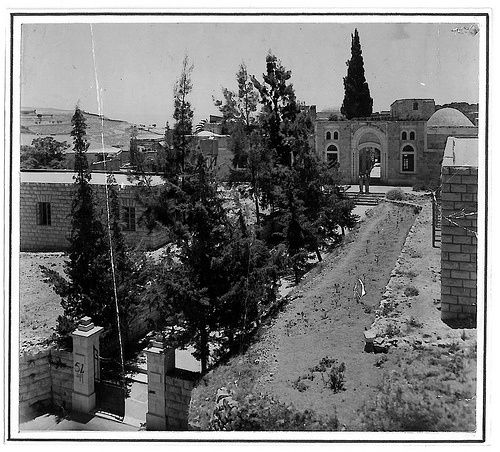
A nearly 700-year-old plot in the heart of Jerusalem that has been flying the Tricolour since 1947 and offering a home to visiting Indian pilgrims has got a fresh lease of life. Foreign minister S.M. Krishna yesterday announced $25,000 (about Rs 13 lakh) in assistance to the Indian Hospice, which has been fighting repeated encroachment attempts and facing financial constraints. Standing on 7000sqm of prime land, the hospice was founded in the 13th century after a visit by Sufi saint Baba Farid. The money Krishna has announced will go towards setting up a Baba Farid Heritage Centre there. The hospice will also be given maintenance funds annually. “We have ensured that the hospice will continue to fly the Indian Tricolour and offer accommodation to Indians visiting Jerusalem,” a foreign ministry source said.

Since 1924, the hospice called Zawiya al-Hindiya has been run as a charitable trust by a family with roots in Saharanpur in Uttar Pradesh. It hosted Indian soldiers during World War II and India-Palestine meetings in recent years. It continues to offer rooms to Indians of all faiths visiting Jerusalem. So far, the hospice has survived with intermittent Indian government and non-government help. But it has been in need of funds for renovation. Its caretakers have, however, spurned offers of help from Israelis and Palestinians for fear of complications that may arise if it loses its Indian character.

Baba Farid, who hailed from Punjab, had visited Jerusalem 700 years ago while on a journey to explore Islam (sic) [Sufi News ed. (most likely) a journey through the Islamic world either during or after his pilgrimage to Mecca]. The then governor of the Ottoman Empire had offered him two rooms to stay. These rooms grew into a holy site for Indian pilgrims over time and expanded into the hospice as it exists today. It is a short walk from Jerusalem’s holiest sites. The hospice has served as a stop for generations of pilgrims who visit Jerusalem on their way back from Haj. During World War II, it served as a camp for the 4th Indian Division of the British Army.

In 2000, it hosted a meeting between then foreign minister Jaswant Singh and Palestinian leader Faisal Husseini. The site was selected after the Israelis reportedly made it inconvenient for the delegations to meet at another spot fixed earlier. The hospice also houses a UN medical centre for Palestinian refugees.

The custodian of the hospice is Sheikh Mohammad Munir Ansari. His father had come from Saharanpur on an invite from the Palestinians. The Ansari family has had to turn to the Indian embassy to prevent encroachments. Their Indian identity has helped them keep away from local politics. The hospice has photographs of Jawaharlal Nehru and Mahatma Gandhi and Khilafat Movement leaders who visited Jerusalem. The hospice went through difficult times when India and Israel did not have diplomatic ties. At that time, non-governmental and individual donations helped it survive.

Officials said things improved after 1992 when India and Israel established diplomatic relations. Then help from New Delhi became regular. Krishna’s funds announcement would keep the hospice safe from people who want to usurp the prime plot it stands on, foreign ministry sources said. Krishna also visited the Yad Vashem Holocaust Memorial and Museum in Jerusalem. He stopped by the cemetery for Indian soldiers, which contains graves of 79 Indian servicemen of World War I.

Monday, January 16, 2012

Takht Gah

By Mohammad Hussain Khan, *At the Urs in Bhit Shah* - Dawn.Com - Karachi, Pakistan; Thursday, January 12, 2012

At the Urs in Bhit Shah

Bhit Shah: Desperate to find her mentally handicapped missing daughter, an elderly Baloch woman, Ganj Bakht, has come to the shrine of Shah Abdul Latif Bhitai.

Despite the weather being bitterly cold, she is staying in the open courtyard of the shrine along with many other women.

“I am a Sawali and have come here to ask Bhitai to find my daughter Shah Bibi,” she said as she wrapped herself in a sheet of cloth to protect herself from the cold which increased in its severity after the sunset of the 13th of Safar – the day the three-day Urs of Sufi poet Shah Abdul Latif Bhittai began.

Her daughter was in her mid 30s when she went missing, she said.

Ameer Hamza, a small restaurant owner in Ghotki district, has brought a goat to be sacrificed on the morning of 14th Safar. “We will distribute the lungar here as a mark of respect to our Murshid, he said, adding that he had been performing this ritual for a long time.

Till Wednesday men, women and children had converged at the shrine in Bhit Shah, a small town in Matiari district, to celebrate the 268th Urs.

The first Dhamal, according to Syed Aneesul Hasnain alias Faqeer Juman Shah, marks the beginning of the Urs which officially opens on Monday morning.

Elderly Fida Hussain Brohi has a different story to share. “I want my son out of prison,” he said. He will pray at the shrine for his son’s release.

Hundreds of thousands of devotees turn up at the shrine to pay homage during the three-day Urs. Many of them who have already come are staying in the courtyard of the shrine and burning firewood to keep themselves warm.

For the fourth consecutive year the devotees will not be able to visit Takht Gah – the abode of Bhitai – because it is in a dilapidated condition. A portion of it caved in three years ago.

“If we allow visitors there it will collapse and might lead to casualties,” said Mazhar Ali Shah alias Nazan Sain, brother of the shrine’s Sajjada Nasheen Syed Nisar Hussain.

He said the antiquities department did not pay attention to it. “We were told that Rs5.5 million was sought from the Auqaf department but it has not been given,” he said.

There are cracks at different places in the shrine’s structure. According to a shrine’s employee, Nawab Lanjwani, a mere touch will cause the affected part to collapse.

The shrine – built around 345 years agoneeds extension to accommodate the large number of devotees. Structure of the shrine needs refurbishment because recent heavy monsoon rains caused serious damage, causing cracks in Lakhi gate, Wazoo Khana and other places.

Some repairs have been carried out in patches and some refurbishing has been done. During recent rains, the roof built with woods started leaking. Devotees cramped into a Musafir Khana built in 1964, but it could not accommodate them.

Annual budget allocation for Lungar in Musafir Khana is quite inadequate. Last year Chief Minister Syed Qaim Ali Shah promised that one fourth of the annual income from nazrana (donations) at the shrine would be allocated for distribution of food among devotees, but according to Mazhar Ali Shah, the promise is yet to be met.

“We pursued it but there has been no progress,” he said.

Picture: A devotee prays at Shah Abdul Latif Bhittai's shrine. Photo: Hussain Afzal/Dawn.com
[Click on the title to the original article with many more photos.]

Sunday, January 15, 2012

Out of the Darkness

By Fayyaz Yaseen, *Religious leaders should impart Sufi teachings to end terror, suggests Sardar Yaqoob Khan* - News Pakistan - Pakistan; Wednesday, January 11, 2012

Religious leaders should impart Sufi teachings to end terror, suggests Sardar Yaqoob Khan

Lahore: President Sardar Muhammad Yaqoob Khan here yesterday at the inaugural session of two-day Syed Hajver Tasawwaf Seminar organized in connection with 968th annual Urs of Hazrat Data
Gunj Buksh at Punjab University, stressed the religious leaders to come forward and impart knowledge on teachings of Sufism to the youth as this could have been effective way of overcoming terrorism and extremism in the society.

The seminar was organized in joint collaboration of Punjab University’s Department of Arabic and Provincial Ministry of Religious Affairs and Auqaf.

With having Provincial Minister for Religious Affairs and Auqaf Haji Ehsan-ud-Din Qureshi as the chief guest, Minister for Mines Ch Abdul Ghafoor and Punjab University Vice Chancellor Prof Dr. Mujahid Kamran, Secretary Religious Affairs and Auqaf Muazffar Mehmood also marked their presence in the seminar.

Speaking on the occasion, the AJ&K president said that the charismatic personality of Hazrat Data Gunj Bakhsh was a model for our guidance as even people of other religions also respected him. He said Data Gunj Bakhsh played a key role in guiding the masses towards the path of peace and love with humanity.

He was of the view that Sufis played foundational role in spread of Islam in the sub-continent. Referring to the present crisis the country was facing despite being an atomic power, he said that the enemies could never harm Pakistan due to the presence of such pious personalities of Sufis.

Adding further to his comments, Sardar Yaqoob said that Kashmiris were not only protecting the ideological boundaries of Pakistan, but they were also ready to sacrifice their lives for the country.

Expressing his views on the occasion, Prof Dr. Mujahid Kamran said that after Prophets, there were Sufis who had taken people out of the darkness of ignorance through their acts and teachings. He highlighted the fact that these were the Sufis who converted hundreds of thousands of non-Muslims to Muslims in the Sub-Continent.

At the end, the Vice Chancellor of the University also underscored the importance of holding such seminars on large scale so as awareness about the lives and teachings of Sufis could be spread among students and the youth.

Saturday, January 14, 2012

Bhinneka Tunggal Ika

By Dwi Lusiana, *SBY Challenges Muslims to Prove Islam is Peaceful* - The Jakarta Globe - Jakarta, Indonesia; Thursday, January 12, 2012

SBY Challenges Muslims to Prove Islam is Peaceful

Malang, East Java: President Susilo Bambang Yudhoyono, speaking on Wednesday at a a large Muslim Sufi order in Bululawang, East Java, called on Muslims to prove that Islam can live in harmony with a pluralistic nation and in a democratic society.

Yudhoyono made the call while opening the congress of the Jam’iyyah Ahlilth Thariqah Al-Mu’tabarah An-Nahdliyah (Jatman), a large Muslim Sufi order in Bululawang, East Java.

“Let us prove to the world that in Indonesia there is no discordance between religion and the state, between Islam and democracy. Islam can answer the various problems of nations and the world. Islam can become a blessing for the universe,” Yudhoyono told the thousands of people attending the congress.

He praised the Sufi’s approach, saying it was religious, calm and educative in broaching problems and therefore a suitable way to deal with disputes, conflicts and clashes in society and the nation.

“We all know that the Indonesian nation is a pluralistic one, it’s wishes and aspirations are numerous and varied,” he said, adding that in such a dynamic environment, clashes and conflict could erupt at any time.

The president called on all Muslims to abide by the four pillars of the state and nation. He cited them as the unitary nature of the country; the state ideology, Pancasila, which puts all religions on equal footing; the 1945 Constitution, which guarantees freedom of religion and of worship; and the national motto Bhinneka Tunggal Ika (Unity in Diversity) .

“As Muslims, let us lead a religious life. As citizens, let us implement those four pillars,” Yudhoyono said.

Yudhoyono’s government has been criticized by rights activists as failing to protect the rights of the minority and the freedom of religion or worship.

The country has in recent years been the site of attacks on minority sects and minority religions, with the perpetrators often receiving only light sentences, if any.

Yudhoyono, who was accompanied by his wife Ani, Religious Affairs Minister Suryadharma Ali, and other ministers, officials and religious leaders, is touring East Java for four days.

Abdul Mujib Sadzili, the secretary of the congress’ organizing committee, said that 10,800 people had registered for the event, but said that many more people were taking part in it.

Jatman is one of the key Sufi orders in the Nahdlatul Ulama, the country’s largest Islamic organization, which has about 40 million members. The event was held at one of its boarding schools.

Picture: President Susilo Bambang Yudhoyono, speaking on Wednesday at a a large Muslim Sufi order in Bululawang, East Java, called on Muslims to prove that Islam can live in harmony with a pluralistic nation and in a democratic society. Religious Affairs Minister Suryadharma Ali is pictured on the right. Photo: Antara Photo.

Friday, January 13, 2012

Searching for “India”

By Staff Writer, *‘I feel we are all aliens’* - Deccan Chronicle - India; Monday, January 9, 2012

‘I feel we are all aliens’: Playback singer and musician Rabbi Shergill, who was in Hyderabad for an unplugged show, says that he is still searching for “India” in Indian music.

Rabbi, who rose to limelight with Bulla Ki Jaana in 2005, is among the new wave of artistes who blend Western influences with Indian roots. He incorporates Sufi and Punjabi elements with rock in his music.

“Music is about adapting influences to your context. It’s about putting a little bit of India in it, like adding a little bit of our spices,”

says the musician influenced by the likes of Led Zeppelin.

But the disappointment is evident when Rabbi speaks of the current music trends. “Indian bands and musicians need to grow beyond Western influences. Most of our artistes are English-speaking elites who use hard-core Western instruments like the guitar. I am waiting to see a band that uses all Indian instruments and all Indian elements. I am in search of ‘India’ now.”

But this doesn’t mean a rigid classical form limited to Kabir bhajans and spiritual content, he cautions. The music still needs to be new. Rabbi does admit that it is the price one pays for a colonial past and an education system that keeps people away from their own languages.

“Sometimes, I feel we are all aliens. Commerce dictates how we live and India has become the receptionist of the world and we have a fragmented collective psyche while fighting a collective war.”

After his stint as an independent composer, Rabbi moved to Bollywood and worked on movies like Delhi Heights. He, however, does not believe that Bollywood clips the composers’ artistic wings in any way.

“There is enough creative freedom in the industry. Take A.R. Rahman, Shankar Ehsaan Loy, they are all bringing out cutting edge sounds,” he says.

I’m No Sufi Singer

By Staff Writer, *Singer-songwriter Rabbi Shergill* - IBN Live - India; Tuesday, January 10, 2012

Singer-songwriter Rabbi Shergill: A graduate from Delhi’s Khalsa College, Rabbi was part of the local hard-rock music scene in his graduation days. Inspired by Led Zeppelin, Aerosmith and Jimmy Page, Rabbi started writing his own songs and made a few demos too.

“I grew up in the 80’s, when the whole concept of western was like a zenith and one could not escape being a wannabe.”

He saw Springsteen perform in Delhi and after that, he says, “I always wanted to be him.”

Rabbi dropped out of his management course in the first year itself. “I went to school just to please my mother and like all the Punjabi parents, even she had academic aspirations for me. I went along with it but deep down I hated it. And so, I dropped out of it and started creating music,” he recalls.

I’m no Sufi singer

Defining his music, Rabbi clarifies, “Sufi is a misnomer for my music. I have just sung one Sufi song! My music is ‘rock and roll’ and ‘funk’ and I always keep thinking of ways to implement the funk into them.”

His latest album ‘Ganga’ also has a few of these elements. The album is all about a guy singing to a girl and telling her not to be deterred by the world and do her own thing. Listing his contemporary favourites, he reveals,

“I love Shruti Haasan, I think she is a decent musician. I really like John Mayer. Shankar-Ehsaan-Loy’s music and a Bengali singer called Mou.”

Commenting on the rock culture scene in India, he opines, “Kids at college just learn to play guitar and form rock bands, which stick for a year or two. Then they either split or get into Bollywood. A lot of their music is not compelling, which is why they don’t last long.”

Thinking out of box

Explaining his creative process, he says, “I’m constantly trying to understand how I can step out of my own box. I think about all the things I want to talk about, get an idea and then somehow, magically some line appears. You can have a general idea about how to get there, but ultimately, it’s just pure magic.”

Rabbi’s flair for poetry can be traced back to his mother, who is a Punjabi poetess. “Her poetry is amazing and yes, there’s a lot of poetry in my songs, which I would like to be considered as something that aspires to be poetry,” he explains.

Rabbi has given music for a Bollywood film, ‘Delhi Heights’. Though he loves composing original music tracks, he says performing has always been his first love. “Making music for films is a different area and I like doing it. But, performing will always be my first love. It depends on how things work out,” he adds.

Stint with Dewarists

Sharing his experience on the music show called the ‘Dewarists’, Rabbi recalls, “It was a fantastic experience and singing with Papon was an amazing experience. It was set in a very beautiful location in Kaziranga. I guess it will be one of the most beautiful experiences of my life.”

And like the romantics of old, he believes we are increasingly living in an artificial world. “We have to get out on to the streets, live in nature and discover ourselves. Big cities act like a pump that drains out everything. It is very irreconcilable,” he points out.

Music and drugs

Expressing his views on musicians, who die of drug overdose, Rabbi says, “We have had many great musicians in the past, who have died of drug overdose, which is really sad. Even I need a relaxed state of mind to write songs. I like my scotch and have never done drugs. I think it’s too much work.”

Thursday, January 12, 2012

Always Mentioning God

By Zehra Onat, *Revnak: A Turkish Sufi music group that shines the spotlight on women* - Today's Zaman - Istanbul, Turkey- Sunday, January 8, 2012

Revnak: A Turkish Sufi music group that shines the spotlight on women

Sufi music (Islamic religious music) has been perceived as a man’s domain -- all semazens (whirling dervishes), the most renowned composers and the most successful performers of Sufi music have traditionally been men.

This understanding is surely the reason that women have taken a back seat in Sufi music. However, for eight years a group has existed that aims to change this perception. The name of the group is Revnak.

Revnak is a group that has its origins in the Mevlana Education and Culture Association and was founded in 1999. While the objective of the association was to serve as a Sufi music and sema (whirling) center for males, things changed in 2003.

Among the founders of this group was Birsen Çakmut, a Turkish classical music artist. She decided to organize a music group that only consisted of women. To this end, she got in touch with friends from her time as a student at the İstanbul University State Conservatory. Next she contacted her fellow artists and, one by one, she gathered the people who love Sufi music.

Revnak comprises 15 people. Six are saz (a stringed instrument) players and nine are singing artists. Almost all of them were educated in a conservatory.

This high level of musical knowledge enables them to select whichever song they like and work on it individually. They present their songs in the various Mevlevihanes (a lodge of the Mevlevi dervishes), in events organized by municipalities and also in concerts. A sema ritual takes place on the stage while they sing.

Although Çakmut points out that the interest in Sufism has increased in recent years, she mentions that Sufi groups consisting of women don’t draw much attention. Çakmut thinks this is partially because of their gender and partially because some people disapprove of them for making Sufi music. Çakmut states that she would prefer giving a concert to viewers who are only women, if she had the choice.

Aynur Demir is the group’s neyzen (reed flute player). She came to know Sufi music when she was 30 years old. At the time she was studying at university, which she began attending as a mother of two. She still has the same feelings that she had the first day she heard the sound of the ney (reed flute).

On the year that Demir entered the faculty of divinity of Marmara University she heard the sound of a ney coming from a classroom and followed the sound upstairs. She could not stop herself from standing in the doorway and listening to it. She has now been playing the ney for 15 years.

Demir describes what it is like to play the ney: “There is peace in this music. I feel as if I’m praying to God relentlessly. It is as if my heart is always mentioning God.”

Another member of Revnak is Lale Duğa. Her family supports her interest in Sufi music and she has a very strong connection with the music. She plays the classical kemençe (a small three-stringed violin) and she has been a music teacher for 17 years.

In 1982, Duğa began playing the classical kemençe, which produces the melodies that give soul to Sufi music. Aside from minor breaks, Duğa has played the kemençe ever since.

Seda Tüfekçioğlu is the kudüm (a small double drum) player, which means bright and shiny. Tüfekçioğlu learned to play the kudüm in the conservatory of the Bursa Metropolitan Municipality while she was studying chemistry at Uludağ University. After she returned to her hometown of İstanbul, she continued playing the kudüm.

After working as a chemist for three years in İstanbul, she received her master’s degree and continued to pursue her PhD in the department of religious music of Marmara University’s faculty of divinity.

Tüfekçioğlu mentions that she has become much closer to God and acquired a very different mood thanks to Sufi music. She said that ever since she began playing Sufi music and performing music with divine melodies that remind one of God, she performs much better and with deep feeling.

Picture: Group Revnak. Photo: Sunday's Zaman.

Sunday, February 05, 2012

‘Tansen al Zaman'
No comments:
By Syeda Farida, *Remembering Sufi mystic Hazrat Inayat Khan* - The Hindu - India; Sunday, January 29, 2012

Remembering Sufi mystic Hazrat Inayat Khan

Hyderabad: February 5 marks the Urs of Sufi teacher Hazrat Inayat Khan that will be held at his mausoleum in Delhi. As a part of this event, special Sufi trails are being organised by international tour operators for followers of this Indian mystic who took Sufism to the West.

Abu Hashim Madani's dargah in Purana Pul and Aastan-e-Kaleemi in Tolichowki (both in old Hyderabad) — mausoleums of the great teachers of Hazrat Inayat Khan feature prominently on the list.

It was in Hyderabad that the musician became a spiritual guru. His grandson Zia Inayat Khan, in his work A Pearl in Wine: Essays on the Life, Music and Sufism of Hazrat Inayat Khan, chronicles Hazrat Inayat Khan's stay in the city.

A noted veena artiste and composer, Hazrat Inayat Khan was patronised by the sixth Nizam, Mehboob Ali Pasha. He received rave reviews from officials in the royal court and the lofty title of ‘Tansen al Zaman' [Tansen of the Time] from the Nizam himself. During his stay in Hyderabad, he penned Minar -i-Musiqar — a treatise on music and had plans to open his own music school on the lines of the Gayanshala in Baroda started by his maternal grandfather Mawlabakhsh, a maestro in Hindustani and Carnatic music traditions alike.

Many would not know that Noor Inayat Khan, the World War II hero executed by the Germans in the Dachau Concentration Camp, was the daughter of Hazrat Inayat Khan and Ora Ray Baker.

Life changing meeting

A chance meeting with his spiritual teachers, Abu Hashim Madani and Syed Mohammed Hasan Jeeli Kaleemi, the latter a Sufi master in the then Tolichowki village, changed his life though.

“Madani was a follower of my grandfather as was Hazrat Inayat Khan. Inayat Khan delved into Sufism during his stay in Hyderabad,” said Syed Mohd. Rasheed-ul Hasan Jeeli Kaleemi, popularly known as Pir Rasheed — the only living descendant of the Chishti order founded by his grandfather Syed Mohammad Hasan Jeeli Kaleemi.

“Hazrat Inayat Khan travelled extensively. He held summer school on Sufism in Suresnes, France and went to Russia and England. The Sufi order founded by him there is now called the Sufi Order International, headquartered in the U.S. He returned to India in 1927 and died after a brief illness. His body was laid to rest near the dargah of Nizamuddin Auliya. His son Vilayat Inayat Khan was my father Syed Mohd. Fakhrul Hasan Jeeli Kaleemi's disciple,” recollected Pir Rasheed, as he got ready to leave for Hazrat Inayat Khan's Urs.

Today Hope Project, started by Vilayat Inayat Khan, takes up community health, livelihood and education-related works in the slums near Hazrat Nizamuddin dargah keeping Hazrat Inayat Khan's Sufi philosophy as a guiding principle.

But sadly for the city that saw Inayat Khan's transformation from a musician into a mystic and then a mureed or disciple, his teacher Madani's tomb in the old city lies in a decrepit condition with the history unheard of by many in its vicinity.

Picture: A portrait of Hazrat Inayat Khan. Photo: Special Arrangement/The Hindu.
Read More

Saturday, February 04, 2012

Attitudes Are Changing
No comments:
By Noah Blaser, *Alevis look to European Court of Human Rights for cemevi recognition* - Today's Zaman - Istanbul, Turkey; Sun, January 29, 2012

Alevis look to European Court of Human Rights for cemevi recognition

In a bid to gain official governmental recognition for Alevi houses of worship, a prominent Alevi civil group has petitioned the European Court of Human Rights to help end what it defines as “decades of official discrimination” against the 6-12 million strong minority community.

In an exclusive interview Thursday with Sunday’s Zaman, İzzettin Doğan, president of the Alevi association Cem Foundation, said that he had officially petitioned the European Court of Human Rights in the wake of an Ankara court ruling earlier this month that found “no legal basis” for the recognition of Alevi places of worship, known as cemevis, in existing Turkish law.

The petition is the latest development in the frustrated quest of Alevis to gain recognition for cemevis in a Sunni-majority nation. “This issue cannot be left to the opinion of the government. This is a basic human right; it is the right to freedom of religion,” said Doğan.

Alevis practice a form of Shiite Islam that mixes Sufism with ancient traditions of Anatolian folk culture into a form of worship largely unique to present-day Turkey. Just what defines Alevism, however, varies widely within the religious community. “Some see it as simply a different practice of Islam; others see it as a completely different religion. Others say it is the very essence of Islam,” İstanbul Şehir University assistant professor of social sciences Talha Köse told Sunday’s Zaman on Thursday.

The religion’s unorthodox practices have for years made it the target of a state that has left Alevism out of text books on religion, has constructed mosques rather than cemevis in Alevi villages and has refused to recognize Alevis as a religious community distinct from orthodox Islam. Alevism has technically been banned in Turkey since the 1925 Closure of Dervish Lodges Law, which shuttered the country’s dervish and Sufi orders as the early republican state sought to limit the reach of both orthodox and non-orthodox forms of Islam.

Despite decades of state opposition to the Alevi community, however, Doğan’s petition to the European Court of Human Rights comes at a time when both Alevi foundations and voices from within the government say that attitudes are changing and a historic turn for Alevi rights may be nearer than imagined. “Mentalities are definitely changing, and the flow of change is going to be for the benefit of cemevis,” said Şule Toktaş, an assistant professor at Kadir Has University and coauthor of a recent Foundation for Political, Economic and Social Research (SETA) report on Alevism and the Turkish government.

Government reforms: built to pass?

If Alevism remains unrecognized by the state, it will certainly not be for a lack of talk. In 2009, the Turkish government announced an “Alevi opening” and made plans to hold a number of informal talks that would bring together prominent members of the Alevi community and high-ranking government ministers.

Sunday’s Zaman predicted in 2009 it was very likely after the year’s round of talks “Alevi dedes, or spiritual leaders, [would be] included on the payroll of the Religious Affairs Directorate and the Culture Ministry,” and further stated that cemevis might soon be listed “as places of worship whose utility bills are paid for by the state.”

2009 even saw the visit of President Abdullah Gül to a Tunceli cemevi -- the first president to ever visit an Alevi place of worship -- which was seen as an “implicit recognition” of the status of cemevis.

Yet Doğan and other Alevi leaders have said that talks, and the opening in general, have so far lacked concrete steps. “We talked with the [Labor and Social Security Minister], Faruk Çelik, several times. The legal status of cemevis was among the paramount topics and most officials from the Directorate of Religious Affairs agreed to the recognition of cemevis as houses of worship in legal terms,” Doğan said. “Yet when it comes to taking action, no one appears to dare because of the political pragmatism concerning Sunni votes.”

Doğan’s assessment of a government unwilling to reform is also indicative of the prevailing opinion in the Alevi community that the Directorate of Religious Affairs, which long allowed the state to regulate Islam in Turkey, is committed to maintaining Sunni power at the expense of Alevis.

“The majority of Alevis are against any effort by the Directorate of Religious Affairs,” said Şehir University Professor Köse. “They believe it doesn’t serve them -- they believe it is the main institution of Sunni power in Turkey. I don’t think that changing its policies will bring any positive change. In fact, with the announcement of the ‘Alevi opening,’ perhaps as many as two-thirds of Alevis thought the move was yet another escalation by the directorate against Alevis.”

The Religious Affairs Directorate neither allocates funds for Alevi activities nor pays the salaries of Alevi religious leaders. In effect, the directorate’s budget is reserved for the Sunni community.

Members of Turkey’s Alevi community also acknowledge a widespread loathing for the ministry that decades of resentment has created. According to prominent Alevi rights activist Hasan Saltık, such convictions have led to divisions in the community and hindered its ability to forward its own rights agenda. “There has long been a rift in the Alevi community between those who are loyal to the establishment and those who oppose it. It has prevented the improvement of rights and, in truth, the state knows this and exploits it,” he told Sunday’s Zaman.

Any attempt to reverse such suspicions among the Alevi community regarding the state may mean that major steps will be needed in the near future. “The state can do one thing right now to resolve the issue -- that’s a new constitution which protects Alevi rights, and this includes the committed protection of Alevis in years to come,” said professor Köse.

Others are more optimistic. “Gas costs and other expenses for cemevis will likely in a year’s time be covered by the Directorate of Religious Affairs, as it tries to adhere to a recent request from the European Commission. Things and mentalities are going to change,” said Toktaş.

Beyond grassroots

If progress for Alevis has stalled at the national level, however, in recent months it has seen impressive gains in province-by-province campaigns to win municipal recognition of cemevis.

In early January a request was submitted to the Mersin provincial council by a local Alevi advocacy group to request compensation for utility expenses from the municipality. In a remarkable show of solidarity, the Mersin council ratified the proposition unanimously. Even though Mersin Mayor Hasan Güzeloğlu voted down the proposition in the days following, numerous Alevi civil groups around Turkey soon announced plans to petition their own municipalities.

On Jan. 18, the Şanlıurfa branch of the Alevi Cultural Foundation officially requested to have some municipal funds to cover the cost of a newly constructed cemevi, a request the provincial foundation’s head, Kemal Atalar, says Şanlıurfa’s municipal council and mayor have looked upon “warmly.”

“The motion [for cemevi recognition] did not pass the governor in Mersin. But we don’t think there’s a chance of [a rejection] happening this time. We as Alevis show respect to all faiths; now we want others to show respect to our beliefs,” Atalar told the İhlas news agency on Wednesday.

But such steps, though encouraging, may not be enough for lasting change, say activists. “The status of cemevis is not the sort of thing which can be solved province by province on account of some good will measures. It warrants a serious decision from the government,” said Alevi activist Cafer Solgun to Sunday’s Zaman.

With Doğan’s appeal to the European Court of Human Rights, such change may be on the way. “I am sure that the court will decide in our favor; there can be no question when it comes to such abuses,” says Doğan.

If the European Court of Human Rights does mandate change, it will likely be a welcome step for a religious community which has for so many years found itself at odds with the state and Sunni society.

Picture: Cemevis have become the focal point of an Alevi activist group’s attempt to win broader rights from the government. The group says its attempt to win official recognition for cemevis is emblematic of the wider struggle of the Alevis. Photo: Sunday’s Zaman, Kürşat Bayhan.
Read More

Friday, February 03, 2012

A Deep Impact
1 comment:
By Professor Hamid Naseem Rafiabadi, *Upcoming Event: A three day international seminar on “Shah-i-Hamadan* - Kashmir Watch - Brussels, Belgium; Saturday, January 28, 2011

A three day international seminar on “Shah-i-Hamadan’s Contribution to Learning and Society” Insha Allah, on 13-15 March 2012 in the University of Kashmir, Srinagar, J & K, India.

Sayyid Ali Hamadani (RA), commonly known as Shah-i-Hamadan (Lord of Hamadan) was a remarkable personality of the 14th century Muslim world. He was a profound Sufi scholar, committed social reformer, distinguished political theoretician and a dynamic preacher of Islam.

Born in 1314 AD at Hamadan (West Central Iran) Sayyid Ali Hamadani got his early education from his maternal uncle, Alau-ud-Din, learning the Quran and other elementary Islamic sciences and was also introduced to Shaykh Muzdaqani and Taqi ud-Daula Ali Dusti (the disciples of celebrated saint Alau-ud-Daula Simanani); from them he attained more training in the knowledge of Islamic spirituality (tasawwuf).

After these accomplishments Sayyid Ali travelled extensively to a number of countries of the world for the preaching of Islam as well as interacting with the other leading Muslim Sufis and scholars of his time. This endowed Sayyid Ali with a charismatic personality of Islam who came to Kashmir in 1373 A.D. along with other seven hundred religious and artistic figures (sadat) and made a deep impact upon the people of Kashmir.

Having evolved himself as an erudite scholar and saintly (Sufi) figure of his times, Mir Sayyid Ali made a valuable contribution to the preaching and teaching of Islam and introduced social and ethical reforms in the society.

This is propounded in his works (rasa`l) whose number is more than one hundred and even biographical literature about him also has documented it considerably.

Among them Zakhirat ul Muluk, Mirat ul Taibin, Siyr-ul Talibin, Fatutiyah, Minhaj-ul Arifin, Risala Muktubat Amiria, Hal al-Fasus, Risalah I`tiqadiyah, al-Nasakh wa al-Mansukh fil Quran al-majid, Insan-i-Kamil and Sharah Asma-al-Husna are worth mentioning.

Some of these are brief while the others are of detailed nature and chiefly deal with the themes of Tasawwuf (mysticism) Imaniyat and Ibadat (Beliefs and Ritual Practices), Scholastic and religious sciences and Social and political ethics.

All this constitutes Sayyid Ali's distinguished contribution in promoting Islamic learning, knowledge and social reform and renders him a special place in the intellectual and civilizational history of Islam.

Not only a common man was made acquainted with the religious fundamentals, but men showing sincerity to religion were exposed to its exoteric and esoteric depths by following the path of saluk and the elites and rulers were specially approached and given the counsels of adhering to piety and social justice of Islam.

This is evident throughout his tours to various countries particularly through his influential role in reforming Kashmiri society on religious norms.

Nevertheless the contribution from Sayyid Ali Hamadani to the promotion of Islamic learning, sciences and society is valuable as it made lasting imprints on the world societies in general and Kashmir society in particular.

To examine and discuss the nature of these dimensions of Sayyid Ali Hamadani, our Institute is organising a three day international seminar on “Shah-i-Hamadan’s Contribution to Learning and Society” Insha Allah, on 13-15 March 2012 in the University of Kashmir, Srinagar.

We are expecting participation of eminent researchers on Syed Ali Hamadani(RA) and Sufism from various countries like Tajikistan Uzbekistan, Turkey, Malaysia and Iran apart from some European researchers, as we are receiving encouraging feed backs from all of them regularly through internet.

Moreover a galaxy of scholars from Aligarh International Islamic University Malaysia, Muslim University, Delhi University, Jamia Millia Islamia, Jamia Hamdard New Delhi, JNU New Delhi, Maulana Abul Kalam Azad National Urdu University Hyderabad, Osmania University Hyderabad, Hyderabad, Mumbai University, Darul Huda Kerala, Islamic University for Science and Technology Awantipora, Darul Uloom Qasmia Srinagar, etc. are expected to present their research papers during this three day international seminar, first of its kind in Kashmir.

The international seminar is being attended by eminent scholars from representatives of research foundations like Shah-i-Hamadan Research Foundation (SHRF) Kashmir etc. etc. and very prominent scholars and ulama of Kashmir.

We have sent invitation letters to all embassies of Islamic countries and have tried to reach out to maximum people in this regard to make this conference a historical one and academically very fruitful event.

One of the important features of this conference will be that about twenty manuscripts in Arabic and Persian authored by Shah-i-Hamadan (RA) are being translated into English and Urdu, and the gist of the contents of which will be presented in form of papers by the researchers during the seminar.

I have been fortunate to procure about 45 copies of manuscripts of Syed Ali Hamadani (RA) in Arabic and Persian for our departmental library last year; these manuscripts were found in London libraries Tashkent, Rampur AMU Aligarh Tonk and other places and are now safely placed after proper binding in a section of our library in Ghosh-i-Shah-i-Hamadan (RA).

We invite the papers from the scholars/experts in the concerned fields across the world for contributing a paper to the seminar relating to any one of the following broader themes of the topic.

The abstract of the paper comprising 150-250 words must reach to us by or before 10 February 2012 and full paper (4000-5000 words) up to 20 February 2012 at shseminar2012@gmail.com, or Director Prof. Hamidullah Marazi, Email: -hamidnaseem@gmail.com ,Contact No: -9419061177,Co-ordinator:Dr. Abdul Rashid Bhat ,Email: -dr_a_r_bhat@rediffmail.com ,Contact No: -99065176987

Broader Themes of the Seminar
1. Social Thought
2. As a Reformer of Society/A Reformist Thinker
3. Political Thought/Shariah (Islamic Law)
4. Tasawwuf (Sufism)
5. Islamic Learning/sciences (Ulum al-Quran, Hadith, Fiqh)
6. Intellectual Legacies of Islam: Ghazzali and Shah-i-Hamadan
7. Sufi Legacies of Islam: Ibn Arabi, Shah-i-Hamadan, Shaykh al-Alam and Shaykh Hamza Makhdum
8. Legacy of Islamic Political Thought: Nizam ud-Din Tusi and Shah-i- Hamadan
9. Economic Development
10. Shah-i-Hamadan and Iqbal
11. Relevance of Shah-i-Hamadan’s Thought in the Contemporary Society
12. Critical Study of Shah-i-Hamadan’s Works
13. Critical Study of Academic Works/Writings on Shah-i-Hamadan

[Picture: University of Kashmir.]
Read More

Thursday, February 02, 2012

A Huge Scope
No comments:
By Anubhuti Vishnoi, *A tourist circuit for every religion, and one that integrates all* - Indian Express - India; Wednesday, January 25, 2012

A tourist circuit for every religion, and one that integrates all

Seven new tourist circuits will be developed across the country to facilitate travel to and stay at religious places. Work has already begun to prepare detailed project reports for Sufi, Buddhist & Jain, Christian, Sikh, Hinduism and Sarva Dharma circuits.

The Sufi circuit will include Delhi, Agra, Fatehpur Sikri, Bijapur, Shirdi, Aurangabad, and the Awadh region, besides the dargahs in J&K, Punjab, Haryana and Uttarkahnad.

The Christian circuit will have the churches of Goa, Kerala and Tamil Nadu.

The Sarv Dharma Circuit, to promote national integration, will be aligned along Tirupathi-Chennai-Velankanni-Nagoor and Vaishnodevi - Golden Temple-Sacred Heart Church (Delhi)-Nizamuddin.

“India is home to a number of religions and there is a huge scope in terms of boosting tourism to religious places. Our aim is to facilitate a packaged tour like experience to tourists complete with stay and entertainment options. We have already engaged consultants to work on these circuits and hope to engage state governments in the project,” Tourism Minister Subodh Kant Sahay said.

Sahay’s ministry has already held a round of discussions on the Sufi circuit with industry stakeholders and some Sufi exponents, sources confirmed.

The ministry wants projects under this scheme to follow a comprehensive approach incorporating all facilities required by a tourist.

The Ministry of Tourism has already identified 35 destinations for Phase I and will cover another 89 in Phase II.

Consultants engaged by the ministry will help identify gaps in infrastructure and amenities, assess investment requirement and possible source of funds and also evolve business models for investment and operations.

Picture: Nizamuddin Awliya with Three Attendants; Folio from a Khamsa (Quintet) by Amir Khusraw Dihlavi; ca. 1450 or earlier; Sultanate period; Opaque watercolor and ink on paper H: 32.7 W: 24.2 cm. Photo: Wiki.
Read More

Wednesday, February 01, 2012

Weekend of Exploration
No comments:
By Urban Dervish, *Sufi Teachers Share Experiences of the Soul's Journey, Oakland CA* - Baraka Institute - CA, USA; Saturday, January 28, 2012

Becoming Fully Human: Sufi Teachers Share Experiences of the Soul's Journey. Cemalnur Sargut, Robert Abdul Hayy Darr, Camille & Kabir Helminski

Friday Evening March 23-Mid-day Sunday March 25
ICCNC (Islamic Cultural Center of Northern California),
1433 Madison St Oakland, CA 94612-4314

Cemalnur Sargut, one of the most inspired and respected spiritual teachers of Turkey, will make a rare appearance in the United States. Through her very being she is a living example of Divine Love and Wisdom.

Robert Abdul Hayy Darr, describes himself as "a teacher of Sufism for an
ordinary life." He studied the Afghan Sufi path of the late Ustad Raz Mohammed Zaray, and is the author of The Spy of The Heart, and the translator of Shabistari's Garden of Mystery.

Shaikh Kabir and Camille Helminski of the Mevlevi Tradition founded by Rumi, are internationally respected Sufi teachers and authors. Their most recent book is The Rumi Daybook (Shambhala, 2012).

Weekend of exploration: talks, music, spiritual practice, and friendship.

"The purpose of the Baraka Institute is to bring together authentic spiritual teachers from various lineages to explore all aspects of spiritual life and practice. We believe humanity is at a defining moment, facing unprecedented challenges, in need of traditional wisdom, as well as a fresh perspective on how that wisdom is to be lived today." ~Kabir Helminski

Friday night 8-10. "Introduction: A Spirituality Adequate to the Times."
Saturday, Registration 9-9:30, Sessions: 9:30-6 PM. Lunch provided.
Sunday, 9:30-12:30 Final Sessions and Conclusion.

All inclusive registration: $165 (at the door).
To register in advance on the Internet: $150.
Read More

Tuesday, January 31, 2012

Standing Ovation
No comments:
By Sarah MacDonald, *Sarmini, whirling dervishes cast musical spell at ROHM* - Times of Oman - Muscat, Oman; Tuesday, January 24, 2012

Sarmini, whirling dervishes cast musical spell at ROHM

Muscat: In a concert that lasted over three hours instead of the slated hour, Syrian singer Omar Sarmini, accompanied by whirling dervishes, impressed the largely Arab audience Friday night at the Royal Opera House Muscat (ROHM).

Sarmini is a master of tarab, Arabic music, which aims to reach people on an emotional level. He studied Quran recitation from a young age, and religion heavily influences his music, as does poetry. His passion for the music and topics of which he sings was evident when he performed, as he often had a smile on his face and seemed inspired to go well beyond the set time.

For many Western patrons of the ROHM, Sarmini’s music may not have been familiar, and given that much of it sounds repetitive, some seemed to lose interest rather quickly.

Yet, whether or not one understood it, Sarmini transcended the language barrier and it was clear that he was singing the most beautiful verses of the Holy Quran, and poetry about nature and love. One also couldn’t help but be impressed with Sarmini’s clear, strong voice, and by his ability to hold long notes without catching his breath.

Sarmini was accompanied by 13 musicians, some of whom played traditional Arabic instruments including the oud, kanun, rek (tambourine), nai (flute), and tabla (drum). All of the musicians faced the audience, which was lovely since one could watch their techniques. The tabla player was especially fun to watch because at times he would flip the instrument in the air, catch it and continue playing.

It was wonderful to see traditional Arabic instruments being played at the ROHM, but unfortunately at times the oud and kanun were inaudible because the drums, string instruments and chorus overpowered them. When the percussion section was silent, it was lovely to hear the tinkling of the kanun and beautiful oud.

Perhaps, the ensemble would have been better off without microphones, especially considering that the ROHM has state-of-the-art acoustics.

Joining Sarmini and his ensemble on stage at the end of each act was a group of whirling dervishes, the Mawlawi Darwhich dancers. The Sufi dancers are supposed to spin to the music, much of which is based on the poetry of the mystic Sufi Rumi, until they are in a spiritual trance that they believe helps them connect to God.

Initially, five dancers appeared on stage dressed in black robes with their arms folded over their chests. They stood on the stage for several minutes as the anticipation built before they began slowly spinning. As the music sped up, so did the dancers, their feet rapidly flashing in circles under their robes.

At the end of the second act, the dancer reappeared, eagerly awaited by the audience. This time their black robes were open, a sign that they were closer to rebirth and religious understanding. As the music began, the dancers, now six on stage, began swaying and tilting their shoulders. After several minutes of the same movement, they took off their black robes, revealing their big, long white skirts underneath.

Again, they started spinning slowly, but as they got faster, their skirts opened up into wide circles floating out around them. They spun faster and faster, opening their arms, touching their shoulders and folding their arms over their torsos before repeating those movements.

They were really fascinating and almost mesmerising to watch, but sadly they seemed too choreographed and not emotional enough. Their movements didn’t come across as personal or very inspired, but clearly staged since their arms were all in sync.

When Sarmini, his ensemble and the dancers finally finished, there was an immediate standing ovation, so clearly this first Arabic concert for the second half of the ROHM’s inaugural season was a hit, especially among the Arab fans!
Read More

Sunday, January 29, 2012

I Am a Mouride
No comments:
By Mark John and Diadie Ba, *Insight: Would-be presidents court Senegal's holy kingmakers* - Reuters U.S. Edition; Monday, January 23, 2012

Insight: Would-be presidents court Senegal's holy kingmakers

Touba: It is not everyday that Senegal's octogenarian president Abdoulaye Wade lets the television cameras into his bedroom.

But Wade, seeking a new term in next month's election, was quick to usher them in when his visitor was Serigne Abo Mbacke, a leader of the 129-year-old Mouride order of Islam which counts millions of devotees in his West African country.

The ensuing images of two men demurely perched next to each other on a king-size divan may not have made great television. But the photo opportunity was not lost to voters as proof of the intimate link between Senegal's Islamic "Brotherhoods" and the body politic of this Muslim but staunchly secular state.

"I have never hidden that I am a Mouride - anyone who votes for me knows they are voting for a Mouride," Wade told Reuters after this month's meeting at a plush residence in Touba, the central town that is the Mourides' spiritual home.

"Any power must have a popular base, and as it happens I benefit from this very broad popular support."

The Mourides are one of four main Muslim communities who have helped shape history in one of Africa's most stable democracies and whose leaders - known as "marabouts" - are being courted by politicians of all hues before a February 26 election.

A religious, economic and social force with no real parallel elsewhere, Senegal's Brotherhoods are a pillar of the moderate Sunni Islam espoused by over 90 percent of the nation, yet co-exist comfortably with minority Christians and other faiths.

Far removed from Islamist insurgents like Boko Haram of Nigeria, the Brotherhoods accept Senegal's secularism and do not use their influence to press demands for Islamic sharia law.

Their deep-rooted pacifism is one factor why there is little local sympathy for al Qaeda, even as it establishes bases in neighboring Mauritania and Mali. In 2001, Senegal's marabouts condemned the 9/11 attacks on the United States as un-Islamic.

Their forte is commerce, be it running stalls in the sprawling open-air markets of the capital Dakar, or as entrepreneurs using contacts to tip a construction deal. A growing diaspora does everything from import-export in New York to hawking tourist trinkets under Paris' Eiffel Tower.

Now, as Senegal approaches an election watched nervously abroad as the latest test of democracy in Africa, the coming weeks will show how much influence they have on this rapidly evolving society - and whether they are ready to use it.

Wade's critics have branded his decision, at 85, to stand for a third term as a flagrant breach of constitutional rules limiting him to two mandates.

Anger at his attempt last June to overhaul election rules triggered some of the worst street clashes with security forces seen in Dakar. Whether Senegal is now able to avoid further unrest may depend, at least in part, on its marabouts.

ELECTION COMES TO TOUBA

A heavily-set figure in a pristine white robe and with an earpiece connected to his Apple iPhone, Cheikh Abdoul Ahad Mbacke Gainde Fatma has seen more Dakar politicians in the last 24 hours than most Senegalese will see in a lifetime.

Ahad Mbacke is the great-grandson of revered Mouride founder Cheikh Ahmadou Bamba Mbacke and heads the organizing committee for the "Grand Magal," the annual Mouride festival which draws millions to Touba for a week of praying, eating and revelry.

His family compound a short walk from Touba's Great Mosque is as much a blend of tradition and modernity as he is. In the main yard, off-road vehicles jostle for space with live sheep and a camel tethered close to the pots of an outside kitchen.

"Virtually all the candidates have come here. A politician who is not on good terms with Touba cannot govern this country," Abdoul Ahad, cross-legged on the floor, says matter-of-factly.

A quick roll call of visitors suggests he has a point.

Aside from Wade himself, his prime minister, finance minister and interior minister attended Touba ahead of Magal, as did Dakar's Socialist mayor Khalifa Sall - not a candidate this time but widely tipped as a future presidential hopeful.

Ex-premiers Idrissa Seck, Macky Sall and Moustapha Niasse, all standing for election next month, have put in an appearance at Touba, along with world music star Youssou N'Dour, whose last-minute entry into the race has made world headlines.

It would be wrong to say the VIP visitors are here purely to fish for votes. Many have come back to Magal year after year, while in N'Dour's case, his strong Mouride faith inspired his Grammy-winning 2004 album "Egypt."

Yet as current Prime Minister Souleymane Ndene Ndiaye steps out of his meeting with senior Mourides, there is no missing the unmistakable sight of a politician on the campaign trail.

"It is a time for meditation but also for prayer. And so we pray to God to help us secure a first-round victory for our candidate Abdoulaye Wade - if God wills it," Ndiaye, speaking outside Touba's Grand Mosque, told reporters.

THE VOTE ORDER FROM ON HIGH

As with Wade's bedside encounter with the marabout, the Magal timing and venue of Ndiaye's soundbite will hit an instant chord with Senegalese voters who have seen the hand of the religious leader at work in their country's defining moments.

Even as the hour of independence struck, Senegal's marabouts influenced both its timing and future course, first urging voters to reject a break with France in a 1958 referendum and then backing the left-leaning Catholic Leopold Sedar Senghor as the founding president of the new nation two years later.

For a would-be president, the most coveted prize from Magal is a "ndiguel" from the Mouride caliph himself - an order issued from on high to his followers to vote for the chosen candidate.

The last vote order was given in 1988 to incumbent socialist president Abdou Diouf - ironically, a Tidiane, not a Mouride - which helped him fend off a challenge from the-then opposition firebrand Wade.

There was no ndiguel at the Magal this year and observers note that among Senegal's increasingly urbanized and literate population, even the most devout Muslims are less receptive to such an order than two decades ago.

"My marabout guides me along the path to God," Mayoro Dione, a 27-year-old baker, told Reuters in Touba. "But the election - that is my private life and I will choose myself how I vote."

But that is not to say the marabouts' influence is waning.

Islamic scholar Galay Ndiaye argues that despite a fiercely free press and a national literacy rate of close to 50 percent, many Senegalese still fail to draw a clear distinction between the state and the Brotherhoods.

That, together with the caliph's silence, allows marabouts lower down the pecking order to issue their own "ndiguels" with the power to influence the vote in a district or even town.

"The politicians will bring them gifts and encourage them to take part in rallies. It's the market of the little marabouts - we will hear at least 50 little ndiguels," predicted Ndiaye, himself the son of a marabout from the northern town Louga.

NOT YOUR ORDINARY MARABOUT

While many Senegalese are ambivalent about receiving explicit vote orders, the marabouts' status means their endorsement is similar in power to that of the celebrity supporters wheeled out by politicians in Western democracies.

In all big Senegalese towns, black-and-white painted images of marabouts compete for attention with political graffiti sprayed on walls, while their names adorn the battered taxis and buses that make up Senegal's dilapidated transport system.

Aside from the gifts they garner from disciples, many are wealthy businessmen in their own right. The house of a marabout is often recognizable by the loudspeaker piping religious chants to the street, or by the smart Mercedes parked outside.

"The population is becoming more urban, better informed and educated, creating a kind of civic conscience and maturity which has led to a rejection of the ndiguel," said Abdou-Aziz Kebe, an Arabist at the University of Dakar and a prominent Tidiane.

"That said, there is a kind of network function at play which can be of use to the politician, be it by associating with a footballer, a wrestler or a religious leader."

Mansour Sy Djamil - who describes himself as "not your ordinary marabout" - is taking it one step further by running directly for the presidency himself.

The grandson of the first Tidiane caliph in Senegal, Sy argues that Senegal has been let down by generations of career politicians and bemoans weak leadership across Africa.

"Marabouts have been kingmakers for others but their children may well ask 'Why not us?'," Sy, who worked for nearly three decades at the Islamic Development Bank, explained.

"In the street, people come up to me and offer me a gift in return for a prayer. Some even get out of buses to greet me. I don't know of any politician who would not use that popularity, so why should I deprive myself of it?"

"ARISE AND WARN!"

Sy may not win the election but a respectable result could well launch his political career. Although he is an exception, his entry into the race is part of a growing debate about the relationship between politics and the Brotherhoods.

That debate resonates within the Brotherhoods' top echelons, with the Mourides last month organizing a three-day conference on themes such as the link between politics and Sufism, the mystical dimension of Islam fundamental to their faith.

Yet it is unlikely any time soon to yield the direct engagement sometimes seen by Christian leaders in Africa and embodied by Desmond Tutu, who as an Anglican bishop in the 1970s was in the vanguard of opposition to apartheid in South Africa.

In mostly Christian Democratic Republic of Congo's chaotic election in November, the Catholic Church not only fielded the largest team of poll observers but ultimately decried incumbent Joseph Kabila's win as spawned by "treachery, lies and terror."

The Bishops' Conference of Senegal's small but influential Christian community has launched a publicity campaign around what it calls the "Ten Commandments" of a fair vote. The first commandment is: "You will vote according to your conscience."

As demonstrators last June threatened to storm parliament in protest at Wade's electoral reform, marabouts were among those who quietly advised the president to step back from the plan, according to widely reported comments from his justice minister.

For Fadel Barro, co-founder of the "Y'en a Marre" ("I've Had Enough") protest movement that has galvanized opposition to Wade among particularly young voters, such backroom interventions by religious leaders will not be enough in the tense weeks to come.

"They have a role to play - they should be up there calling for the preservation of social peace in a non-partisan way," said Barro of the possibility of more unrest around polls which some observers fear will be less than free and fair.

Kebe at the University of Dakar agrees that there was room for the Brotherhoods to have spoken more audibly during those restive few days last year.

Now, as Senegal's faces the biggest test in years to its cherished social peace, he says his appeal to the marabouts echoes that of God to Mohammed in the Koran: "Arise and Warn!"

Picture: Senegal's President Abdoulaye Wade addresses the 66th United Nations General Assembly at the U.N. headquarters in New York September 21, 2011. Photo: Reuters/Chip East
Read More

Friday, January 27, 2012

A Buffer Zone
No comments:
By Fatimah Hussain/Sarah Sikander *Across enemy lines* - The Friday Times - Pakistan; January 20-26, 2012 - Vol. XXIII, No. 49

Fatima Hussain is an historian who specializes in the political history of Sufism. She is also an Indian Muslim married to a Pakistani. She talks to Sarah Sikander about the many lines she crosses and uncrosses in her life

In the withering heat of Lahore on a day like any other I found myself in a room that miraculously distracted my attention from the intense feeling of my back melting into its walls. History spoke through them and all the photographs, medals and souvenirs were collective images of nostalgia and tragedy for one could feel the Bhuttos pounding through them. From ZAB's iconic hand-on-the-chin portrait to Benazir's charisma to Nusrat Bhutto's beauty - two generations of Pakistan's first political family. And within these walls I was to meet an Indian, a patriotic Indian.

These walls, and the house by default, was Fakhar Zaman's, the revered Pakistani writer and the current chairperson of the Pakistan Academy of Letters. The purpose of my visit wasn't an interview with Zaman. I was there to meet his wife Fatima Hussain. I didn't have to wait long before she appeared, nervously apologizing for the intensified heat in the absence of electricity. Looking rather fresh for the smoldering temperature, Fatima was one of those rare people who instantly give you a sense of the remarkable conversation ahead.

Born and raised in New Delhi, Fatima graduated from Lady Shri Ram College in 1990 and went on to do Masters in Medieval Indian History. After completing an M Phil in 1994 on the relationship between the Sufi and the state, she completed her doctorate from Jawaharlal Nehru University in 2002. She is currently working as Associate Professor in the Department of History at University of Delhi.

Fatima's niche is Sufism in its historical and political context. She has authored *The War That Wasn't: The Sufi and the Sultan*, *The Palestine Question: A Historical Perspective* and *Sufism Revisited*.

Why Palestine and Sufism? Because: "My study of Sufism is very political."

She believes diverging into other arenas of historical research is two-fold, it broadens vision and gives you a perspective for your own research. "Reading into other areas is something my teachers always encouraged me to do, which consequently helped me string-up the two."

About the Sufi-State relationship she said: "Sufi is a panacea for the masses not allowing the state to use the religious sentiment as a tool to propel their own aim. In the context of the Sultanate of Delhi, the Sufis were acting as a safety vows. They were allowing the grudges of the masses, muting the voice of dissent. People think the Sultan was everything but it is not true. The Sufi tried to maintain a balance between the relationship between the state and the masses. This implicit support of the Sufi was obviously beneficial for the Sultan. When the situation arose, the Sufi himself became the voice of the people and rebuked the Sultan."

The Sufi, in a way, becomes a buffer zone. He criticizes the Sultan but without the unnecessary violence, a lesson Fatima feels could come in handy in the current socio-political environment.

Fatima feels it is nearly impossible to define a Sufi. "It is a multi-faceted state of mind. A Sufi, predominantly, is a renouncer. If you insist, there are two kinds of Sufis - Ba'shar Sufi and Beshar Sufi, someone who adheres to the Shariah and someone who doesn't."

The conversation veers towards Fatima's marriage to Fakhar Zaman. Despite being married to a Pakistani, Fatima doesn't live in Pakistan. "But I love Pakistan nonetheless."

Asked whether it was as fascinating as it looked on the surface, she replied the idea of an Indian married to a Pakistani wasn't "as fascinating as it sounds and there are many nitty gritties to be resolved."

Does it have anything to do with her being a Muslim in India? "No, I have been a Muslim all my life and I know how to meander my way through that."

"Pakistan is a bad word in India. And when people back home find nothing wrong with me personally they target me from that aspect."

In Old Delhi people aren't threatened by someone like Fatima, but moving around in the South and carrying a good opinion of Pakistan, she is perceived to be threatening because of her position as a teacher. "People are far more tolerant [towards India] in Pakistan."

For the record, Fatima feels the hatred also has a lot to do with personal vendetta rather than the traditional enmity between the two countries.

The conversation turns to the history that joins and disjoins the two countries. History is "never the moral", says Fatima, "because a historian in not a moralist. One should always question, what do I believe? Do I take for granted that this is the truth? Is this even the truth? Where is it coming from? If you question only then will you be able to authenticate."

Fatima sees no reconciliation between India and Pakistan in the near future.

"Propaganda is a very important tool. The fiasco which was orchestrated by the British was also successful because of the potent tool called propaganda which has assumed mammoth proportions. I don't see a solution to the problem in the near future. I might be thinking ahead of my time. National, democratic politics should be built on the notion of mobilizing the masses by political parties. For any party that wants to come into power, it has to convince people that the bourgeoisie's interest is their interest and for this they need propaganda. We are not able to think beyond politicians. We need to look beyond nationalist politics."

"I can present a hunky dory picture but I would be lying. I am at the core of the problem and I face it from both sides. The clerk looks at my bill and says 'Pakistan se bare naqli note a rahe hain.' This is an insult because he knows I am married to a Pakistani. We are also branded as Pakistani, at the time of Kargil they would say go back to Pakistan..."

Now that Fatima has a Pakistani husband, the defense has to be stronger. Her phones are tapped, she is chased by intelligence agencies and there are bugs in her house - all this is routine for her. Fatima plans to stand tall. "It is a psychological game."

Fatima is currently working on a coffee table book on Lahore. "Pakistan is always in the news for all the wrong reasons, so much so that all the positivity is disregarded. Lahore is the heart of Pakistan and embodies the spirit of Pakistan. In terms of food and landscaping, Lahore fascinates me".
Read More

Wednesday, January 25, 2012

Sufism to the Rescue?
1 comment:
By Bahzad Alam Khan, *Sufism to the rescue* - Herald/Dawn - Karachi, Pakistan; Monday, January 16, 2012

The Trappist monks of Gethsemani Farms in central Kentucky, USA, bake the most divine fruitcake.

Of course, this has absolutely nothing to do with the Sufi University that was supposed to have started functioning in Bhit Shah,Pakistan, a year ago. But there is food for thought in the holy men’s occupation — could the power of Sufism transform legions of potential Taliban into peaceable chefs, making biryani on order or sweetening palates with fresh rabri?

Perhaps, that’s stretching it.

Yes, the Sufi University is supposed to do wonders for inculcating the values of religious and cultural tolerance by teaching Sufi thought to our restless youth. But other subjects too are presumably on the menu — after all, the title of the law approved by the Sindh governor for the setting up of the university is The University of Sufism and Modern Sciences in the Bhit Shah Bill, 2011.

Unfortunately, progress on the institute has been tediously slow, and to make matters worse, the expected funds from the Turkish government have yet to materialise. The Sindh government’s own pockets are empty on account of the flooding caused by torrential rains this year. So unless the saints give their blessings, this mega project – the initial cost of which is estimated to be more than 65 million rupees – may go the way of other grand schemes before it.

Meanwhile, how far will one Sufi university, that too in the heartland of Sufism, go in spreading the message of peace?

For better results, perhaps the provincial governments should consider revising the contents of school textbooks to encourage a more pluralistic outlook and a more tolerant worldview.

You can’t expect generations of students brought up on biased, often hate-filled, texts at schools and colleges to suddenly turn the other cheek in university.
Read More

Monday, January 23, 2012

‘Celebrating Abilities' Show
No comments:
By Staff Reporter, *Gifted with ‘abilities' par excellence* - The Hindu - India; Tuesday, January 18, 2012

Gifted with ‘abilities' par excellence

The Bharatanatyam performance on wheel-chairs and yoga by physically challenged persons mesmerise audience

Clothed in white long skirts and hat of camel's hair, they danced the quintessential ‘dervish dance' with an ease characteristic of seasoned professionals.

And to the soothing Sufi tunes, they whirled unmindful of all distractions. This and more they did, amid a shaken audience, on wheelchairs indispensible to them.

Differently-abled, but barely disabled, they also performed the classical Bharatanayam and yoga, all on their wheelchairs, at the ‘Celebrating Abilities' show, organised here on Tuesday.

Trained under Syed Sallaudin Pasha at the ‘Abilities Unlimited' foundation, the group has been acclaimed nationally and internationally and has also held world records.

While the feat of the physically challenged was one unseen and unheard of, another of its kind presented at the show was the classical dance recital by the hearing impaired. Although unable to gather a single note of the music played, they danced as a group with incredible coordination and perfection.

Equal opportunities

“I undertook such training for them in therapeutic dance to provide equal opportunities to Persons with Disabilities in the field of arts and culture where they barely have a presence despite being extremely gifted in their own way,” said Guru Pasha (Ph.9811340308).

Besides opening a new segment of employment for them, his foundation has also been offering courses in classical dance, dance and movement therapy, stage lighting, photography and film making, editing, sound recording and animation for PWDs.

To showcase the strength and ability of the physically challenged in overcoming their inability, the show had been organised by the Astah ladies organisation.
Read More

Saturday, January 21, 2012

As Much As It Can Hold
No comments:
By Ellie Armon Azoulay *A new retrospective shows how far Palestinian art has come* - Haaretz.com - Israel; Saturday, January 14, 2012

A new retrospective shows how far Palestinian art has come: The Walid Abu Shakra retrospective − being held simultaneously at the Tel Aviv Museum of Art and in Umm al-Fahm − reflects the London-based artist’s longings for his childhood.

"Mintarat al-Batten,” a retrospective showcasing the work of Palestinian artist Walid Abu Shakra, is one of the most fascinating political events in the history of Israel art in general and Palestinian art in particular. It is taking place simultaneously in two parts, in two locations: in the gallery established by the artist’s brother Said 16 years ago in their hometown of Umm al-Fahm, and at the Tel Aviv Museum of Art.

The first part of “Mintarat al-Batten” opened a few weeks ago. It both represents the closing of a circle, and also places on the agenda the importance of the museum of Palestinian art that is slated to be built in Umm al-Fahm. The show in the Tel Aviv Museum, which opened on January 5, on the other hand, not only makes amends for something that should have been done long ago, but also constitutes an important promise that we hope will be kept: to continue to research and expose such key artists, and to exhibit the next generations of Palestinian art.

“A Palestinian, by essence, is made from the lost culture, from the dialectic relationship with memory and with the foreign culture on which he draws, and at the same time criticizes. The lost, expropriated time, like culture and as part of it, continues to exist in the consciousness and memory of life here and there, as if refusing to acknowledge the parting,” wrote Hanna Farah-Kufer Birim in the catalog of the exhibition “Men in the Sun” that he curated with Tal Ben Zvi about two years ago in the Herzliya Museum of Contemporary Art, which showcased 12 Palestinian artists.

Walid Abu Shakra was born in Umm al-Fahm in 1946, and subsequently moved to England, where he has lived for over three decades. Although he says he has thrived on the bright gray light and the heavy fog there, he adds that he feels he never really left Umm al-Fahm, which has been at the heart of his work all these years.

When asked about his hometown and his relationship with it, Abu Shakra expresses mixed feelings: a sense of longing when he is far away in cold England, and on the other hand, the realization from his many visits that there has been accelerated destruction of the familiar landscape. The shattering of a dream.

Abu Shakra’s exhibition is called “Mintarat al-Batten.” Al-Batten is one of the central hills in the Umm al-Fahm area which, due to its strategic location, became the site of a watchtower ‏(mintarat‏) overlooking the surrounding fields and farms. “For us, the members of the Abu Shakra family, Mintarat al-Batten has tremendous personal symbolic meaning,” explains Said. And Walid adds: “As a child I spent hours there, days and nights. You could see the rising and setting of the sun and the moon there.”

As opposed to his first and only exhibition in the city 40 years ago, in the local council building − which was attended only by a few people aside from family members − several hundred people attended the opening of the new show at the gallery.

“It was like a festival for me,” says Abu Shakra excitedly. “I hope that what I am trying to give here will influence them − that all my friends, family and residents of the village who came to see the work will show more love and seriousness in their attitude toward the landscape that remains in the village.”

On display in the gallery are drawings, paintings and etchings by Abu Shakra, which range from the early years of his career in the 1960s to a new series of prints that he created as an artist’s album, in a limited edition. In the Tel Aviv museum, on the other hand, only etchings are on show.

The exhibition in Umm al-Fahm tells the story of the artist and his career, as well as the story of the city. It focuses on various aspects in the landscape, both alive and abandoned: the view from al-Batten, olive groves in bloom alongside felled trees, prickly pears and plowed fields. Occasionally one can see vestiges of old abandoned stone houses, swallowed up by the general landscape. He also makes you feel you are present in the place for which the work is named.

Farid Abu Shakra, who is curating the two exhibitions ‏(in Tel Aviv together with Irith Hadar‏), explains: “Abu Shakra’s works use names that the locals use among themselves: ‘Mintarat al-Batten,’ ‘Hashem’s Garden,’ ‘Al-Minjara Area,’ and so on. On the one hand the artist wanted to introduce his country, its beauty and magic to a foreign audience. On the other he wanted to express the original names of the places, the buildings, the fields and the vineyards where he spent his childhood, as though just by uttering these names he is inhaling the air of the homeland, the fragrance of jasmine and his longing for the past.”

The seed of the retrospective was planted 15 years ago, when the late Prof. Mordechai Omer, veteran curator and director of the Tel Aviv Museum of Art, visited the Abu Shakra home in Umm al-Fahm. Not much happened during that visit. But four years ago, Omer visited Farid in his studio in the artists’ workshops in Herzliya. Their relationship developed and they began meeting regularly. After a year and a half of visits and trips, Omer asked Farid to make some suggestions for shows. “My first suggestion to him was a retrospective for Walid,” recalls Farid.

Walid and his brothers regretted that Omer passed away before the opening of the show. Indeed, he had had complete confidence in Farid and even agreed to hold the exhibition simultaneously in Umm al-Fahm. Farid and Said compiled an outstanding exhibition catalog designed by Palestinian designer Wael Wakim, which begins in Arabic.

‘Part of all of them’

Walid Abu Shakra, along with Abed Abdi, who is four years his senior, and Bashir Abu-Rabia, were the first Palestinian artists to study in Israeli schools, and eventually went abroad. Their choices and their daring paved the way for the younger generations.

In the catalog for “Men in the Sun,” Antoine Shalhat writes about the cultural consequences of the occupation, and the expulsion of Arab villages in 1948: “Among the victims of that war were a group of artists and intellectuals, including quite a few authors and poets, playwrights and painters, who had already achieved a considerable reputation. However, the greater part of those remaining were peasants, concentrated in their villages. This distribution indicates something about the meaningful changes undergone by the socioeconomic structure of the Palestinian community remaining in Israel, but also about what this change meant for the community’s culture and art, implications that we can compare to the outcomes of a particularly strong earthquake.”

For his part, Walid began drawing in kindergarten for himself and later became the “class artist.” Afterward he attended a high school in Afula, where an art-history class brought him to the point of no return, as he puts it. When he was 16-years-old, his father went bankrupt and Walid had to leave school to help support the family. He went to Tel Aviv, lived in a little shack in Jaffa with his cousin, and worked at three jobs simultaneously: In the early morning he worked in a bakery; at noon in a pizzeria; and in the evenings at a restaurant on Dizengoff Street. He remembers the period as extremely difficult: “I remember huge mice running under my broken-down bed.”

That year, 1964, he was contacted by an acquaintance who told him there was a position open for a tax official in Hadera; he submitted a request and was accepted.

“During the period when I worked there, I lived in a rented room in the home of Fania and Aryeh Kochok, a wonderful couple who were like parents to me, and I took art courses with Yoram Rozov. I also traveled to Haifa once a week to study at Beit Hagefen ‏(the Arab Jewish Cultural Center‏).”

Meanwhile, Abu Shakra’s passion for painting became stronger by the day. He registered at the Avni Institute of Art and Design in Tel Aviv, and studied with Yaakov Wechsler, Moshe Propes, Avshalom Okashi, Yehezkel Streichman and others.

“The socialization process undergone by Palestinian artists who study in Israeli academic institutions displays several post-colonial characteristics: first, the language of study – Hebrew – forces the artist to develop his/her creative modes of expression in a foreign linguistic setting; second, the curricular habitus − its cultural and artistic context − is firmly anchored between the Western and the Israeli art worlds, excluding the Palestinian artist’s culture; third, being a national field, despite its universalist aspiration, the Israeli art field tends to regard Palestinian artists as ‘other,’” wrote Tal Ben Zvi in the catalog for “Men in the Sun.”

Abu Shakra: “I didn’t think too much about the aspects of who and what. I felt I was a part of all of them. I liked my teachers, they were good, every one of them gave me something.” Still, he adds, he never gave up the local habitus − the cultural and artistic characteristics that he is closest to. Even later on, when he used abstraction, which was then of course the Israeli bon ton, he preserved certain prominent Palestinian cultural elements.

Community life

“The abstract works created by Walid Abu Shakra when he finished his studies at the Avni Institute, which are full of life’s tribulations and the difficulties of supporting a family of seven, were mandatory,” writes Farid in the catalog of the present exhibition.

At the gallery show, one can see the transition from the quick drawings executed in Nablus, Acre, Beit She’arim and Jenin, in which he focused on urban motifs, to abstract and geometrical structures and forms − while at the same time the artist maintained structural shapes identified with mosques, arches and minarets.

“I was attracted by the elements, the shapes in the windows, the adornments, and with them I created new compositions and preserved Middle Eastern color,” the artist explains.
As opposed to his colleagues at Avni and the dominant artistic trend during those years, Abu Shakra did not stop dealing with the concrete, with his immediate surroundings. In addition to the landscape of Umm al-Fahm, he described life there as well.

Says his brother Said: “The days when we walked around together in the courtyards of Umm al-Fahm to photograph and document everything are etched in me. With his camera he captured community life, the marvelous childhood of the neighborhood children, the elderly of the community and everything that created the local culture of that time. He captured the human experience, which has been preserved to this day thanks to his work.”

Walid Abu Shakra and his English girlfriend lived in Hadera for a while, and his work was exhibited in group shows in Tel Aviv and Jerusalem. “In 1972 I participated in a group exhibition in Gallery 220 in Tel Aviv and sold a painting to a family in Holon. With that money I was able to travel to Europe. We went for six months and toured various places, met my partner’s parents in England and decided to get married. I entered Saint Martin [London’s Central Saint Martins College of Art and Design] with a portfolio of drawings and several etchings I had done in Avni with my teacher Tuvia Beeri, and they accepted me for two years. I returned to Israel with a letter from them and received a stipend from the Education Ministry.”

Abu Shakra says it wasn’t easy for the family to accept his emigration. “Before I left I gave the family enough money for a certain amount of time, so there would be no obstacles for me to deal with. My mother was good and understanding, but my father was more skeptical.”

In London, however, Abu Shakra flourished: He didn’t stop working and participating in exhibitions in England and Europe, he became a member of the Precious Metal Clay Guild, the British Printing Society and the Royal Society of British Artists. In 1974 he and his family moved to Weybridge, Surrey; he purchased a printing press and installed a workshop in his home.

“Sometimes it was hard to live far away. I missed Mother and my siblings, I came to visit, for several months each time,” he says now.

When his children ‏(now in their thirties‏) were born, it became more difficult to visit. In general, Abu Shakra says, “Every time I came the disappointment was greater. Every year I would come with money to build a house here, and because of the changes in the place I would return empty-handed.”

After a long time in England, far from home, he says he found consolation in the writings of Nazim Al-Haqqani and other prominent Sufi figures. He became so involved in reading these works that he set his art aside. Walid is not the only Sufi in the family, incidentally; his paternal grandmother also was, and had a great influence on him. “She was a special woman, blind, her hands were blessed,” he says warmly.

“I’m not a fanatic. It was exactly what I wanted. It wasn’t that I had planned to stop the art, it’s just that sometimes there’s a container and you can only put as much water in it as it can hold. Apparently the place in my heart was filled with spirituality; I wanted to find more within myself. I didn’t know how to express myself, and Sufism gave me the answer. For me Sufism is a way of life. To be a person with a big heart.”

But his affair with art was not completely over. When his mother fell ill and was on her deathbed she turned to him. “She didn’t talk much, she wasn’t the type to give orders and tell people what to do. She was quiet and full of love. We understood her without words. When I came to visit her, she asked me to return to art. Apparently at the time I was also ready to do that.”

Picture: Walid Abu Shakra at the Umm al-Fahm gallery. 'He captured the human experience, which has been preserved to this day thanks to his work,' says his brother Said. Photo: Moshe Shai. [Click on the title to the original article with more pictures.]
Read More

Thursday, January 19, 2012

The Revolution Continues
No comments:
By Staff Reporter, *Sufi orders announce participation in 25 January celebrations* - Al-Masri Al-Youm - Cairo, Egypt; Thursday, January 12, 2012

Sufi orders announce participation in 25 January celebrations

The Sufi orders, on Thursday, announced they would participate in the 25 January celebration to mark the first anniversary of the Egyptian revolution that toppled the ousted President Hosni Mubarak.

Abdel Hadi al-Qasby, head of the Sufi orders, told al-Masry al-Youm that they agreed with the Islamist, political and popular forces to participate in the 25 January celebrations in order to show that the revolution continues and to revive its spirit in Tahrir Square.

“We are keen on the unity of the fabric of Egyptian society,” said Qasby.

He also said the celebrations should be peaceful. “We are against the destruction of public institutions,” he added.

For his part, Essam Mohy, secretary general of the Sufi-oriented Tahrir Al-Masry Party, said his party is participating to demand the handover of power to a civilian authority.

On Monday, 54 political parties and movements called for country-wide protests on 25 January to demand a swift transfer of power from military to civilian authorities.

In a statement, the groups listed their demands, including the handover of power to an elected president by April, the release of all activists in detention, the end to military trials for civilians and the approval of minimum and maximum wage limits.
Read More

Tuesday, January 17, 2012

India funds pilgrim hospice in Jerusalem

No comments:
"700yr Indian address in Jerusalem gets lift" by Archis Mohan in The Telegraph (Calcutta), January 12, 2012
[Sufi News Editor' note: Originally founded after a visit to Jerusalem by the 13th century Indian Sufi Saint Baba Farid (aka Fariduddin Ganjshakar) and maintained since Ottoman times as a resthouse for Indian pilgrims, the Zawiya al-Hindiya in Jerusalem has recently been the recipient of a handsome donation on the part of the Indian Foreign Ministry.]

A nearly 700-year-old plot in the heart of Jerusalem that has been flying the Tricolour since 1947 and offering a home to visiting Indian pilgrims has got a fresh lease of life. Foreign minister S.M. Krishna yesterday announced $25,000 (about Rs 13 lakh) in assistance to the Indian Hospice, which has been fighting repeated encroachment attempts and facing financial constraints. Standing on 7000sqm of prime land, the hospice was founded in the 13th century after a visit by Sufi saint Baba Farid. The money Krishna has announced will go towards setting up a Baba Farid Heritage Centre there. The hospice will also be given maintenance funds annually. “We have ensured that the hospice will continue to fly the Indian Tricolour and offer accommodation to Indians visiting Jerusalem,” a foreign ministry source said.

Since 1924, the hospice called Zawiya al-Hindiya has been run as a charitable trust by a family with roots in Saharanpur in Uttar Pradesh. It hosted Indian soldiers during World War II and India-Palestine meetings in recent years. It continues to offer rooms to Indians of all faiths visiting Jerusalem. So far, the hospice has survived with intermittent Indian government and non-government help. But it has been in need of funds for renovation. Its caretakers have, however, spurned offers of help from Israelis and Palestinians for fear of complications that may arise if it loses its Indian character.

Baba Farid, who hailed from Punjab, had visited Jerusalem 700 years ago while on a journey to explore Islam (sic) [Sufi News ed. (most likely) a journey through the Islamic world either during or after his pilgrimage to Mecca]. The then governor of the Ottoman Empire had offered him two rooms to stay. These rooms grew into a holy site for Indian pilgrims over time and expanded into the hospice as it exists today. It is a short walk from Jerusalem’s holiest sites. The hospice has served as a stop for generations of pilgrims who visit Jerusalem on their way back from Haj. During World War II, it served as a camp for the 4th Indian Division of the British Army.

In 2000, it hosted a meeting between then foreign minister Jaswant Singh and Palestinian leader Faisal Husseini. The site was selected after the Israelis reportedly made it inconvenient for the delegations to meet at another spot fixed earlier. The hospice also houses a UN medical centre for Palestinian refugees.

The custodian of the hospice is Sheikh Mohammad Munir Ansari. His father had come from Saharanpur on an invite from the Palestinians. The Ansari family has had to turn to the Indian embassy to prevent encroachments. Their Indian identity has helped them keep away from local politics. The hospice has photographs of Jawaharlal Nehru and Mahatma Gandhi and Khilafat Movement leaders who visited Jerusalem. The hospice went through difficult times when India and Israel did not have diplomatic ties. At that time, non-governmental and individual donations helped it survive.

Officials said things improved after 1992 when India and Israel established diplomatic relations. Then help from New Delhi became regular. Krishna’s funds announcement would keep the hospice safe from people who want to usurp the prime plot it stands on, foreign ministry sources said. Krishna also visited the Yad Vashem Holocaust Memorial and Museum in Jerusalem. He stopped by the cemetery for Indian soldiers, which contains graves of 79 Indian servicemen of World War I.

Read More

Monday, January 16, 2012

Takht Gah
No comments:
By Mohammad Hussain Khan, *At the Urs in Bhit Shah* - Dawn.Com - Karachi, Pakistan; Thursday, January 12, 2012

At the Urs in Bhit Shah

Bhit Shah: Desperate to find her mentally handicapped missing daughter, an elderly Baloch woman, Ganj Bakht, has come to the shrine of Shah Abdul Latif Bhitai.

Despite the weather being bitterly cold, she is staying in the open courtyard of the shrine along with many other women.

“I am a Sawali and have come here to ask Bhitai to find my daughter Shah Bibi,” she said as she wrapped herself in a sheet of cloth to protect herself from the cold which increased in its severity after the sunset of the 13th of Safar – the day the three-day Urs of Sufi poet Shah Abdul Latif Bhittai began.

Her daughter was in her mid 30s when she went missing, she said.

Ameer Hamza, a small restaurant owner in Ghotki district, has brought a goat to be sacrificed on the morning of 14th Safar. “We will distribute the lungar here as a mark of respect to our Murshid, he said, adding that he had been performing this ritual for a long time.

Till Wednesday men, women and children had converged at the shrine in Bhit Shah, a small town in Matiari district, to celebrate the 268th Urs.

The first Dhamal, according to Syed Aneesul Hasnain alias Faqeer Juman Shah, marks the beginning of the Urs which officially opens on Monday morning.

Elderly Fida Hussain Brohi has a different story to share. “I want my son out of prison,” he said. He will pray at the shrine for his son’s release.

Hundreds of thousands of devotees turn up at the shrine to pay homage during the three-day Urs. Many of them who have already come are staying in the courtyard of the shrine and burning firewood to keep themselves warm.

For the fourth consecutive year the devotees will not be able to visit Takht Gah – the abode of Bhitai – because it is in a dilapidated condition. A portion of it caved in three years ago.

“If we allow visitors there it will collapse and might lead to casualties,” said Mazhar Ali Shah alias Nazan Sain, brother of the shrine’s Sajjada Nasheen Syed Nisar Hussain.

He said the antiquities department did not pay attention to it. “We were told that Rs5.5 million was sought from the Auqaf department but it has not been given,” he said.

There are cracks at different places in the shrine’s structure. According to a shrine’s employee, Nawab Lanjwani, a mere touch will cause the affected part to collapse.

The shrine – built around 345 years agoneeds extension to accommodate the large number of devotees. Structure of the shrine needs refurbishment because recent heavy monsoon rains caused serious damage, causing cracks in Lakhi gate, Wazoo Khana and other places.

Some repairs have been carried out in patches and some refurbishing has been done. During recent rains, the roof built with woods started leaking. Devotees cramped into a Musafir Khana built in 1964, but it could not accommodate them.

Annual budget allocation for Lungar in Musafir Khana is quite inadequate. Last year Chief Minister Syed Qaim Ali Shah promised that one fourth of the annual income from nazrana (donations) at the shrine would be allocated for distribution of food among devotees, but according to Mazhar Ali Shah, the promise is yet to be met.

“We pursued it but there has been no progress,” he said.

Picture: A devotee prays at Shah Abdul Latif Bhittai's shrine. Photo: Hussain Afzal/Dawn.com
[Click on the title to the original article with many more photos.]
Read More

Sunday, January 15, 2012

Out of the Darkness
No comments:
By Fayyaz Yaseen, *Religious leaders should impart Sufi teachings to end terror, suggests Sardar Yaqoob Khan* - News Pakistan - Pakistan; Wednesday, January 11, 2012

Religious leaders should impart Sufi teachings to end terror, suggests Sardar Yaqoob Khan

Lahore: President Sardar Muhammad Yaqoob Khan here yesterday at the inaugural session of two-day Syed Hajver Tasawwaf Seminar organized in connection with 968th annual Urs of Hazrat Data
Gunj Buksh at Punjab University, stressed the religious leaders to come forward and impart knowledge on teachings of Sufism to the youth as this could have been effective way of overcoming terrorism and extremism in the society.

The seminar was organized in joint collaboration of Punjab University’s Department of Arabic and Provincial Ministry of Religious Affairs and Auqaf.

With having Provincial Minister for Religious Affairs and Auqaf Haji Ehsan-ud-Din Qureshi as the chief guest, Minister for Mines Ch Abdul Ghafoor and Punjab University Vice Chancellor Prof Dr. Mujahid Kamran, Secretary Religious Affairs and Auqaf Muazffar Mehmood also marked their presence in the seminar.

Speaking on the occasion, the AJ&K president said that the charismatic personality of Hazrat Data Gunj Bakhsh was a model for our guidance as even people of other religions also respected him. He said Data Gunj Bakhsh played a key role in guiding the masses towards the path of peace and love with humanity.

He was of the view that Sufis played foundational role in spread of Islam in the sub-continent. Referring to the present crisis the country was facing despite being an atomic power, he said that the enemies could never harm Pakistan due to the presence of such pious personalities of Sufis.

Adding further to his comments, Sardar Yaqoob said that Kashmiris were not only protecting the ideological boundaries of Pakistan, but they were also ready to sacrifice their lives for the country.

Expressing his views on the occasion, Prof Dr. Mujahid Kamran said that after Prophets, there were Sufis who had taken people out of the darkness of ignorance through their acts and teachings. He highlighted the fact that these were the Sufis who converted hundreds of thousands of non-Muslims to Muslims in the Sub-Continent.

At the end, the Vice Chancellor of the University also underscored the importance of holding such seminars on large scale so as awareness about the lives and teachings of Sufis could be spread among students and the youth.
Read More

Saturday, January 14, 2012

Bhinneka Tunggal Ika
No comments:
By Dwi Lusiana, *SBY Challenges Muslims to Prove Islam is Peaceful* - The Jakarta Globe - Jakarta, Indonesia; Thursday, January 12, 2012

SBY Challenges Muslims to Prove Islam is Peaceful

Malang, East Java: President Susilo Bambang Yudhoyono, speaking on Wednesday at a a large Muslim Sufi order in Bululawang, East Java, called on Muslims to prove that Islam can live in harmony with a pluralistic nation and in a democratic society.

Yudhoyono made the call while opening the congress of the Jam’iyyah Ahlilth Thariqah Al-Mu’tabarah An-Nahdliyah (Jatman), a large Muslim Sufi order in Bululawang, East Java.

“Let us prove to the world that in Indonesia there is no discordance between religion and the state, between Islam and democracy. Islam can answer the various problems of nations and the world. Islam can become a blessing for the universe,” Yudhoyono told the thousands of people attending the congress.

He praised the Sufi’s approach, saying it was religious, calm and educative in broaching problems and therefore a suitable way to deal with disputes, conflicts and clashes in society and the nation.

“We all know that the Indonesian nation is a pluralistic one, it’s wishes and aspirations are numerous and varied,” he said, adding that in such a dynamic environment, clashes and conflict could erupt at any time.

The president called on all Muslims to abide by the four pillars of the state and nation. He cited them as the unitary nature of the country; the state ideology, Pancasila, which puts all religions on equal footing; the 1945 Constitution, which guarantees freedom of religion and of worship; and the national motto Bhinneka Tunggal Ika (Unity in Diversity) .

“As Muslims, let us lead a religious life. As citizens, let us implement those four pillars,” Yudhoyono said.

Yudhoyono’s government has been criticized by rights activists as failing to protect the rights of the minority and the freedom of religion or worship.

The country has in recent years been the site of attacks on minority sects and minority religions, with the perpetrators often receiving only light sentences, if any.

Yudhoyono, who was accompanied by his wife Ani, Religious Affairs Minister Suryadharma Ali, and other ministers, officials and religious leaders, is touring East Java for four days.

Abdul Mujib Sadzili, the secretary of the congress’ organizing committee, said that 10,800 people had registered for the event, but said that many more people were taking part in it.

Jatman is one of the key Sufi orders in the Nahdlatul Ulama, the country’s largest Islamic organization, which has about 40 million members. The event was held at one of its boarding schools.

Picture: President Susilo Bambang Yudhoyono, speaking on Wednesday at a a large Muslim Sufi order in Bululawang, East Java, called on Muslims to prove that Islam can live in harmony with a pluralistic nation and in a democratic society. Religious Affairs Minister Suryadharma Ali is pictured on the right. Photo: Antara Photo.
Read More

Friday, January 13, 2012

Searching for “India”
No comments:
By Staff Writer, *‘I feel we are all aliens’* - Deccan Chronicle - India; Monday, January 9, 2012

‘I feel we are all aliens’: Playback singer and musician Rabbi Shergill, who was in Hyderabad for an unplugged show, says that he is still searching for “India” in Indian music.

Rabbi, who rose to limelight with Bulla Ki Jaana in 2005, is among the new wave of artistes who blend Western influences with Indian roots. He incorporates Sufi and Punjabi elements with rock in his music.

“Music is about adapting influences to your context. It’s about putting a little bit of India in it, like adding a little bit of our spices,”

says the musician influenced by the likes of Led Zeppelin.

But the disappointment is evident when Rabbi speaks of the current music trends. “Indian bands and musicians need to grow beyond Western influences. Most of our artistes are English-speaking elites who use hard-core Western instruments like the guitar. I am waiting to see a band that uses all Indian instruments and all Indian elements. I am in search of ‘India’ now.”

But this doesn’t mean a rigid classical form limited to Kabir bhajans and spiritual content, he cautions. The music still needs to be new. Rabbi does admit that it is the price one pays for a colonial past and an education system that keeps people away from their own languages.

“Sometimes, I feel we are all aliens. Commerce dictates how we live and India has become the receptionist of the world and we have a fragmented collective psyche while fighting a collective war.”

After his stint as an independent composer, Rabbi moved to Bollywood and worked on movies like Delhi Heights. He, however, does not believe that Bollywood clips the composers’ artistic wings in any way.

“There is enough creative freedom in the industry. Take A.R. Rahman, Shankar Ehsaan Loy, they are all bringing out cutting edge sounds,” he says.
Read More
I’m No Sufi Singer
No comments:
By Staff Writer, *Singer-songwriter Rabbi Shergill* - IBN Live - India; Tuesday, January 10, 2012

Singer-songwriter Rabbi Shergill: A graduate from Delhi’s Khalsa College, Rabbi was part of the local hard-rock music scene in his graduation days. Inspired by Led Zeppelin, Aerosmith and Jimmy Page, Rabbi started writing his own songs and made a few demos too.

“I grew up in the 80’s, when the whole concept of western was like a zenith and one could not escape being a wannabe.”

He saw Springsteen perform in Delhi and after that, he says, “I always wanted to be him.”

Rabbi dropped out of his management course in the first year itself. “I went to school just to please my mother and like all the Punjabi parents, even she had academic aspirations for me. I went along with it but deep down I hated it. And so, I dropped out of it and started creating music,” he recalls.

I’m no Sufi singer

Defining his music, Rabbi clarifies, “Sufi is a misnomer for my music. I have just sung one Sufi song! My music is ‘rock and roll’ and ‘funk’ and I always keep thinking of ways to implement the funk into them.”

His latest album ‘Ganga’ also has a few of these elements. The album is all about a guy singing to a girl and telling her not to be deterred by the world and do her own thing. Listing his contemporary favourites, he reveals,

“I love Shruti Haasan, I think she is a decent musician. I really like John Mayer. Shankar-Ehsaan-Loy’s music and a Bengali singer called Mou.”

Commenting on the rock culture scene in India, he opines, “Kids at college just learn to play guitar and form rock bands, which stick for a year or two. Then they either split or get into Bollywood. A lot of their music is not compelling, which is why they don’t last long.”

Thinking out of box

Explaining his creative process, he says, “I’m constantly trying to understand how I can step out of my own box. I think about all the things I want to talk about, get an idea and then somehow, magically some line appears. You can have a general idea about how to get there, but ultimately, it’s just pure magic.”

Rabbi’s flair for poetry can be traced back to his mother, who is a Punjabi poetess. “Her poetry is amazing and yes, there’s a lot of poetry in my songs, which I would like to be considered as something that aspires to be poetry,” he explains.

Rabbi has given music for a Bollywood film, ‘Delhi Heights’. Though he loves composing original music tracks, he says performing has always been his first love. “Making music for films is a different area and I like doing it. But, performing will always be my first love. It depends on how things work out,” he adds.

Stint with Dewarists

Sharing his experience on the music show called the ‘Dewarists’, Rabbi recalls, “It was a fantastic experience and singing with Papon was an amazing experience. It was set in a very beautiful location in Kaziranga. I guess it will be one of the most beautiful experiences of my life.”

And like the romantics of old, he believes we are increasingly living in an artificial world. “We have to get out on to the streets, live in nature and discover ourselves. Big cities act like a pump that drains out everything. It is very irreconcilable,” he points out.

Music and drugs

Expressing his views on musicians, who die of drug overdose, Rabbi says, “We have had many great musicians in the past, who have died of drug overdose, which is really sad. Even I need a relaxed state of mind to write songs. I like my scotch and have never done drugs. I think it’s too much work.”
Read More

Thursday, January 12, 2012

Always Mentioning God
No comments:
By Zehra Onat, *Revnak: A Turkish Sufi music group that shines the spotlight on women* - Today's Zaman - Istanbul, Turkey- Sunday, January 8, 2012

Revnak: A Turkish Sufi music group that shines the spotlight on women

Sufi music (Islamic religious music) has been perceived as a man’s domain -- all semazens (whirling dervishes), the most renowned composers and the most successful performers of Sufi music have traditionally been men.

This understanding is surely the reason that women have taken a back seat in Sufi music. However, for eight years a group has existed that aims to change this perception. The name of the group is Revnak.

Revnak is a group that has its origins in the Mevlana Education and Culture Association and was founded in 1999. While the objective of the association was to serve as a Sufi music and sema (whirling) center for males, things changed in 2003.

Among the founders of this group was Birsen Çakmut, a Turkish classical music artist. She decided to organize a music group that only consisted of women. To this end, she got in touch with friends from her time as a student at the İstanbul University State Conservatory. Next she contacted her fellow artists and, one by one, she gathered the people who love Sufi music.

Revnak comprises 15 people. Six are saz (a stringed instrument) players and nine are singing artists. Almost all of them were educated in a conservatory.

This high level of musical knowledge enables them to select whichever song they like and work on it individually. They present their songs in the various Mevlevihanes (a lodge of the Mevlevi dervishes), in events organized by municipalities and also in concerts. A sema ritual takes place on the stage while they sing.

Although Çakmut points out that the interest in Sufism has increased in recent years, she mentions that Sufi groups consisting of women don’t draw much attention. Çakmut thinks this is partially because of their gender and partially because some people disapprove of them for making Sufi music. Çakmut states that she would prefer giving a concert to viewers who are only women, if she had the choice.

Aynur Demir is the group’s neyzen (reed flute player). She came to know Sufi music when she was 30 years old. At the time she was studying at university, which she began attending as a mother of two. She still has the same feelings that she had the first day she heard the sound of the ney (reed flute).

On the year that Demir entered the faculty of divinity of Marmara University she heard the sound of a ney coming from a classroom and followed the sound upstairs. She could not stop herself from standing in the doorway and listening to it. She has now been playing the ney for 15 years.

Demir describes what it is like to play the ney: “There is peace in this music. I feel as if I’m praying to God relentlessly. It is as if my heart is always mentioning God.”

Another member of Revnak is Lale Duğa. Her family supports her interest in Sufi music and she has a very strong connection with the music. She plays the classical kemençe (a small three-stringed violin) and she has been a music teacher for 17 years.

In 1982, Duğa began playing the classical kemençe, which produces the melodies that give soul to Sufi music. Aside from minor breaks, Duğa has played the kemençe ever since.

Seda Tüfekçioğlu is the kudüm (a small double drum) player, which means bright and shiny. Tüfekçioğlu learned to play the kudüm in the conservatory of the Bursa Metropolitan Municipality while she was studying chemistry at Uludağ University. After she returned to her hometown of İstanbul, she continued playing the kudüm.

After working as a chemist for three years in İstanbul, she received her master’s degree and continued to pursue her PhD in the department of religious music of Marmara University’s faculty of divinity.

Tüfekçioğlu mentions that she has become much closer to God and acquired a very different mood thanks to Sufi music. She said that ever since she began playing Sufi music and performing music with divine melodies that remind one of God, she performs much better and with deep feeling.

Picture: Group Revnak. Photo: Sunday's Zaman.
Read More