Expressindia - Delhi Newsline
Thursday, May 18, 2006
A new coffee table book revisits the 700 years old
dargah at Nizamuddin.
At a glance, she looks ill-equipped to talk about the
legendary dargah of Nizamuddin Auliya in south Delhi.
Laxmi Dhaul is a saraswat Brahmin by lineage and a
Maharashtrian by birth. But the 50-year-old mother of
three has penned some 120 pages on the dargah in her
book The Dargah of Nizamuddin Auliya (Rupa, Rs 595),
which was released at Urs Mahal, Nizamuddin, last
evening.
"I made a lot of effort to have the book released on
this day," says Dhaul about the fact that the launch
coincided with the 702nd Urs celebration at the
dargah.
The coffee table book is not her first attempt at
discovering the mystic powers that the dargahs exude.
Dhaul, who has always been attracted to the history
and culture of Delhi, was first exposed to sufism at
the Khwaja Moinuddin Chisti's dargah in Ajmer when she
had her children admitted to the Mayo College. Soon
she compiled a A4-sized book, The Sufi Saint of Ajmer,
which was published and then reprinted in 2003 by
Rupa.
''The sanctity of the place gets lost in swotting away
the flies and shooing away the beggars at most of
these places. People all around you are telling you
where to deposit the donations or where to buy the
chadar from. And the next moment you are happily out
of the dust and crowd,'' says Dhaul, who also
co-partners husband Harry Dhaul's NGO, Independent
Power Production Association of India.
For Dhaul, her ''inexposure'' to dargahs has worked to
her advantage. ''I have a layman's view on the dargah
and even little details about the peer's life are new
for me,'' she reveals.
While Dhaul's second book is out with support from
Delhi Tourism Department, she is now busy working on
her next venture, the ''Eklingji Shrine in Udaipur''.
This, besides plans to pen a comprehensive book on the
dargahs of Delhi.
Monday, October 30, 2006
Diane Cilento's, *My Nine Lives* and Sufism
By Rachael Kohn - ABC Radio National - Australia
Transcript from a recording of the program "The Spirit of Things"
Sunday 6pm, May 7 (repeated Monday 9pm and Friday 4am) 2006
She made it big in the movies in the 1950s and 60s, married 'James Bond', Sean Connery, but later turned her back on stardom to embark on a life of spiritual discovery. From Gurdjieff to Sufism, Diane's awakening has been profound.
Rachael Kohn: 'No Regrets' sang Edith Piaf, and for my guest today, it's probably a suitable anthem. Hello, I'm, Rachael Kohn. Welcome to The Spirit of Things on ABC Radio National. This is the second in our Epiphanies series, personal tales of courage, adventure and fulfillment.
My guest today is Diane Cilento, one of those rare people who's followed her heart, in love, in her profession, and in her spiritual life. If anyone's been on a journey, Diane has, leading her ever forward into new territory, even to Mecca, as a Sufi pilgrim.
She's an acclaimed actress in film and on stage, a writer and film maker, a spiritual seeker, and an owner and director of a theatre, and much more besides. She's had a couple of famous husbands: Sean Connery, the first James Bond, and Tony Shaffer, one of England's great playwrights. In all that, Diane's never lost her feisty personality which she had way back in boarding school in Queensland. All of which she's written about in her new autobiography, My Nine Lives.
I met her when she was down from Queensland to give a series of talks on Sufi Poetry and Sainthood for the Temenos Foundation at the Art Gallery of New South Wales in Sydney.
Diane Cilento, welcome to The Spirit of Things.
Diane Cilento: Thank you.
Rachael Kohn: Diane, you grew up in Brisbane, the daughter of two famous doctors, Lady Phyllis and Sir Raphael Cilento, and I think your father became the head of the World Health Organisation; were you expected to achieve great things?
Diane Cilento: Nooo! I'm in fact the only one except for a sister who didn't become a doctor. I have three brothers and a sister who was also married to a doctor, and in a way, it was expected that you would go into medicine and be part of the medical group that was our family. My mother and father, and all the rest of them.
Rachael Kohn: Goodness. So joining the theatre must have been a very rebellious thing to do.
Diane Cilento: Well I think they thought I was a bit stupid, actually. I mean, I didn't go to university, I think I'm the only member of my family that didn't. I did go to RADA and I did go to the American Academy of Dramatic Art, but that, I mean actually have you noticed that professional people don't take - I mean especially doctors - don't take other professions like acting seriously. They think it's sort of a bit of a joke.
Rachael Kohn: Do you think your family didn't take your profession seriously?
Diane Cilento: Well they didn't take it seriously until I started earning more money than they were! That's when they started taking me seriously. But I think even then it was a bit - no, I think that they began to think it was OK after that, now.
Rachael Kohn: Well you went on to have quite a significant career as an actress, playing some of the most memorable parts like Molly Seagram, the saucy wench in Tom Jones, that great film of the '60s. And not long after that your then husband, Sean Connery, I guess he was your second husband, became a superstar as James Bond. And that was in the mid-'60s. That must have been a terrific time for you, but also very challenging. What were the personal challenges of that kind of fame so early?
Diane Cilento: Well. I was more famous than him when we married, and then he got to be very, very famous, and we lived in a funny little house in the middle of Acton Common. And of course we had absolutely no protection, and nobody really knew about security and guards and people then, we never thought about it.
We had 17 robberies, and oh dear, it was very challenging, believe me, because see I think England at that time, I mean America had had Elvis Presley and Frank Sinatra, but England suddenly got Bond and the Beatles, and they'd never really had any internationally ding-dong drag out celebrity type lifestyles. And it was a very, very swift learning process. And none of us knew that obviously it would cost so much money. And as Sean's Scottish, he didn't want to spend anything on guards coming around, and I didn't know anything about all that stuff. We were a bit Babes in the Wood about it.
Of course, after a while you get to not be, especially with the paparazzi who invade your space continuously.
Rachael Kohn: Did that spark some questions in you about what it is to be Diane Cilento?
Diane Cilento: Well it certainly sparked questions about the idea of being famous. Because when you're a working actor, what you're really entranced by is the skill of acting. And then suddenly, when you get into films, and I had a contract with Alexander Korda long ago before this, and he then died when I was in America, so I had been sort of passed on to the government; I was a civil servant.
British Lion was owned by the British government, so I was shoved into all these films, and suddenly the gilt goes off the gingerbread in the acting stakes, and you think, Oh God, not another one of these ghastly films. And you get put into - at least I did - at that time I didn't fit the mould, you see, never, of that sort of British type star, of Deborah Kerr 'arrive as a star', get your hair sort of done into these awful little globules and follow a formula which I wasn't good - I couldn't do it.
Rachael Kohn: Well I think you actually described yourself as a young woman, being impetuous and passionate and what else? Dramatic. Though I suppose that's predicable for an actress. Did that work for you, or against you, in what became a budding spiritual quest?
Diane Cilento: Well, first of all Sean didn't want me to work, because he had a very different idea of what wives do. They sit at home and they do other things than acting. So I thought that I'd be sitting at home and writing books. So I started writing and I did write two books actually. I wrote one called Hybrid, but the first one was called The Manipulator, and it was really because I'd been to the Mexican Film Festival with Tony Richardson. See, I was in the Royal Court and all that, too. And I'd seen the sort of manipulation that goes on in the film industry, and I suppose I began finally to actually begin to look at things in a more questing way.
Rachael Kohn: Well you got involved in the esoteric movement called the School of Philosophy that was begin by J.G. Bennett, and I think he was based in London, was he?
Diane Cilento: No, he was based in Gloucestershire. At first he was in London and in fact I knew him in London and used to go to meditational things at his place, which was in the next street from me in Kingston. But he started a great big school in Gloucestershire, which was in the same school that If - you know that film called If, where the boys from school revolted against their schoolmaster and threw him in Sherwater - it was called Sherborne - and the school was left empty, and then it was taken over by Bennett and called the School of Continuous Education, and that's where I lived for a year.
Rachael Kohn: Is that where your interest in Sufism first began?
Diane Cilento: Yes, it did, because Sufism really was the parent of I suppose you could say, Sufism was the parent of Gurdjieff, and the source from which he took a lot of his work, and although Bennett wasn't a complete Gurdjieffian, he did also go back, and I find myself going back to the source of where the knowledge came from.
And I found that it came from very much from a philosopher that lived in the 12th century called Muhyiddin Ibn Arabi, and I met the man who did translations, he was a Turkish gentleman, called Bulent Rauf, and then I was taken to the Whirling Dervishes to stay with them and do this film, and then I was taken to Turkey to help with the translations of Muhyiddin Ibn Arabi's work. So suddenly, I was taken into a different world, where the work went back to a very long time before.
Rachael Kohn: How did you find yourself making a film about the Whirling Dervishes? That couldn't have been easy in the first place to organise.
Diane Cilento: I know that this will sound very bizarre. First of all I had a dream that I saw this whirling white figure, and I wrote to Bulent, and I said, Look, I keep seeing this strange - and I thought he'd say, 'Go away and take a pill, or have a shower, or do something.' But he said, 'No, no, we'll go to the Turkish Embassy together, because I happen to know the Mevlevi, he was an archaeologist'.
Rachael Kohn: Who was that?
Diane Cilento: Rauf his name was. And he was also a great chef. We went to the Turkish Embassy and we did - I had just done a film for the BBC with the director, and that director was supposed to come with us and sign up, because at that time, they'd just done Midnight Express and no-one was allowed to go into Turkey to film, because they were terrified you were going to put a camera in a paper bag and get into their prisons and do some nasty stuff.
Anyway, this silly BBC director didn't come, so suddenly we all were there, and they wouldn't let him come because he hadn't signed on in the Embassy. So there was me who had to direct it. I would never have done it if I hadn't actually been to that school, because by that time, practically speaking, I'd tackle anything.
Rachael Kohn: I was going to say, Diane, you never recoil from a challenge, do you?
Diane Cilento: Well I couldn't. We were all there, nine people and a group of wonderful technicians and we were off down to stay with the Mevlevi and they were all ready to go, and the old Sheikh, Suleiman Dede, and Ahmed Becan and all these people were lined up. And I was sort of suddenly the director. What did happen though was it took me a long time to edit it. And that was very exciting. I loved that. But I mean, I promise you, the editing was together-together, and to do it right, I had to write the whole thing, then I had to get myself and Bulent to do the words. It won a few prizes and it is a lovely film, I think. And I suppose probably it's the only film which explains the ceremony of the Whirling Dervishes, the sema, in fact what's really happening.
I've often see a lot of films of people turning round and round, and it's very fascinating, but you don't know why they're doing it. That's what my film's about, why they're doing, what they're doing.
Rachael Kohn: Tell me about that, and why it affects you, why it's important to you.
Diane Cilento: Well it's important to anybody who's watching it because in fact they are taking part in it. It's called the sema and it's actually a meditational practice that, it's sort of like the transmission of blessings through - they raise their right hand and it comes through that place, then it goes through their heart and out their left hand, and it's actually a wonderful symbolic passing of the energies from one world to another, and I think really that's what happens.
It has the most extraordinary effect upon those people watching it, they are taken into it, it's wonderfully - it's with the music, and the music of the flute, and the music of the blind man, who sings the incantation, and the thing called the walk where they acknowledge the godhead of each one. It's a very, very complicated but beautiful ceremony from beginning to end.
I had one of the guys turn. I found a nightclub which had a square as a dance floor, and I put him in the middle of it as the circle within the square, and I put the camera right above his head and shot down on him. But he couldn't do it unless the whole of the incantation, this flute, and the whole thing was done, then he could do it. Without that, he couldn't actually turn properly. Odd that, wasn't it?
Rachael Kohn: Well there are no women dervishes are there?
Diane Cilento: Oh yes. Of course. But they don't turn like that, but there are really a lot of women dervishes, yes, and they've got a lot of Vroom. They're very powerful women, promise you.
At one time there was a woman dervish there who was extraordinary, her name was Madame Ayashler and she had a big turban on a big stick, and I was shooting in the tomb of Mevlâna Jalâluddîn Rumi and someone because we were supposed to be sort of non-Muslims, pulled out all the plugs and the light. And so suddenly the lights went tchiu! like that, and she knew, she'd been watching, and she went over and she tongue-lashed them with a big stick and they were all terrified. Up went the lights again in a flash!
Rachael Kohn: Diane, one of the great names associated with Konya in Turkey, is the Sufi poet Jalâluddîn Rumi who fled there with his family when he was a boy. And you've actually lectured on his poetry for the Temenos Institute. Would you read a bit of his poetry for us?
Diane Cilento: Well one of the names that Jalâluddîn Rumi had was the Master, Mevlana. And he was incredibly enamoured of poetry, calligraphy and especially that music of the ney, which is that reed flute that you hear that's so haunting. And his students were encouraged to go down to the river and pick their own reed and fashion it for themselves, for their own mouth and their own hands. And he wrote this poem about that.
Listen to the reed forlorn
Crying since it was torn
from its rushy bed
a song of love and pain.
The secret of my song, though near,
none can see and none can hear.
Oh, for a friend to know the sign
And mingle all his tears with mine.
'Tis the flame of love that fired me,
'Tis the wine of love inspired me.
Would you learn how lovers bleed?
Then listen, listen to the reed.
Rachael Kohn: Diane, Sufi poets are known for mixing up passion and love and divinity in this beautiful way. Is that what is so powerful for you, that mixture?
Diane Cilento: Oh yes. I mean the love affair's very powerful, but also the humour and the individuation, that the extraordinary advanced tastiness of most Sufi poets. Each one is different, and each one has their own sort of as though you know them, because they're so funny, some of them are very funny.
Rachael Kohn: Well you read that poem from memory. Do you read them as a kind of spiritual practice?
Diane Cilento: I don't know. I just do like them. I don't think you can segregate spiritual practices from anything, that's just it, it's just your life, and once you come across these poems, I mean I like lots of other poems, too. For my picture I used T.S. Eliot and different people, although strangely enough, T.S. Eliot was a pupil of J.G. Bennett's, did you know that?
Rachael Kohn: No.
Diane Cilento: Well, he was.
Rachael Kohn: Amazing.
Diane Cilento: And they were both Catholics. [T.S.Eliot was an Anglo-Catholic.] But you can be in the Sufi way and be any - although it is based in Islam. But I mean, it doesn't really matter what basically the religion is, it's all the same thing. It's all oneness. And I don't think you can divorce or segregate or pigeonhole life in that way much. It is just life, and poetry's part of that.
Rachael Kohn: Diane, you were married to the celebrated English playwright and screen writer, Tony Shaffer for many years. Did he share your spiritual interests?
Diane Cilento: Yes, he did, but he was more fascinated by the personalities. He loved Bulent Rauf for instance, he thought he was wonderful. He loved J.G. Bennett as well. Bulent had been married to King Farouk's sister. He was an extraordinary man, and he loved smoked salmon and that very black chocolate when it's dipped in grapefruit peel. And things like that. He was a wonderful sensualist. And Tony loved all that sort of thing too.
He did quite a lot of work with everyone, and he came when we did the translating bits, and when we went - there is a place in Scotland that is run, it's called Beshara, which is 'In this way', it's a school. And he came there and did a retreat and he was nearly always though more fascinated by the theatricality of it than the personalities, than in fact the idea of meditational practice. I don't think he had the gift of meditation. He used to think, not meditate.
Rachael Kohn: Did you ever want to convey or transmit your spiritual interests to your children?
Diane Cilento: I know that that's not possible. You can talk about it. One of my children lives in a Sufi group but the other, my son, doesn't. And I would never think of trying to proselytise anything to my children. That son actually lived at Sherborne, when I was at that school. And I think, I mean Mr Bennett used to say about children that they learn through their skin, so I don't think I would ever try and lead my children anywhere, they'll go where they'll go.
Rachael Kohn: Diane, you went on a pilgrimage recently to Mecca. Why did you want to do it?
Diane Cilento: I was invited, and I wasn't actually going to go at first, and then I knew I had to. And I really was very pleased that I did. It was quite an experience.
Rachael Kohn: Who went with you?
Diane Cilento: I went with my daughter, and the group of people that she lives with, who are an extraordinary group of people who live in Sydney, and theirs is a, I suppose you'd call it a tekya, a school of Sufism. But they're Islamic, they've got a Sheikh who is Egyptian, very nice and extraordinary man, who was strangely enough in the United Nations as well. And he invited all of us, and of course you can't go as a single woman, unless you've got a male person to look after you. My son-in-law did that, but I didn't take any notice of it much, I just went around anyway. I mean I'm certainly not nubile still, so it didn't really matter.
Rachael Kohn: What were you wearing?
Diane Cilento: I was wearing my hijab, which took me a while to get used to, especially as the temperature was 45, and I did lose a few pairs of sandals, because they were made of leather, I mean anything like that, leave outside it's all gone afterwards. So I learnt not to do that.
Rachael Kohn: How long was it?
Diane Cilento: I was there for three weeks. It was very extraordinarily momentous. You forget, it's like a dream. You forget about time, you don't know what day it is, or what time it is, because they do the circumambulation in the middle of the night, because it's too hot to do it.
Rachael Kohn: So that's the Kaaba, the great black stone.
Diane Cilento: The Kaaba is covered with beautifully embossed damask, it smells, if you put your nose against it it smells of attar of roses. People are trying to kiss this black stone. I didn't go near there, it was a bit like a sort of football scrum, but I did the whole circumambulation and went to see the feet of Abraham and I thought it was an extraordinary experience. It takes quite a while, and I did it more than once, I did it quite often.
Rachael Kohn: You've lectured on the Sufi saint, Shamseddin Mohammad Hafiz, who was also a poet. He was sort of quirky, and even ostracised by the Muslim clergy. Can you read from one of his poems?
Diane Cilento: Certainly.
Spill the oil lamp, set the boring place on fire!
If you've ever made wanton love with God,
Then you have ignited that brilliant light inside,
That every person needs.
So spill the oil! Set the boring place on fire!
Rachael Kohn: You know, when I read that, it made me think of perhaps how you might have felt as a school student in the boarding school, when you fled. Does that poem have a certain resonance or connection to your anarchic spirit?
Diane Cilento: Oh God yes. Anybody has got my tick if they have a bit of that sort of anarchy in them. I like - I think those sort of things are born in you, and I always have to have something that spills over, let's say. It's not that I try and create chaos or anything, it's just that life has to be sort of on the bubble, I think.
Rachael Kohn: Well there's something about love being at the centre of Sufism, which always contains an element of yearning for me.
Diane Cilento: Well of course. That's what it's all about. What people really want is to be embraced, it doesn't matter whether they want to go and - whatever they want to do, even if they're out to make a million bucks in a card game, it's still about being embraced. It's being approved of and loved. And that's what it is, it's the whole of life is this incredible love affair, which the last poem in that, that Muhyiddin Ibn Arabi poem, which is written as God speaking to those who will come after, or are here now, or have been, to say Why don't you see me? Why can't you hear me? I've only created you with perceptions so that I can be the object of your perception.
That's what I feel Sufism has. Instead of all that sort of knocking that goes on and dogma, it sort of says, Oh, don't worry about all that stuff, it's just a love affair. And that's what I think is, you know, that's it.
Rachael Kohn: Diane, it's been a joy talking to you, thank you so much for being on The Spirit of Things.
Diane Cilento: Thank you, it's been very lovely to talk to you too, Rachael.
Rachael Kohn: Diane Cilento has written about her life in a new book, just out, called My Nine Lives.
Title: My Nine Lives
Author : Diane Cilento
Publisher: Viking, 2006
Saturday, October 28, 2006
The Friends of God: Sufi Saints in Islam
By Saad Akhtar - Newsline - Karachi, Pakistan
Wednesday, May 17, 2006
"There is always a controversy about who has the right to define Islam but it is all about accepting differences"
- Prof. Dr. Jürgen Wasim Frembgen
Prof. Dr. Jürgen Wasim Frembgen recently launched his book and exhibition titled The Friends of God - Sufi Saints in Islam: Popular Poster Art from Pakistan at the Goethe Institut in Karachi. He is chief curator of the Oriental Department at the Museum of Ethnology in Munich as well as lecturer of anthropology and Islamic Studies at various universities in Germany. Dr. Frembgen has been working in Pakistan since 1981 and has conducted numerous researches and published books and papers regarding Islamic, particularly Sufi, belief in Pakistan. His latest book, published by the Oxford University Press, is a collection of posters of Sufi Saints from all across Pakistan.
What are your areas of interest?
Since the late 1970s, my areas of interest have generally been in Islam. However, since Islam has many facets and dimensions, my interest specifically has been the Sufi tradition and the veneration of Muslim saints. In addition, my work as the curator of the Museum of Ethnology in Munich, Germany, means that, because of the 'material culture' of the museum, I am also interested in Muslim art as well as the expression of art among the people - folk art, popular art - and the Sufi posters are in a way popular art in Pakistan.
What were your reasons for being attracted to Pakistan?
The seeds were sown in childhood. I had a very illustrious aunt, who was also my godmother. She embraced Islam and she married a Pukhtun Popalzai from Afghanistan and travelled across the world. Since childhood, my eyes were set towards Afghanistan and South Asia.
Initially, I wanted to do fieldwork in Afghanistan but due to the Soviet invasion this was not possible. So, I shifted my focus, initially, to the mountains of Hindukush, Karakoram and the Northern Areas of Pakistan.
Since 1981, I have been coming to Pakistan every year and, in the process, I have become 'Pakistanised.' Step by step I was socialised into Pakistani life. I embraced Islam in 1988 and changed my second name.
Pakistan, in addition, is extraordinary and unique. It is a meeting place of cultures and it offers everything a researcher could want. I was also attracted to Pakistan because it is in many ways still unknown, as compared to other parts of the world such as India and Iran. It provides a lot of chances for new discoveries.
Being a foreigner and coming here to work, what sort of barriers did you face initially?
It was really similar to learning like a child. You have to learn how to behave and adjust your personal habits, you have to adjust to the food and learn the language - at least to a certain extent. But adjusting to the society is always a challenge for an anthropologist doing fieldwork in a strange country.
What else have you researched on in Pakistan?
I originally started with anthropological fieldwork in Nager, which is opposite Hunza in the Karakorams. I did a general ethnography there and worked on political history.
The second fieldwork was in Hurbund valley in Indus-Kohistan. Hurbund was a very dangerous area to do fieldwork in because there is still blood revenge going on and there is no central authority. They have their jirga system and fortified villages, with watchtowers. I was working on Islam and the social system. The Tablighi Jamaat is very active there, not the Sufi tradition.
Then I kept coming to Punjab and to Sindh-to Sehwan Sharif-to attend melas and urs to see how the common people venerate the saints in the low-land provinces of Pakistan. The Sufi shrine is a sort of aesthetic space. It's such an interesting visual culture and it's appealing to the senses in that you can get some taste of paradise eating the sweets and eating at the lungar. There is also the auditory aspect. You are listening to Sufi music, to qawwali and kafian. In that way, all the senses of the human body are offered a lot and the whole experience gives sukoon to people. I wanted to see what the experience of the Pakistani people was as well as experience it myself. That was my initial interest. To live with the malangs - and not in the guest-houses and air-conditioned rooms of the Sajjada Nashin -to travel in a qafila, from Shah Jamal in Lahore, for example.
What problems have you faced during the research and in the time you have spent here?
There were hardships in the beginning during my early days in the Northern Areas, where I was starving due to the purdah system in Nager. I was not allowed to stay within the family, so I had made arrangements with a policeman to cook a bit of potatoes for me, but I went down to 48 kilograms during that time.
On the other hand, in Hurbund people showed me a lot of hospitality. They cared for me in a fantastic way and I can only praise the hospitality of people here. There were only a few ugly incidents. I remember coming back immediately after 9/11 and in 2002 there was a street urchin in Lahore who was throwing all sorts of dirty things at me. That was the single ugly incident, but that was my own fault because I was too visible as a foreigner taking a picture on that occasion.
You have probably travelled more of Pakistan than most people in this country. What are your perceptions and opinions about people and places?
I know about the problems and I see them-over-population, pollution, crime-but despite that there is so much warmth and emotional interest in other people; in communicating with other people. There is a different quality of friendship among Pakistanis and between me and my Pakistani friends.
If there was one thing I would single out from every part of Pakistan, it would be the character of Pakistani people which I really miss in Germany. The Balochis, Pukhtun, Sindhis and Punjabis all have their own characteristics. The Punjabis have a great sense of humour and their love of food.
If you had to name one of all the Sufi shrines you have visited in Pakistan, which is your favourite and why?
I don't want to name just one shrine. From the point of architecture, the shrine of Mian Mir in Lahore has a fantastic serenity and tranquillity around it and my mentor- she was not my teacher but my mentor- Prof. Dr. Annemarie Schimmel, the famous German scholar, that was also her favourite shrine. But because I love the practiced forms of Islam and the vivid life of devotion, my favorite shrine is that of Lal Shahbaz Qalandar in Sehwan Sharif. Although from an artistic point of view it does not offer much nowadays, it has this immense energy of life around the shrine during the urs.
How do Pakistani Sufi practices differ, in your opinion, from Sufi practices in Iran, Egypt or Turkey?
I think Sufism and Islamic mysticism is extremely vivid and colourful in Pakistan. The aspect of devotion is more emphasised here. The amount of emotional appeal is more intense than Afghanistan, Iran or Turkey. There it can be more intellectual, more sober and less colourful.
There is also the power of music. We should not forget that the most well-known and most well-respected exponents of Sufi music come from Pakistan-Ustad Nusrat Fateh Ali Khan, Rahat Fateh Ali Khan, Mubarak Ali Khan and of course, Abida Perveen, the biggest and the best Sufi voice. This aspect of music and rendering the verses of the Sufi poets is a message that Pakistan can convey to the outside world. This sort of peaceful, soft approach to religion is really very much embedded here, even if it is contested.
There are those who frown upon the Sufi way of following Islam. As someone who came in as an objective observer and has embraced the faith and society, what is your opinion on this issue?
I know people frown upon the Sufi tradition and there are things which they don't consider Islamic. They say it is, so to speak, not 'true' Islam. But there is always the question of who has the authority to say what is Islam and what isn't. I think one should listen to the people themselves. The common people in the countryside, even among nomads, the Islam they are practicing, they are of the opinion that this is the right Islam. There are different dimensions. There is the official, normative, scriptural forms of Islam but there are also the more vernacular and popular forms of Islam as practiced at the shrines and in the villages and there is also the Sufi tradition.
Nowadays, there are very well-educated Sufis in western suits, carrying briefcases, going to London. They are members of Sufi tareeqas and silsilas. So I think the Sufi tradition is perfectly adjusted to the modern way of life. Now, we have a transnational Sufi network. In fact, this esoteric view of Islam is really at the core of Islam and the Sufis are much more into prayers and religious observances than 'normal' Muslims.
You mentioned that there are parallels in other religions in South Asia of the sort of popular art studied in your book. Why do you think this art form is so popular despite certain conservative views of Islam in Pakistan that despise figural representations?
Again the orthodox and official voices of Islam have always been critical of images. There is the so-called prohibition or ban on images in normative, official Islam. They are even sometimes considered haram. In effect, the hadith addressing this issue was concerned with the mosque and other religious places where it was not allowed to exhibit any paintings or depictions of human beings.
In the history of Muslim art you have figural representations all over, on carpets, in the courtly arts of the Mughals, Safawids and Ottomans, you have all these depictions of human beings in popular expressions of faith. Be it Islam or any other religion, there was always a demand on the popular level to make the saint more apparent, to bring him closer to the simpler minds of the people.
It was always controversial and there were also periods in Muslim history where there was more tolerance towards images. Then the Taliban were destroying the Buddha images in Bamiyan and there was a hue and cry raised against that.
There is always a controversy about who has the right to define Islam but it is all about accepting differences. I am just exhibiting the posters and researching them because they are part of a certain aspect of popular Islam. Not all the Muslims in Pakistan share these beliefs and, of course, it is more in the disprivileged social classes in Pakistan, the common people in the streets, they purchase and use these posters as a tabarruk to express their personal religious identity.
As a professor and teacher, what advice would you give students planning on doing similar research?
If I'm addressing a class of German students, I would advise them to try and convey sympathy and empathy. I think this is the order of the day: Muslims and people in western countries all have to realise that in this global age we all have to live with differences.
People like Baba Bullay Shah have given us examples and models in the way that people from different religions should sit together on equal terms. They should not develop hate and animosity and they can all benefit from meeting each other and exchanging views in a liberal way. That, in short, is my philosophy.
Friday, October 27, 2006
Musical tribute to a living legend -- Shah Abdul Karim

By Karim Waheed - The Daily Star - Bangladesh
Thursday, May 18, 2006
THE 90-year old 'Baul' Shah Abdul Karim has written and composed about 1500 songs. Six books of his songs -- Aftab Sangeet, Gano Sangeet, Kalnir Dheu, Dholmela, Bhatir Chithi and Kalnir Kooley -- have been published. Bangla Academy has translated 10 of his songs in English and he has been honoured with the prestigious national award -- Ekushey Padok in 2001.
Shah Abdul Karim's songs such as Maya lagaisey, Ami koolhara kolonkini and Gari choley na have attained popularity among music fans of this generation. Quite a few contemporary artistes and musicians have shot to fame rendering Abdul Karim's songs -- often re-arranged or remixed. His songs, following the trend of Sufism, stand out for their extraordinary metaphors, message of secularism and depiction of divine love in simple words; a reason why his music has a mass appeal.
As a tribute to the living legend, Sound Machine has released an album titled Jibonto Kingbodonti: Baul Shah Abdul Karim. The mixed album features renditions of Abdul Karim's familiar songs by celebrated as well as emerging artistes -- Bangla, Momotaz, Dalchhut, Maqsud, Dilruba Khan, Shandipon, Ajob, Oojaan, The London Underground and others.
The opening song Agey ki shundor din kataitham, re-arranged and performed by Oojaan gives the album a lukewarm start. This well-known song, addressing the once thriving harmony among Muslims and Hindus in the rural areas, is not slow paced but Oojan's rendition lacks the exuberance manifested in Abdul Karim's songs.
The next song, Ami tomar kaul-er gari however, sweeps one away. The song, re-arranged by Bappa Mazumdar and rendered by Momotaz, follows the genre of Dehotatwa, a sect of Murshidee. Much has been said about Momotaz and her "questionable" songs that have fetched her mass popularity but her performance in this song should be enough to demonstrate that given opportunities, she can work wonders. Her not so stereotypically melodious, yet powerful voice questions the divine will in the song.
Pradeep Kumar and The London Underground deliver a very appealing and hum-able version of Kano piritee barailarey bondhu. Pradeep's skillful vocals epitomise the eternal yearning for the beloved. The fusion number aptly uses several sounds effects and alaap.
Bangla performs Shokhi kunjo shajao. Anusheh's inimitable style and flawless rendition is nothing new to the listeners; only one predicament -- the number sounds more like the songs Bangla usually performs and less like a Shah Abdul Karim song.
Manush hoye talaash korley, re-arranged and rendered by Ajob highlights spirituality. Ajob uses the serene style of Lalon songs, which makes the song interesting and easy to the ear.
Dilruba Khan renders Ailaye na. The tune of the song sounds somewhat similar to another number in the album -- Bashonto batashey, rendered by Shandipon. Dilruba's breathy vocals and emotive expressions make her version memorable.
The album has 12 tracks in total and can be a treat for music aficionados of all cults. Different artistes, groups and musicians add their unique touch to the collection. Kudos to Sound Machine for putting together a quality production. Proceeds from the sales of the album will go to Shah Abdul Karim, who is suffering from age-related ailments.
A Very Complicated Frontier
by Sergei Markedonov - special to Russia Profile
Wednesday, May 17, 2006
Caucasus Conflicts More Than a Clash of Civilizations
The North Caucasus is often automatically associated in people’s minds with Islamic extremism and 2005 was, indeed, a year of renewed violence as a form of political activity in the region. The tragic events of the October attack on Nalchik, the capital of Kabardino-Balkaria, signalled for many that the Russian state’s main terrorist opponents are no longer secular ethno-nationalists, fighting for an independent Chechnya, but rather Caucasian Islamic terrorists, fighting the international war on terror.
In this sense, the Russian North Caucasus is following a road already taken by countries in the Middle East and North Africa. In these areas, the main proponents of terrorism from the 1960s to the 1980s were secular ethno-nationalists, like Yasser Arafat and the Palestinian Liberation Organization, who made use of religious values and slogans as just one tool in their struggle. Beginning in the early 1980s, however, proponents of “true Islam,” like the Muslim Brotherhood and Islamic Jihad, began playing an increasingly dominant role. The North Caucasus is now experiencing a similar evolution, as the second half of the 1990s saw ethno-nationalism begin to give way to the slogans of “pure Islam.”
Throughout the region’s history, non-religious considerations have had - and continue to have - a significant influence on the formation of values, norms, institutions and ways of thinking in the region. To begin with, self-identification in the Caucasus is based on the principle of blood - identity as connected to family and kinship groups such as clans. This is both a sub-ethnic and supra-ethnic identity. Clans are often divided along geographical lines, with groups that live in the mountains claiming allegiance to each other at the expense of groups who live in the valleys or on the plains. This type of division may also apply to the differences between rural and urban dwellers or nomads and farmers. Additionally, clans may identify with other, larger political or cultural structures that break down along regional lines or particular political beliefs. Clans may determine how open a group of people would be to a modernization project or how tied they are to traditional culture. Family loyalty is stronger than any adherence to aКlarger ethnic or regional grouping, including the nation state.
These divisions all have their roots in history and are not primarily based on religious differences. There have been numerous examples in the history of the Caucasus when ethnic identity or loyalties to different states have caused confrontation between two peoples sharing the same religion. Likewise, there have been cases when religious identity has divided members of the same ethnic group or, on the contrary, united peoples speaking different languages.
Moreover, the idea of a unified and monolithic civilization (Christian or Islamic) based on a common religion is, in many respects, a myth in the context of the Caucasus. Islam in the Caucasus has many faces. There are, for example, the Sufi brotherhoods in Dagestan, Ingushetia and Chechnya. Sufism, which is derived from the Arab word “Suf,” for the wool of the rough garments worn by hermits - is a mystical current in Islam that preaches humility and withdrawal from the vain pursuits of the world. The Sufi brotherhoods in the Caucasus are known as tarikat - from the Arab word Tarik, meaning road or path, as in the road to truth. The teacher, or “murshid,” plays a crucial role in Caucasian Sufism. The most influential Tarikats in the Caucasus are Nakhsbandia and Kadiria. Former Chechen separatist president Dzhokhar Dudayev belonged to Kadiria, as did former pro-Moscow Chechen president Akhmat Kadyrov. Doku Zavgayev, another pro-Russian Chechen leader, belonged, instead, to Nakhsbandia.
More dogmatic Islamic theology is also represented in the Caucasus republics of Kabardino-Balkaria, Adygeya and Karachayevo-Cherkessia, in the form of salifia, or Wahhabism. The Wahhabis oppose the adaptation of Islam to local traditions and denounce the cult of the teacher. One of the greatest political changes in the region since the collapse of the Soviet Union is the divide that has split Muslims into followers of traditional local Islam and supporters of the Wahhabi doctrines. Both sides have proven capable of extremist views.
The periodic flare-ups in the latent interethnic conflicts in the Caucasus have involved participants of many different ethnic groups, all sharing the Islamic faith. The Kabardis and Balkars in conflict in Kabardino-Balkaria are both Muslim peoples, as are the rival Karachais and Cherkesses, the Avars and the Chechen-Akkins, the Laks and the Kumyks. Splits between the followers of different sects in Islam have developed into sometimes ruthless and violent conflicts, with the most serious in Dagestan and Chechnya.
As for Christian representatives and groupings in the Caucasus, the leaders of the Russian Orthodox Church’s 98 dioceses in the region are much more prepared to engage in dialogue with representatives of traditional local Islam than with Catholic or Protestant preachers. The most consistent follower of this line is Metropolitan Feofan (Ashurkov) of Stavropol and Vladikavkaz. This speaks of a supra-religious identity shared by the traditional faiths and based on perceptions of the historical roots of a faith in the region. In this sense, “old Islam” and the Orthodox Church stand opposed to Wahhabism and Protestant groups such as the Seventh-Day Adventists, Baptists and Jehovah’s Witnesses, as well as groups like the Hare Krishnas.
Appeals to ethnic, religious or cultural identity have always been a response to situations determined by specific historical circumstances. The peoples of the Caucasus might see themselves as representatives of religious “civilizations” (Christian, Muslim, and Buddhist) and, at the same time, as defenders of ethnic interests, citizens of a particular state, participants in modernization or defenders of traditional values. Concepts of ethnic, religious, state and social identity in the Caucasus have always been in flux.
The Caucasus has always been a region of shifting borders and identities. A listing of the various state and administrative-territorial transformations in the region through history would fill a book. The region has never ceased to be a shifting frontier area - not even during the years of Soviet hegemony. In this respect, the ethno-political and religious processes in the Caucasus cannot be reduced to the clash of civilizations scheme involving a conflict between religions. Historically, the Caucasus has been a contact zone for different ethnic, religious, ethno-religious and ethno-social groups, and the interaction between all of these different groups over various historical periods has created the unique mosaic we see today.
“Living Up to Ustad Nusrat’s Image is Tough”
Namita Kohli - Express Features Service, Delhi Newsline
Tuesday, May 16, 2006
Talk: “Living Up to Ustad Nusrat’s Image is Tough” but Rahat Ali Khan is doing just fine without his illustrious uncle.
Life has not been easy, if not tough, for Rahat Fateh Ali Khan, the nephew and prodigy of Pakistani qawwali singer Ustad Nusrat Fateh Ali Khan. He was only 24 when his uncle died, leaving him to take on the mantle of the 700-year-old musical legacy. Since then, the soft-spoken Faisalabad-based Khan has been trying to keep alive the qawwali tradition. He provided the soundtrack for Shekhar Kapur-directed The Four Feathers and his songs like Mann Ki Lagan in Paap and Jiya Dhadak Dhadak in Kalyug have made him a household name. He spoke to Namita Kohli about sufi music and his new album Charkha, The Circle of Life.
You’ve been carrying on the legacy of your illustrious uncle Nusrat Fateh Ali Khan since his death in 1997. How has the journey been?
It has only begun. Initially, it used to feel like a burden. But now things are more comfortable, though the pressure to live up to his image continues.
What projects are you working on currently?
My solo album Charkha will be out by June this year. The music will be a blend of Arabian, Latin and Spanish influences, but the beat will be ethnic. I have used Baba Bullehshah’s verses and the sufi shora for the lyrics. I also have a few proposals from Bollywood.
What about international projects?
In August, I will be touring Canada and America. I am trying to do something new by adding saxophone and guitar to my music to make it more accessible to people.
Do improvisations interfere with the essence of traditional music? Even Nusrat Khan was criticised for such experiments.
Even when we improvise, the base is always pure qawwali. Sufi music is spiritual music and it will end only when the link with the soul is absent. These days, the audience wants something different. In the West, I find that the NRI audience appreciates my music.
Are the audiences in Pakistan and India any different? Where do you enjoy performing more?
I enjoy performing in India as people understand my music. Many of the musical stalwarts are Indians and the industry here is alive. Also, I am a fan of musicians like Ustad Zakir Hussain and Pandit Shiv Kumar Sharma.
You started performing with your uncle at the age of 10. Any childhood memories?
He is always there in my sur. But I feel the vaccum sometimes. My journey to reach him will continue till I meet him.
Urs of Hazrat Bari Imam [RA] begins in Pakistan
By Sufi Sikandar Ghani Sheikh - Pakistan Times
Tuesday, May 16, 2006
ISLAMABAD: The centuries-old ceremonies of the Urs of great spiritualist and saint Hazrat Bari Imam [RA] began at Noorpur, close to the capital city of Islamabad on Sunday.
Sweat mingles with tears on sun-darkened faces of pilgrims who walk miles, most of them barefoot and clad in rags, destine towards the shrine Hazrat Bari Sarkar [RA] in the hills, around Islamabad every year.
These are Pakistan’s colourful saint-worshippers, adherents of the Sufi branch of Islam. Almost one Million pilgrims from home and abroad arrive to pay homage at the silver-mirrored mausoleum of 17th century Sufi saint Hazrat Shah Abdul Latif Kazmi [RA], best known as Hazrat Bari Imam [RA].
People have been coming to the shrine of the great saint for centuries.
The annual pilgrimage to Hazrat Bari Imam [RA] is undertaken over five days surrounding the anniversary of the saint’s death each May. Each night at the shrine, a large number of pilgrims twirled to rapidly beating drums. Others carried miniature golden mausoleums garlanded with yellow and green streamers and triangular flags bearing verses from the Holy Quran.
The devotees come to make or fulfil “mannats” [pledges] that they would regularly visit the shrine, feed the poor or perform another act if their prayers are answered.
“My son wanted to go to Kuwait and he just came back. I promised I’d come to the shrine of Hazrat Bari Imam [RA] and donate rice to the poor when he came back,” said Budronisa Yacoub from Lahore to 'Pakistan Times' [Daily Web Newspaper] as she arrived at the shrine on Monday.
“If I hadn’t come, I would have been anxious. I would have worried because I made a promise to Allah,” she said, wiping away a tear. “I feel relaxed now.”
As is indexed in the history, Hazrat Bari Imam [RA] was one of the great preachers of Central Asian and Arab who for centuries travelled through South Asia spreading Islam.
During the 17th century, thieves and outcasts occupied Noorpur Shahan village at the edge of Islamabad. While travelling though the area, the great saint, who had migrated to the densely thick underwood isolated terrain, now known as Islamabad from his origin, a village in Chakwal area, was stunned by the habits of those living among the natural beauty of the Margalla Hills.
He decided to stay and teach the people about Islam. Mughal Emperor Aurangzeb, who was devoted to spreading his empire, originally built the silver-mirrored shrine of Hazrat Bari Imam [RA].
It has been renovated and is now is maintained by the government. Inside the mausoleum, where the great saint rests, only men are permitted, a steady stream of worshippers enter and exit, most bending to kiss and strew rose petals on the green cloth covering the grave of Hazrat Bari Sarkar [RA].
Reciting verses from the Holy Quran, women view the grave through a glass window, which many touch and kiss while praying for the blessings of Almighty Allah.
The faithful read from one of the hundreds of the copies of the Holy Quran, the moment when one leaves after recitation. Some simply sit in silence as mark of respect for the great saint, taking a moment to say a final prayer and to collect the inspiration and strength to make the journey back home.
Thousands throng Bari Imam’s shrine
Staff Reporter - Dawn.com
Monday - May 15, 2006/Rabi-us-Sani 16, 1427
Thousands of people thronged the shrine of Hazrat Shah Abdul Latif, better known as Bari Imam, on the first day of annual Urs at Noorpur Shahan Village here on Sunday.
The three-day Urs began with the beat of drum and Dhamals (dances) to pay tribute to the most famous and revered saint of Potohar region.
A ceremony of Chadarposhi was held in the shrine. National Assembly Speaker Chaudhry Amir Hussain was the chief guest on the occasion. He was accompanied by caretaker of the shrine Raja Sarfaraz.
Senate Chairman Mohammadmian Soomro will be the chief guest at the concluding ceremony on 18th.
Some 500 ‘Dalian’ (rallies), each comprising about 50 people, reached the shrine from various parts of the country. Most of the devotees travelled on foot in memory of the saint who was famous for travelling long distances on foot.
The devotees, carrying the replica of the shrine, sang devotional songs and danced to the beats of the drums.
Some of the devotees were seen collecting ‘Langar’ (food) distributed at the shrine, while others were offering prayers.
According to a rough estimate, some 200,000 people, including women, children and aged persons, visited the shrine on the first day of Urs.
The Urs of Hazrat Bari Imam has become one of the major events of the capital as thousands of devotees from all over the country take part in it every year. A number of free medical camps have been set up on the premises of the shrine to provide first aid, if required. The Capital Development Authority has provided a tanker to provide drinking water to the devotees. Hundreds of tents and sheds have been installed in the open field around the shrine for providing accommodation to the devotees, who will stay for six days.
The capital administration has also made special arrangements. Close circuit cameras, scanners and walk-through gates had been installed at the entrance and other points of the shrine to keep a vigil on terrorists.
Bari Imam urs begins today
APP/Daily Times - Islamabad, Pakistan
Sunday, May 14, 2006
The five-day annual urs (death anniversary)
of Shah Latif Bari Qadri (Bari Imam) will begin today
(Sunday) in Islamabad, where the National Assembly
speaker will attend as chief guest.
Annually, thousands of people from all over the
country participate in the urs to pay homage to the
great Sufi saint who lies buried at the historical
mirror-studded shrine in Nurpur Shahan, a village at
the foot of the Margalla Hills. This year, the
Islamabad District Administration (IDA) and the
District Auqaf Directorate has made strict security
arrangements for the event.
Bari Imam, whose real name is Shah Abdul Latif Kazmi,
was born in 1617 AD (1026 Hijra). His father, Syed
Mehmood Shah, shifted his family from Jhelum district
to Baghan village (Aabpara), which was barren at the
time. Mehmood Shah began farming in the area, where he
also raised some domestic animals.
In his early years, Shah Latif helped his father in the small
establishment where he would take the animals for
grazing. When he reached the age of twelve, however,
he left his father and went to the village of Nurpur
Shahan, and later to Ghaur Ghashti (now Attock), where
he stayed for two years studying fiqh, hadith, logic,
mathematics, medicine and other disciplines, as Ghaur
Ghashti was an educational centre of its time.
To obtain spiritual knowledge and satiate his love for
Islam, Bari Imam visited many places such as Kashmir,
Badakhshan, Bukhara, Mashhad, Baghdad and Damascus,
where he met great scholars. Later, he went to Saudi
Arabia to perform Haj. Bari Imam’s spiritual mentor
was Hayatul Mir (Zinda Pir), who gave him the title of
‘Bari Imam’, which proved his link to the Syed family.
Through his Islamic lectures at Nurpur Shahan, Bari
Imam inspired thousands of Hindus to convert to Islam.
Legend has it that the Mughal emperor Aurangzeb
Alamgir had visited Nurpur Shahan to pay his respect
to Bari Imam.
Wednesday, October 25, 2006
First Moroccan Spanish Festival to take place in Madrid

MAP News/Morocco TIMES - Casablanca, Morocco
Friday, May 12,2006
The Spanish capital, Madrid, will host on May 19-28 the first Moroccan Spanish cultural festival, to reinforce cohabitation between the two peoples. Organised by a group of Moroccan associations in Spain, the event will take place under the theme “To Consolidate Cohabitation”.
The programme of the festival schedules round tables, Moroccan traditional and modern music concerts, fashion shows, sports competitions and activities for children.
According to the organizers, the festival aims at reinforcing cultural ties between Moroccans and Spaniards and creating a space of meeting and conviviality between the two cultures.
A large part of the festival is devoted to Moroccan music, with shows of Sufi, Gnawa, Malhoun, Rai and popular Music. Several music groups will participate in this cultural meeting, including Said Oughassal, Gnawa dar jamai, Nass El Ghiwane, Raiband and Jadwane.
The festival will be closed on May 28 with crowning moments with the Sufi group “Belkhayat” and the “Tetouani” group of Andalusian music.
The public will also have the opportunity to get to know the wonders of Moroccan fashion, through shows on May 20, 22 and 26. The organisers will spotlight the mixture of tradition and modernity of the uncontestable success Caftan.
William T. Hathaway's Summer Snow

by Milo Clark - Book Review - Swans.com
Monday, March 27, 2006
Summer Snow is a relatively simple novel crafted around universal themes: cross-cultural love, first loyalties, governmental duplicities, contemporary lists of nasties, and a chase in search of an errant nuke.
William T. Hathaway is a very interesting man, too. Tested as a special operations warrior in Vietnam and Panama, he is now a strong anti-war activist.He wrote Summer Snow during a year-and-a-half in the country that forms his stage.
That stage is Kyrgyzstan, a central Asian relic of the defunct Soviet Union. History is very deep out there. Mountains and crags and roadless wilds dominate the landscape. The Silk Road that once connected Europe to the silks and spices of Asia passes through. For most of modern history, little of note to outsiders happened there. Kyrgyzstan is on top of Afghanistan and provides funnels in and out of that troubled conglomerate of tribal allegiances so recently unknown to most Americans. The only bridge into northern Afghanistan leaves from Kyrgyz soil.
The Soviets had a number of missile silos in Kyrgyzstan. It is one leftover warhead that provides focus for Summer Snow's chase.
Add in one complexity to differentiate Summer Snow. The heroine, Cholpon, imbued with requisite dark-haired, dark-eyed exotic central Asian beauty is also a devotee of Djamila, an older woman and Shakya, head of an all woman order. Djamila has fashioned a fusion of Islamic Sufism, Hindu mysticism, and Transcendental Meditation (TM). Djamila knows how to save the world. Her women are both devoted and industrious.
The American protagonist, Jeff, is a battle-worn veteran of special operations, Vietnam and such, now retired somewhat. As a rather standard, densely-headed American, a bit on the "ugly" side, he needs some convincing that Djamila's version of TM will lead those who stole the nuke to give it back and go away quietly.
There are interludes with Cholpon, naturally.
For those, such as myself, fascinated with Central Asia and its spiritual disciplines, Summer Snow is a compendium. The mix of Sufi, Hindu, and TM ideas takes some suspension of credulity at the start but then flows relatively seamlessly to the denouement.
Whether Jeff or Djamila wins Cholpon, whether TM or Delta Force returns the nuke to safe hands, whether Jeff gets "it" are questions better left to the reading of Summer Snow.
Hathaway, William T.: Summer Snow, Avatar Publications, St. Albert, Alberta, Canada, 2005, ISBN 0-9738442-3-X (paperback) - E-book (pdf): ISBN 0-9738442-4-8, Microsoft Reader: ISBN 0-97388442-5-6.
Sunday, October 22, 2006
Maverick at work!
By Jhumari Nigam-Misra - The Times of India
Thursday, May 11, 2006
If you thought it was only his hairstyle that stands out in a crowd, wait till you actually speak to Makrand Deshpande. He thinks, acts and lives differently.
An actor par excellence, a Sufi at heart and a nonconformist to the core, Deshpande happily lives in his own world of fantasy while life happens to him. And on rare occasions when someone wakes up this dreamer, he shares his love for life and more...
Destiny's will: I was a cricketer. In fact, there was a time when my parents got quite worried because I'd got into college through sports quota but I graduated as a dramatist!
There was a room next to my college gym from where you could hear all sorts of noises coming out throughout the day. I was curious so I inquired and found out about a group rehearsing for a play. Somebody asked me to take a chance and I did it. I guess I was destined to be here.
Stage talk: Theatre is my highest priority. I enjoy being a part of any healthy creation, be it through acting or directing, writing or singing. For me, life matters more than a character.
So I've never aspired to be an important figure or waited to be a 'kalakar'. I was happy being a 'seh-kalakar' also. I believe, the more you live or the way you live is the way you create. I only do work that gives me pleasure.
Filmi funda: One good thing about Bollywood is that once you are in it, you never go out. But my love for theatre has restricted me to make long commitments anywhere. Bollywood was a sweet serendipity to me. It has given me popularity, money and recognition.
I was always called a good luck actor and in fact Mukesh Bhatt actually calls me a 'lucky mascot'. I am just choosy about time and not a character. If I have time and need the money, I will surely do a film.
Love bytes: I do believe in 'love at first sight'. There is a chemistry that's like lightening. I can see a photo and feel that chemistry, but I can't explain it to you. Of course, I've fallen in love, but I don't have a follow-up theory in life. I have a time theory. If time and situation favours you, it will work.
Fixed image: You can't help it if people slot you. After all, who has the time to understand you? It doesn't bother me. People often perceive me as a serious actor, an intellect... and turn quiet on the sets, only to realise that I am the first one to have some masti.
Soul curry: I am a Sufi in my approach but also a doer. Any fantasy that I have, (I don't just dream about it...) I turn it into reality. I love to absorb life and then project it my way. Though a little moody, I am otherwise a calm, fun-loving and private person. I like to live life and not analyse it.
Sufi, so good!
By Shridevi Keshavan - Daily News and Analysis - Mumbai, India
Thursday, May 11, 2006
What comes to your mind when you hear the term ‘Sufi’? Esoteric whirling dervishes, sacred saints or Abida Parveen? Well, Sufism seems to be the flavour of the moment. From Kailash Kher’s music to Manish Malhotra’s designs, everything seems to have a Sufi influence.
“Sufism has been in existence in the communication arts for a long time now. The trend is definitely spreading but doing it just as a fad makes no sense,” says director/designer Muzaffar Ali who is working on a script on the works of the Sufi poet Rumi.
According to him, even Rabindranath Tagore and Raja Ram Mohan Roy were influenced by the tenets of Sufism. “You need to have the passion to follow it, be it music or any other art,” he says.
Sufism can be traced back to the 8th century, when Sufis were known as individuals trying to connect with God without following any particular religion. It produced a large body of poetry, with poets like Bullehshah, Rumi and Amir Khusro being hailed as the icons of Sufism. “Sufism means eternal love. You can see madness in a pure Sufi’s work — be it music, painting or any other art,” says singer Kailash Kher.
Though he is now known more for playback singing, Kailash denies diverting from his Sufi style of singing. “You have to constantly evolve. I cannot restrict my music to a dargah by using only a tabla and a harmonium. But dressing in a jeans and a t-shirt and yelling at the top of your voice doesn’t make you a Sufi singer.”
For lyricist Prasoon Joshi, the concept of Sufism is very contemporary. “Sufism suspends the idea of logic. Today, the world is moving towards individualism; the herd mentality is slowly fading. It caters to people who do not believe in religion but feel the existence of a supreme power. I think it caters to the youth. It’s like hip-hop which talks about existence and not about change.”
As far as fashion goes, Manish Malhotra’s collection for Lakme Fashion Week showed Sufi influences. “A friend of mine introduced me to Sufi music, which I find very soulful. For LFW, my collection was a complete package of free-flowing whites with Sufi sounds to go with it,” he says, adding, “though I’m not sure if it will catch on as a trend.”
Impact of Bangladesh on Tagore's creativity
By Ershad Kamol with Sadi Mohammed - The Daily Star - Dhaka, Bangladesh
Thursday, May 11, 2006
Rabindranath Tagore spent the prime of his life at Patishar of Rajshahi, Shilaidah of Kustia and Shahjadpur of Pabna in Bangladesh. Though he came here to oversee his zamindari, these visits had immense impact on his thought, philosophy and creativity. The Tagore songs composed in this tradition are treasures of our music.
He spent most of the time watching the unique natural beauty, interacting with the bauls and rural bards as well as writing and composing. Most of his popular writings -- from Chhinnapatra to Nobel Prize-winning book Geetanjali -- have spontaneously overflowed through powerful emotions recollected from tranquility of these regions, especially in his poems and songs.
Eminent Tagore singer Sadi Mohammed, who after completing a Master's in Music in Rabindra Sangeet from Shantiniketan is currently teaching as the head of the department of Rabindra Sangeet at Government Music College, said, “Tagore claimed himself as 'Rabi Baul'. All of his devotional songs are based on Sufism. The philosophy and tune of 'baul songs' had an immense impact on Tagore songs. However, folk music of Bengal has been presented uniquely by Tagore like the other music genres, western music, north Indian raga and more, which have been followed in his songs. And the mastery of Tagore is that when he fused the folk music genres of Bengal in his songs, it was quite distinct from the original form. He extensively used tunes and styles from baul, kirtan, shyamasangeet, sari, bhatiali and even kathakata to give his songs a unique flavour and beauty."
Rabindranath was an adherent of 'Brahmo Samaj', to whom music is a kind of devotion. This is similar to 'doctrines of bauls', as the latter also offer the mystic songs as prayer for the supreme God. Tagore's intimacy with bauls such as Gagan Harkara, a disciple of great baul Lalon Shah, Khepa baul and others generated interest in Tagore about baul songs.
And like the bauls' quest for moner manush (urge for reunification of the soul and God), Tagore has also wandered in search of the supreme creator in his devotional songs. Sadi said, "After visiting the then East Bengal in the early 20th century, Tagore was greatly influenced by the bauls, who believe that the mystic creator lives in the soul of human beings. Tagore believed that love is devotion and nature is its background. That is why love, devotion and nature are interwoven in Tagore's songs.
Rockland peace delegation heads to Iran
By Khurram Saeed - The Journal News - Westchester, NY, U.S.A.
Monday, May 8, 2006
During the Cold War, Richard Deats led peace delegations to the Soviet Union and Eastern Europe to let ordinary people speak for themselves, instead of governments.
Now Deats is at it again.
The Nyack man will be part of a delegation leaving today for Iran sponsored by the Fellowship of Reconciliation. FOR is an Upper Nyack-based interfaith pacifist organization and Deats is the former editor of its Fellowship magazine.
"We believe in what we call people-to-people diplomacy," Deats said. "You know, when Eisenhower was president, he said, 'The people of the world want peace so much that some day the governments are going to have get out of the way and let them have it.' "
This will be FOR's second peace mission to Iran in six months. It comes at a time when tensions between the leaders of the United States and Iran are rising over Iran's nuclear power program. President Bush has threatened military action and economic sanctions, but Iranian President Mahmoud Ahmadinejad has refused to back down.
"What we need right now is to defuse the hostile rhetoric," said Deats, a Methodist minister.
Deats will be joined by 23 others for the 12-day stay in Iran. They include a leaders of various Christian denominations, an expert of Sufism, an art professor from Philadelphia, a Middle East professor and graduate students.
Hossein Alizadeh, who heads FOR's Iran Initiative, said securing passage for the travelers wasn't easy. Some in Iran, an Islamic theocracy, are suspicious of Americans entering their country and influencing their citizens, he said.
But visas were issued, and the delegation plans to meet with Christian, Jewish, Muslim and Zoroastrian leaders, college students, journalists and nongovernment organizations, including one that serves women and another that focuses on the environment.
Concert with Molana lyrics
Iran-Music-US - IRNA, Islamic Republic News Agency
Sunday, May 7, 2006
The US Petersburg Symphonic Orchestra will, for the first time, perform a concert with lyrics composed of works of a renowned Iranian poet on May 12-14.
According to the English-language 'Iran Daily', the concert, with lyrics composed of works of the prominent Iranian mystic and poet Molana Jalaleddin Rumi is to be held in Pennsylvania.
The concert titled 'Essence of Love' was composed by a distinguished Iranian composer Reza Vaali who is a music instructor at Carnegie Mellon University in Pennsylvania.
Vaali was a graduate from Tehran's Academy of Music when he moved to Austria in 1972 and succeeded to receive his PhD in theoretical music and composition from Petersburg University in 1985.
He composed 'Essence of Love' in form of five alternative songs based on Molana's poems.
Molana Jalaleddin Mohammad Rumi, is a 13th century Persian poet, jurist, theologian and teacher of Sufism. (1207-1273 CE), whose works are translated in many languages.
The concert, which will be held in Heinz Hall in the center of Petersburg, is expected to be a hit among the Americans in view of the universal fame of Molana in poetry and mysticism as well as Vaali's erudition in music.
An online poetry contest is also organized by the orchestra for those who buy tickets of the event.
The objective of the contest is to honor the great Iranian poet whose poems are at the core of the event, it said.
Mimetic Warfare: "Gnosticism" and "Traditionalism" as Weapons of Disinformation
By br Dr. Robert Dickson Crane - TAM The American Muslim
Sunday, May 7, 2006
Almost two thousand years ago, the entire known world, i.e., from India to Morocco, was convulsed with so-called Christian heresies. Allegedly the most vicious of them all was known in Rome and Constantinople as “gnosticism,” which taught that each individual person has access to God without going through mediation and redemption by Jesus Christ.
Many centuries later, in the 18th century after Christ a movement arose in England known eventually as philosophical “traditionalism” and in its political expression as Whigism. Its roots go back to the Glorious Revolution of 1688, when William of Orange and his wife, Mary, crossed the narrow seas between France and England to eliminate the English King Charles II and his alleged efforts to reimpose Vatican rule. It blossomed throughout the 18th century as the “Scottish Enlightenment” and laid the philosophical foundation toward the end of the century for the American Revolution and the American Constitution. The Scottish Enlightenment was the opposite of the European Enightenment because it served to revive a dying tradition of enlightened religion in human affairs rather than to introduce “enlightened” rational thought as a means to destroy the role of all religion in public life.
These two movements in the history of Western thought, so-called gnosticism and so-called traditionalism, are again being revived variously to attack Islam and to revive awareness of its contribution to Western civilization. Oddly, the ancient form of demonization known as “gnosticism” is being revived by “Paleo-Conservatives,” also known as self-proclaimed “modern traditionalists,” in their efforts to combat both Islam and Neo-Conservatism as the two twenty-first-century threats to order, justice, and liberty.
This complex phenomenon was raised but not addressed in a colloquium on The Nature of Evil published in the April, 2005, edition of the online journal, The American Muslim. This colloquium, in turn, triggered some emotional discussion of probably the best presentation of Islamic traditionalism ever drafted. This presentation, drafted by Shaykh Rashid al Ghanouchi, head of the illegal Nahda party in Tunisia, and others who no longer wish to be identified, is known as the platform of the Halaqa al Asala wa Taqadun (Circle of Tradition and Progress). The complete text is available on pages 79-81 in the chapter entitled “Ecumenical Justice Versus the Pagan Empire,” in my monograph, The Grand Strategy of Justice, Islamic Institute for Strategic Studies, Policy Paper No. 5, April 2000, P.O. Box 303, Washington, Virginia 22747.
This statement referred to the two giants of traditionalist thought, Edmund Burke and Russell Kirk, but included also Eric Voegelin and Gerhart Niemeyer as examples of traditionalist thinkers. This raised a highly controversial issue, because Voegelin is the most articulate modern thinker who condemns Gnosticism as the greatest threat to traditionalist thought. Whereas the traditionalist, Robert Strausz-Hupe, who is erroneously claimed by Daniel Pipes and other Neo-Cons as their original mentor, regarded Islam more than half a century ago as possibly America’s greatest ally against totalitarian systems, more recently key intellectuals are condemning Islam in the world today as the re-emergence of the deadly Gnostic pandemic.
In my follow-up emails to the colloquium on The Nature of Evil, I called attention to articles published in the Winter 2005 issue of Modern Age, which has been the intellectual mainstay of traditionalist thought in America ever since Russell Kirk founded it in 1957. Two articles attempt to turn gnosticism into a stalking horse as the opposite of traditionalism, when, in fact, gnosticism as I understand it is quite compatible with traditionalism and in many ways synonymous with it. These two are Michael Henry’s “Civil Theology in the Gnostic Age: Progress and Regress,” and R. V. Young’s “Harold Bloom: the Critic as Gnostic.”
My own writings on gnosticism have evolved over the decades, ever since I wrote a dissertation at Northwestern University in 1955-1956, entitled, The Political Origins of Heresy in the First Six Christian Centuries. My writings thirty and more years ago ascribed the secular utopias of Communism, Nazism, and Apocalyptic Zionism to a gnostic concept of human perfectability and to the resultant rationale for creating perfection through social engineering on earth. Further study, however, suggested to me that this negative view of Gonosticism is a direct descendent of the third-century and fourth-century efforts of Christian orthodox theologians to demonize those who denied the divinity of Christ. The charge was that these people believed salvation can come from direct knowledge of God and submission to God rather than only from joining the vicarious atonement of Jesus for one’s sins. The related charge was that such heretics deny original sin and therefore are vulnerable to utopian dreams of perfecting the material world through their own intellect rather than perfecting themselves through the grace of God.
The first charge about the direct relationship between the human person and the transcendent God is no doubt true, but the second charge of triumphalist utopianism does not accord with my understanding of gnosticism. Gnosticism in history accords with what we now call Sufism, and Sufis would be the last to reject transcendence in favor of immanence and to seek the City of God on earth.
Young writes that, “Gnosticism is a religious conspiracy theory ... based on a radical dualism ... that offers salvation on the basis of occult knowledge.” He quotes Han Jonas’ critique of gnosticism: “[In Gnosticism] the deity is absolutely Transmundane, its nature alien to that of the universe, which it neither created nor governs and to which it is the complete antithesis; to the divine realm of light, self-contained and remote, the cosmos is opposed as the realm of darkness. The world is the work of lowly powers which though they may mediately be descended from Him do not know the true God and obstruct knowledge of Him in the cosmos over which they rule.” This charge may be true concerning extremist elements in both Muslim Sufism and in the more generic phenomenon of Gnosticism, but it is totally off base in describing their classical expressions.
The evil nature of using the Gnostic analogy to demonize Islam is most strikingly brought out, as I have discussed it in many of my articles, in the assertion by Richard John Neuhaus, editor of the leading Neo-Conservative religious publication, First Things, that Muslims can have no personal relationship with God, that therefore they can have no understanding of human rights, and that accordingly they can not even understand what democracy is all about. This is a standard think-tank trick of taking the core of one’s opponents beliefs, turning them on their head, and then accusing one’s opponent of exactly the opposite of what the opponent actually believes. Such forms of deliberately reversing truth and falsehood are known as diabolism or as the Work of the Anti-Christ (the Messiah al Dajjal)..
The Gnostic disease that has caused evil in the modern world, according to anti-Islamic traditionalists (which should be recognized as an oxymoron), consists in rejecting St. Augustine’s emphasis on personal sin separating the person from God and repentance through the help of divine grace. Instead, says Young, “The Gnostics’ teaching places the origin of evil, of pain and suffering, in the conditions of the material creation; salvation involves overcoming ignorance and escaping these external conditions by finding divinity within.”
Young castigates Gnosticism further as follows: “The Gnostic finds the beginning of the path to salvation in the realization that the world is a great imposture, a prison of pain and frustration. His escape lies in recovering the intrinsic good within himself, the principle of
illumination that he shares with other enlightened spirits. ... What makes it possible for the self and God to commune so freely is that the self already is of God.” Perhaps Young is confusing panentheism with pantheism, i.e., the belief that the transcendent God is in the immanent universe with the belief that the universe is God and that nothing is transcendent.
He continues, “The ancient Gnostics, Sigmund Freud, and Harold Bloom all share a loathing of the Christian vision of reality, which sees mankind’s willful disobedience and fallen nature as the principal source of his misery and of the evil in a world created good. ... The alternative is the Gnostic and Freudian view, ... [whereby] our hope lies not in acknowledging and submitting to the moral reality of our situation, but in overcoming or even transforming it.” He then goes on to his paradigm-forming conclusion about the evils of the modern world: “Marxism is a good example of the similarity between Gnosticism and many modern ideologies.”
The impact on political thought of Gnosticism recreated as a bugbear of conservatism, is discussed in the second article, “Civil Theology in the Gnostic Age,” by Michael Henry, who teaches philosophy at St. John’s University in New York (not the St. John’s in Annapolis and Santa Fe) and is series editor of the Library of Conservative Thought of Transaction Publishers. He defines Gnosticism as “a somewhat deformed version of Christianity that seeks immanent salvation through human action in a redivinized world in which humanity is the locus of the divine.”
Henry then develops his well-based traditionalist critique of Neo-Conservatives, whose mission to perfect the world represents a “re-irruption” of Gnosticism in the concept of “enlightened liberty [consisting in] an emphasis on personal gratification and the isolation of individual desires rather than the community of shared participation in transcendence. Americans came to see themselves as the saviors of the world through their achievement of the most rational order that maximizes individual freedom and earthly happiness ... guaranteeing earthly happiness through democracy.”
He then writes, quite soundly in reference to Neo-Conservatism but quite erroneously in reference to Gnosticism, that, “As Voegelin has pointed out, positivism is another variety of Gnosticism through its reduction of reality to the immanent. ... If the public philosophy means that liberty is the possession of rights determined by the citizens’ preferences, then order is merely the absence of chaos but has no positive content or meaning. ... Having no substantial truth in itself [democracy] worships freedom, which means that it appeals to relativism and the related skepticism - which is quite the opposite of Voegelin’s characterization of the nature of man as ‘openness to transcendence’.”
Since the term “Gnosticism” is central to the apologetics of American traditionalist savants, we, as traditionalists from the Islamic tradition, should address what we have in common with the Christian traditionalists. This does not include the demonization of Gnosticism, which suggests that we need to use other terms that have less historical baggage.
Rather than throwing the baby out with the bathwater, perhaps we should change the bathtub. Whether we call the paradigm liberalism, conservatism, or neo this or paleo that, is not as important as the content of the terms we are using. I abandoned my self-description as conservative a long time ago, because most people who like this term are simply reactionary. Facetiously, I call my self a prolicon, as in lepracon, meaning progressive, liberal, conservative. But actually I am none of those.
Why abandon the term traditionalism merely because it has been hijacked by people who do not understand it and have perverted it into a neo-traditionalism, the way the neo-conservatives have perverted their origins? I have no problem with “classical liberalism,” but only if we understand that classical liberalism is similar to what I call classical traditionalism, which is quite the opposite of modern libertarianism and its opposite, neo-traditionalism.
Libertarianism refuses to recognize any transcendent framework for either human responsibilities or human rights. Classical liberalism, on the other hand, can recognize freedom as both the purpose and product of transcendent justice. The highest goal, however, as propounded throughout the Qur’an, is truth and justice.
The weakness of the so-called traditionalism of Voegelin is that he seems to reject anything similar in any religion other than Christianity, but at the same time rejects Christianity as anything more than an imperfect expression of his own ideas. His followers attack the triumphalism of the Neo-Cons but seem to replace it with their own brand.
Perhaps we need a better word to describe what classical Islam and classical Christianity share. Frithjof Schuon uses the term philosophia perennis, and this has been translated as universal traditionalism because it is the substance of what is traditional, perennial, or enduring in all religions. My suggestion is that we rescue the term traditionalism from those who would hijack it, rather than surrendering to the hijackers.
At a less philosophical level and even more profoundly the battle of the intellectual titans is really about the role of justice in the Plan of Allah. Justice divorced from the “Agenda of Allah” is self-referential and can amount to totalitarian self-worship. Worship of Allah divorced from justice is un-Islamic because it results in the same thing. This, of course, is why the third element of the Shi’i creed is so important, namely, nubuwiya, which serves to provide the wisdom necessary to maintain a mutually reinforcing balance between the first two elements.
All of this, unfortunately, has been totally missing from most Sunni thought for many centuries, which may be why the world of Sunni Islam has been so devastated by Western solypsism. Recovery and renewal are possible only by intra-faith cooperation among Muslims, which should be the basis of inter-faith cooperation with those of other religions who are being hijacked by their own forms of ultra- or neo-conservatism and ultra- or neo-liberalism.
We are engaged in mimetic warfare, which is the use of mimes in the form of words or symbols, to capture the sub-conscious of others without them knowing that they have been hijacked. The first rule of warfare is to know your enemy. The second is to know his strategy. Only then can we know better the nature good and evil.
Sufi Insight
Sacred Space - The Times of India
Sunday, May 7, 2006
Not Christian, Jew or Muslim, not Hindu, Buddhist, Sufi or Zen. Not any religion, or cultural system. I am not from the East or the West, nor out of the ocean or up from the ground, not natural or ethereal, not composed of elements at all.
I do not exist, am not an entity in this world or the next, did not descend from Adam and Eve or any origin story. My place is placeless, a trace of the traceless. Neither body nor soul.
I belong to the beloved have seen the two worlds as one and that one call to and know, First, last, outer, inner, only that breath breathing human being.
Jalaluddin Rumi
Whatever you have in your mind — forget it; Whatever you have in your hand — give it; Whatever is to be your fate — face it!
Abu Sa'id
A seeker went to ask a sage for guidance on the Sufi way. The sage counselled, "If you have never trodden the path of love, go away and fall in love; then come back and see us".
Jami
Sufism - Its Origin and Impact on Indian Islam
By Asghar Ali Engineer - TAM The American Muslim
Thursday, May 4, 2006
Sufism has recently gained in popularity outside Muslim circles, particularly Sufi music. Sufi music is attracting attention internationally. Sufi music congregations are taking place in several western countries, particularly in USA. Maulana Rumi, a great Sufi saint has become tremendously popular in USA in post-9/11 situation when Islam is being targeted as religion of jihad.
What is Sufism and when did it originate? What are its doctrines? What is its relation with orthodox Islam? Does it reconcile with it or not? These are some important questions we will take up in this article.
Sufism, some scholars maintain during the Prophet’s (PBUH) life- time itself. It is not something different from Islam or different from Islamic teachings. It is more a question of attitude than teachings. Then the question arises is it in any way different from Islam and if so, in what respect?
Due to historical circumstances of Islam’s origin, it got associated with state power and some even began to theorise that political power cannot be separated from Islam. The two must go together. Thus struggles for political power unfortunately became part of Islamic state and this created a sense of alienation among many Muslims who did not see approvingly of these kept themselves aloof from power struggles and were instead drawn to spiritual side of Islam.
The Prophet (PBUH) of Islam himself was a unique combination of statecraft and spiritualism. For him statecraft was not meant for domination or exploitation but for providing just rule. However, this could not be expected of other Muslim rulers. Lust for power became their goal. Thus in a way Sufism originated with the Prophet himself as spiritual aspect dominated his life.
In fact some scholars have suggested that the word Sufism has its origin in suffa – a piece of rock – on which some of his followers used to sit outside his mosque and discuss religious matters. Some consider them as the first Sufis who were deeply concerned about spiritual aspects of life and were known in Islamic history as ahl-i-suffa.
Some Sufis were also concerned with just governance and setting up just social order in keeping with the Qur’anic teachings and hence participated in political struggles for this purpose but not in a struggle for political power. However, most of the Sufi saints maintained their distance from political Islam and concentrated on spiritual side.
As Sufis had maintained distance from political Islam, there were also differences with orthodox Ulama who concentrated on Shari’ah Islam i.e. legal Islam. The orthodox Ulama were so rigid that anyone who deviated from Shari’ah (i.e. from a particular legal school) was considered as kafir. Thus to these Ulama legal Islam was central, not spiritual Islam. Though many Sufis followed Shari’ah their emphasis was spiritual, not legal. Thus Sufis chose spiritual rather than political or legal Islam.
Since Sufis were concerned with spiritual more than legal, they were much more open to other spiritual traditions. Religion ultimately results in forming a community of believers and hence it leads to formation of an identity whereas spiritualism is not confined to any narrow boundary and does not result in identity formation. Sufis never hesitated in accepting other spiritual traditions.
In India too Sufis who mainly came from Central Asian regions whole-heartedly accepted Indian spiritual tradition and cultural practices. Many of them like Baba Farid preferred to write in local languages instead of Arabic or Persian. They even adopted local rituals and tradition. This made them quite popular among people and that is why they attracted Hindu masses.
Since these Sufi saints preferred to be in the company of poor and weaker sections of society instead of courtiers and upper class nobles, and they did not observe religious boundaries, they could acquire much popularity and they came to be deeply venerated by the masses both Muslim as well as Hindu. It is due to them that many low caste Hindus converted to Islam as they found more dignity and acceptability at their hands.
The Sufis became bridge between Hindus and Muslims and brought about the birth of composite culture at lower rungs of society. The Sufis of Chishti silsila (chain) believed in the doctrines of wahdat al-wujud (unity of Being) and sulh-i-kul (total peace, peace with all) and both these doctrines are quite helpful in building bridges between the communities. In fact the doctrine of wahdat al-wujud demolished all barriers between communities as real Being is One and all human beings are manifestation of this Real Being.
Sulh-i-kul (total peace and peace with all) was another doctrine that brought about cordial relations with all communities. No doubt than Sufis commanded respect from all communities and their dargahs (hospices) and their mausoleums became centres of attraction for people of all communities, especially the poor and downtrodden. The Sufi mausoleums even today attract large number of Hindus along with Muslims, be it dargah of Ajmer Sharif or dargah of Baba Gesu Daraz or that of Nizamuddin Awliya in Delhi.
Sufi Music
The orthodox Ulama considered music as haram (forbidden) but music was an integral part of Sufi Islam. The Sufis developed a special genre of music known as qawwali. Khusrau, the celebrated disciple of Nizamuddin Awliya composed qawwalis and Nizamuddin would listen to these qawwalis and fall into a trance. Khusrau was a great poet as well as musician. Qawwali became the powerful instrument of inducing spiritual trance. It is so soothing to the human soul. It transports one into inner world.
More the Sufis acquired popularity, more they came to be opposed by the orthodox Ulama. In fact orthodox Ulama considered them to be heretics. Moreover the Ulama jockeyed for positions in king’s court and maintained their distance from the poorer masses denouncing them as ‘impure’ and bad Muslims. They held these Sufi saints responsible for keeping them ‘impure’ and polluted with un-Islamic way of life. They also denounced the doctrine of wahdat al-wujud (Unity of Being) as un-Islamic as it demolished religious boundaries between Muslims and Non-Muslims.
Also, the Wahabi Islam, founded by Abdul Wahab in 18th century in what is now known as Saudi Arabia (Najd), opposed Sufi Islam and denounced it as kufr (unbelief) and all those Muslims who visit Sufi mausoleums as kafirs. Abdul Wahab played same role in Arabia as in 19th century India, played by founder of Arya Samaj Dayananda Saraswati. Dayanand denounced idol worship and gave slogan for back to Vedas. Abdul Wahab, denounced visit to dargahs and mausoleums and gave slogan for back to the Qur’an.
Thus there is direct clash between Wahabis and Sufis. Wahabi doctrines are rigid, narrow and lay stress on ‘purity’ and denounce any deviation for rigid dogmas as kufr. It is interesting to note that poor masses never accepted narrowly interpreted Wahabi Islam but readily accepted Sufi Islam with all its openness and liberality. Thus Sufi dargahs, as pointed out above, till today remain shared sacred spaces.
Since Sufi Islam lays stress on spiritualism, rather than on rigid dogmas it is becoming more acceptable in western countries despite their hatred of political Islam. The Sufi music because of its strong appeal to heart and soul is becoming so popular. As bhakti always attracted lower caste Hindus throughout ages in history, Sufism appealed to the poorer masses.
The fast and tense pace of life in modern societies makes sufism a soothing balm for the soul. Consumerism of modern capitalist society brings more tension rather than happiness in life. Instant pleasure of modern consumerism cannot provide inner and lasting happiness. Thus Sufism becomes popular both for idle classes in modern society as well as to poor suffering masses.
To both these classes Sufism acts as a soothing balm and much more so the Sufi music. Sufi singers like Abida Parveen and Nusrat Fatehally have made Sufi singing tremendously popular and their cassettes and CDs sell by thousands in the market. There are also groups like Junun from Pakistan, which combine Sufi music with today’s pop appeal.
In USA Maulana Rum’s Mathnavi (long epic poem) is selling briskly. Rumi is a Sufi poet and his poetry is full of spirituality and wisdom. Maulana Rumi was a great scholar and an Alim but one spiritual encounter with Shams Tabriz, a wandering Sufi from Persia, transformed Rumi completely. Rumi gave up his high status as an alim and began to roam around madly in love with Shams Tabriz and it was in this state of total involvement with Shams Tabriz he composed his Mathnavi.
Thus Sufi Islam which is opposite of political and legal Islam, is much more appealing to the people than rigid, doctrinaire orthodox Islam. And it is this spiritual appeal of Sufi music, which stirs our soul.
Saturday, October 21, 2006
Apolitical Sufis at Peace in Uzbekistan
May 2006 by By Igor Rotar, Forum 18 News Service. This is an excerpt from a longer article on Religion in Uzbekistan.
In Kokand (in the Uzbek section of the Fergana [Farghona] valley) there is an unregistered kanaka (Sufi monastery), where the leader of the Sufi Nakshbandi tarikat in Uzbekistan, Sheikh Ibrahim, teaches his murids (Sufi pupils). "We don't have any problems with the authorities," Sheikh Ibrahim told Forum 18 last November. "We are poets and mystics and are quite uninterested in political issues. Anyone who is interested in politics is not a Sufi follower. The state understands that we don't represent any danger to it, and doesn't touch us."
Forum 18 has established that the authorities generally do not prevent Sufi believers from meeting in private apartments to perform the zikr (a ritual dance). "After the terrorist attacks in March and April, many Sufi believers were called in to the NSS offices and asked about our meetings. But we were left in peace once they understood that we are removed from politics," Sabir Tokhirov, a surgeon and a Sufi follower, told Forum 18 on 28 March in the southern town of Karshi [Qarshi]. One explanation for the authorities' tolerant attitude towards Sufism is that this movement, in which regional customs are quite closely intertwined, is a reasonably effective alternative to fundamentalism – the main "enemy" of the authorities.
Subscribe to:
Posts (Atom)
Monday, October 30, 2006
Call of the Saint: The Sufi Shrine of Ajmer


Expressindia - Delhi Newsline
Thursday, May 18, 2006
A new coffee table book revisits the 700 years old
dargah at Nizamuddin.
At a glance, she looks ill-equipped to talk about the
legendary dargah of Nizamuddin Auliya in south Delhi.
Laxmi Dhaul is a saraswat Brahmin by lineage and a
Maharashtrian by birth. But the 50-year-old mother of
three has penned some 120 pages on the dargah in her
book The Dargah of Nizamuddin Auliya (Rupa, Rs 595),
which was released at Urs Mahal, Nizamuddin, last
evening.
"I made a lot of effort to have the book released on
this day," says Dhaul about the fact that the launch
coincided with the 702nd Urs celebration at the
dargah.
The coffee table book is not her first attempt at
discovering the mystic powers that the dargahs exude.
Dhaul, who has always been attracted to the history
and culture of Delhi, was first exposed to sufism at
the Khwaja Moinuddin Chisti's dargah in Ajmer when she
had her children admitted to the Mayo College. Soon
she compiled a A4-sized book, The Sufi Saint of Ajmer,
which was published and then reprinted in 2003 by
Rupa.
''The sanctity of the place gets lost in swotting away
the flies and shooing away the beggars at most of
these places. People all around you are telling you
where to deposit the donations or where to buy the
chadar from. And the next moment you are happily out
of the dust and crowd,'' says Dhaul, who also
co-partners husband Harry Dhaul's NGO, Independent
Power Production Association of India.
For Dhaul, her ''inexposure'' to dargahs has worked to
her advantage. ''I have a layman's view on the dargah
and even little details about the peer's life are new
for me,'' she reveals.
While Dhaul's second book is out with support from
Delhi Tourism Department, she is now busy working on
her next venture, the ''Eklingji Shrine in Udaipur''.
This, besides plans to pen a comprehensive book on the
dargahs of Delhi.
Read More
Thursday, May 18, 2006
A new coffee table book revisits the 700 years old
dargah at Nizamuddin.
At a glance, she looks ill-equipped to talk about the
legendary dargah of Nizamuddin Auliya in south Delhi.
Laxmi Dhaul is a saraswat Brahmin by lineage and a
Maharashtrian by birth. But the 50-year-old mother of
three has penned some 120 pages on the dargah in her
book The Dargah of Nizamuddin Auliya (Rupa, Rs 595),
which was released at Urs Mahal, Nizamuddin, last
evening.
"I made a lot of effort to have the book released on
this day," says Dhaul about the fact that the launch
coincided with the 702nd Urs celebration at the
dargah.
The coffee table book is not her first attempt at
discovering the mystic powers that the dargahs exude.
Dhaul, who has always been attracted to the history
and culture of Delhi, was first exposed to sufism at
the Khwaja Moinuddin Chisti's dargah in Ajmer when she
had her children admitted to the Mayo College. Soon
she compiled a A4-sized book, The Sufi Saint of Ajmer,
which was published and then reprinted in 2003 by
Rupa.
''The sanctity of the place gets lost in swotting away
the flies and shooing away the beggars at most of
these places. People all around you are telling you
where to deposit the donations or where to buy the
chadar from. And the next moment you are happily out
of the dust and crowd,'' says Dhaul, who also
co-partners husband Harry Dhaul's NGO, Independent
Power Production Association of India.
For Dhaul, her ''inexposure'' to dargahs has worked to
her advantage. ''I have a layman's view on the dargah
and even little details about the peer's life are new
for me,'' she reveals.
While Dhaul's second book is out with support from
Delhi Tourism Department, she is now busy working on
her next venture, the ''Eklingji Shrine in Udaipur''.
This, besides plans to pen a comprehensive book on the
dargahs of Delhi.
Diane Cilento's, *My Nine Lives* and Sufism
By Rachael Kohn - ABC Radio National - Australia
Transcript from a recording of the program "The Spirit of Things"
Sunday 6pm, May 7 (repeated Monday 9pm and Friday 4am) 2006
She made it big in the movies in the 1950s and 60s, married 'James Bond', Sean Connery, but later turned her back on stardom to embark on a life of spiritual discovery. From Gurdjieff to Sufism, Diane's awakening has been profound.
Rachael Kohn: 'No Regrets' sang Edith Piaf, and for my guest today, it's probably a suitable anthem. Hello, I'm, Rachael Kohn. Welcome to The Spirit of Things on ABC Radio National. This is the second in our Epiphanies series, personal tales of courage, adventure and fulfillment.
My guest today is Diane Cilento, one of those rare people who's followed her heart, in love, in her profession, and in her spiritual life. If anyone's been on a journey, Diane has, leading her ever forward into new territory, even to Mecca, as a Sufi pilgrim.
She's an acclaimed actress in film and on stage, a writer and film maker, a spiritual seeker, and an owner and director of a theatre, and much more besides. She's had a couple of famous husbands: Sean Connery, the first James Bond, and Tony Shaffer, one of England's great playwrights. In all that, Diane's never lost her feisty personality which she had way back in boarding school in Queensland. All of which she's written about in her new autobiography, My Nine Lives.
I met her when she was down from Queensland to give a series of talks on Sufi Poetry and Sainthood for the Temenos Foundation at the Art Gallery of New South Wales in Sydney.
Diane Cilento, welcome to The Spirit of Things.
Diane Cilento: Thank you.
Rachael Kohn: Diane, you grew up in Brisbane, the daughter of two famous doctors, Lady Phyllis and Sir Raphael Cilento, and I think your father became the head of the World Health Organisation; were you expected to achieve great things?
Diane Cilento: Nooo! I'm in fact the only one except for a sister who didn't become a doctor. I have three brothers and a sister who was also married to a doctor, and in a way, it was expected that you would go into medicine and be part of the medical group that was our family. My mother and father, and all the rest of them.
Rachael Kohn: Goodness. So joining the theatre must have been a very rebellious thing to do.
Diane Cilento: Well I think they thought I was a bit stupid, actually. I mean, I didn't go to university, I think I'm the only member of my family that didn't. I did go to RADA and I did go to the American Academy of Dramatic Art, but that, I mean actually have you noticed that professional people don't take - I mean especially doctors - don't take other professions like acting seriously. They think it's sort of a bit of a joke.
Rachael Kohn: Do you think your family didn't take your profession seriously?
Diane Cilento: Well they didn't take it seriously until I started earning more money than they were! That's when they started taking me seriously. But I think even then it was a bit - no, I think that they began to think it was OK after that, now.
Rachael Kohn: Well you went on to have quite a significant career as an actress, playing some of the most memorable parts like Molly Seagram, the saucy wench in Tom Jones, that great film of the '60s. And not long after that your then husband, Sean Connery, I guess he was your second husband, became a superstar as James Bond. And that was in the mid-'60s. That must have been a terrific time for you, but also very challenging. What were the personal challenges of that kind of fame so early?
Diane Cilento: Well. I was more famous than him when we married, and then he got to be very, very famous, and we lived in a funny little house in the middle of Acton Common. And of course we had absolutely no protection, and nobody really knew about security and guards and people then, we never thought about it.
We had 17 robberies, and oh dear, it was very challenging, believe me, because see I think England at that time, I mean America had had Elvis Presley and Frank Sinatra, but England suddenly got Bond and the Beatles, and they'd never really had any internationally ding-dong drag out celebrity type lifestyles. And it was a very, very swift learning process. And none of us knew that obviously it would cost so much money. And as Sean's Scottish, he didn't want to spend anything on guards coming around, and I didn't know anything about all that stuff. We were a bit Babes in the Wood about it.
Of course, after a while you get to not be, especially with the paparazzi who invade your space continuously.
Rachael Kohn: Did that spark some questions in you about what it is to be Diane Cilento?
Diane Cilento: Well it certainly sparked questions about the idea of being famous. Because when you're a working actor, what you're really entranced by is the skill of acting. And then suddenly, when you get into films, and I had a contract with Alexander Korda long ago before this, and he then died when I was in America, so I had been sort of passed on to the government; I was a civil servant.
British Lion was owned by the British government, so I was shoved into all these films, and suddenly the gilt goes off the gingerbread in the acting stakes, and you think, Oh God, not another one of these ghastly films. And you get put into - at least I did - at that time I didn't fit the mould, you see, never, of that sort of British type star, of Deborah Kerr 'arrive as a star', get your hair sort of done into these awful little globules and follow a formula which I wasn't good - I couldn't do it.
Rachael Kohn: Well I think you actually described yourself as a young woman, being impetuous and passionate and what else? Dramatic. Though I suppose that's predicable for an actress. Did that work for you, or against you, in what became a budding spiritual quest?
Diane Cilento: Well, first of all Sean didn't want me to work, because he had a very different idea of what wives do. They sit at home and they do other things than acting. So I thought that I'd be sitting at home and writing books. So I started writing and I did write two books actually. I wrote one called Hybrid, but the first one was called The Manipulator, and it was really because I'd been to the Mexican Film Festival with Tony Richardson. See, I was in the Royal Court and all that, too. And I'd seen the sort of manipulation that goes on in the film industry, and I suppose I began finally to actually begin to look at things in a more questing way.
Rachael Kohn: Well you got involved in the esoteric movement called the School of Philosophy that was begin by J.G. Bennett, and I think he was based in London, was he?
Diane Cilento: No, he was based in Gloucestershire. At first he was in London and in fact I knew him in London and used to go to meditational things at his place, which was in the next street from me in Kingston. But he started a great big school in Gloucestershire, which was in the same school that If - you know that film called If, where the boys from school revolted against their schoolmaster and threw him in Sherwater - it was called Sherborne - and the school was left empty, and then it was taken over by Bennett and called the School of Continuous Education, and that's where I lived for a year.
Rachael Kohn: Is that where your interest in Sufism first began?
Diane Cilento: Yes, it did, because Sufism really was the parent of I suppose you could say, Sufism was the parent of Gurdjieff, and the source from which he took a lot of his work, and although Bennett wasn't a complete Gurdjieffian, he did also go back, and I find myself going back to the source of where the knowledge came from.
And I found that it came from very much from a philosopher that lived in the 12th century called Muhyiddin Ibn Arabi, and I met the man who did translations, he was a Turkish gentleman, called Bulent Rauf, and then I was taken to the Whirling Dervishes to stay with them and do this film, and then I was taken to Turkey to help with the translations of Muhyiddin Ibn Arabi's work. So suddenly, I was taken into a different world, where the work went back to a very long time before.
Rachael Kohn: How did you find yourself making a film about the Whirling Dervishes? That couldn't have been easy in the first place to organise.
Diane Cilento: I know that this will sound very bizarre. First of all I had a dream that I saw this whirling white figure, and I wrote to Bulent, and I said, Look, I keep seeing this strange - and I thought he'd say, 'Go away and take a pill, or have a shower, or do something.' But he said, 'No, no, we'll go to the Turkish Embassy together, because I happen to know the Mevlevi, he was an archaeologist'.
Rachael Kohn: Who was that?
Diane Cilento: Rauf his name was. And he was also a great chef. We went to the Turkish Embassy and we did - I had just done a film for the BBC with the director, and that director was supposed to come with us and sign up, because at that time, they'd just done Midnight Express and no-one was allowed to go into Turkey to film, because they were terrified you were going to put a camera in a paper bag and get into their prisons and do some nasty stuff.
Anyway, this silly BBC director didn't come, so suddenly we all were there, and they wouldn't let him come because he hadn't signed on in the Embassy. So there was me who had to direct it. I would never have done it if I hadn't actually been to that school, because by that time, practically speaking, I'd tackle anything.
Rachael Kohn: I was going to say, Diane, you never recoil from a challenge, do you?
Diane Cilento: Well I couldn't. We were all there, nine people and a group of wonderful technicians and we were off down to stay with the Mevlevi and they were all ready to go, and the old Sheikh, Suleiman Dede, and Ahmed Becan and all these people were lined up. And I was sort of suddenly the director. What did happen though was it took me a long time to edit it. And that was very exciting. I loved that. But I mean, I promise you, the editing was together-together, and to do it right, I had to write the whole thing, then I had to get myself and Bulent to do the words. It won a few prizes and it is a lovely film, I think. And I suppose probably it's the only film which explains the ceremony of the Whirling Dervishes, the sema, in fact what's really happening.
I've often see a lot of films of people turning round and round, and it's very fascinating, but you don't know why they're doing it. That's what my film's about, why they're doing, what they're doing.
Rachael Kohn: Tell me about that, and why it affects you, why it's important to you.
Diane Cilento: Well it's important to anybody who's watching it because in fact they are taking part in it. It's called the sema and it's actually a meditational practice that, it's sort of like the transmission of blessings through - they raise their right hand and it comes through that place, then it goes through their heart and out their left hand, and it's actually a wonderful symbolic passing of the energies from one world to another, and I think really that's what happens.
It has the most extraordinary effect upon those people watching it, they are taken into it, it's wonderfully - it's with the music, and the music of the flute, and the music of the blind man, who sings the incantation, and the thing called the walk where they acknowledge the godhead of each one. It's a very, very complicated but beautiful ceremony from beginning to end.
I had one of the guys turn. I found a nightclub which had a square as a dance floor, and I put him in the middle of it as the circle within the square, and I put the camera right above his head and shot down on him. But he couldn't do it unless the whole of the incantation, this flute, and the whole thing was done, then he could do it. Without that, he couldn't actually turn properly. Odd that, wasn't it?
Rachael Kohn: Well there are no women dervishes are there?
Diane Cilento: Oh yes. Of course. But they don't turn like that, but there are really a lot of women dervishes, yes, and they've got a lot of Vroom. They're very powerful women, promise you.
At one time there was a woman dervish there who was extraordinary, her name was Madame Ayashler and she had a big turban on a big stick, and I was shooting in the tomb of Mevlâna Jalâluddîn Rumi and someone because we were supposed to be sort of non-Muslims, pulled out all the plugs and the light. And so suddenly the lights went tchiu! like that, and she knew, she'd been watching, and she went over and she tongue-lashed them with a big stick and they were all terrified. Up went the lights again in a flash!
Rachael Kohn: Diane, one of the great names associated with Konya in Turkey, is the Sufi poet Jalâluddîn Rumi who fled there with his family when he was a boy. And you've actually lectured on his poetry for the Temenos Institute. Would you read a bit of his poetry for us?
Diane Cilento: Well one of the names that Jalâluddîn Rumi had was the Master, Mevlana. And he was incredibly enamoured of poetry, calligraphy and especially that music of the ney, which is that reed flute that you hear that's so haunting. And his students were encouraged to go down to the river and pick their own reed and fashion it for themselves, for their own mouth and their own hands. And he wrote this poem about that.
Listen to the reed forlorn
Crying since it was torn
from its rushy bed
a song of love and pain.
The secret of my song, though near,
none can see and none can hear.
Oh, for a friend to know the sign
And mingle all his tears with mine.
'Tis the flame of love that fired me,
'Tis the wine of love inspired me.
Would you learn how lovers bleed?
Then listen, listen to the reed.
Rachael Kohn: Diane, Sufi poets are known for mixing up passion and love and divinity in this beautiful way. Is that what is so powerful for you, that mixture?
Diane Cilento: Oh yes. I mean the love affair's very powerful, but also the humour and the individuation, that the extraordinary advanced tastiness of most Sufi poets. Each one is different, and each one has their own sort of as though you know them, because they're so funny, some of them are very funny.
Rachael Kohn: Well you read that poem from memory. Do you read them as a kind of spiritual practice?
Diane Cilento: I don't know. I just do like them. I don't think you can segregate spiritual practices from anything, that's just it, it's just your life, and once you come across these poems, I mean I like lots of other poems, too. For my picture I used T.S. Eliot and different people, although strangely enough, T.S. Eliot was a pupil of J.G. Bennett's, did you know that?
Rachael Kohn: No.
Diane Cilento: Well, he was.
Rachael Kohn: Amazing.
Diane Cilento: And they were both Catholics. [T.S.Eliot was an Anglo-Catholic.] But you can be in the Sufi way and be any - although it is based in Islam. But I mean, it doesn't really matter what basically the religion is, it's all the same thing. It's all oneness. And I don't think you can divorce or segregate or pigeonhole life in that way much. It is just life, and poetry's part of that.
Rachael Kohn: Diane, you were married to the celebrated English playwright and screen writer, Tony Shaffer for many years. Did he share your spiritual interests?
Diane Cilento: Yes, he did, but he was more fascinated by the personalities. He loved Bulent Rauf for instance, he thought he was wonderful. He loved J.G. Bennett as well. Bulent had been married to King Farouk's sister. He was an extraordinary man, and he loved smoked salmon and that very black chocolate when it's dipped in grapefruit peel. And things like that. He was a wonderful sensualist. And Tony loved all that sort of thing too.
He did quite a lot of work with everyone, and he came when we did the translating bits, and when we went - there is a place in Scotland that is run, it's called Beshara, which is 'In this way', it's a school. And he came there and did a retreat and he was nearly always though more fascinated by the theatricality of it than the personalities, than in fact the idea of meditational practice. I don't think he had the gift of meditation. He used to think, not meditate.
Rachael Kohn: Did you ever want to convey or transmit your spiritual interests to your children?
Diane Cilento: I know that that's not possible. You can talk about it. One of my children lives in a Sufi group but the other, my son, doesn't. And I would never think of trying to proselytise anything to my children. That son actually lived at Sherborne, when I was at that school. And I think, I mean Mr Bennett used to say about children that they learn through their skin, so I don't think I would ever try and lead my children anywhere, they'll go where they'll go.
Rachael Kohn: Diane, you went on a pilgrimage recently to Mecca. Why did you want to do it?
Diane Cilento: I was invited, and I wasn't actually going to go at first, and then I knew I had to. And I really was very pleased that I did. It was quite an experience.
Rachael Kohn: Who went with you?
Diane Cilento: I went with my daughter, and the group of people that she lives with, who are an extraordinary group of people who live in Sydney, and theirs is a, I suppose you'd call it a tekya, a school of Sufism. But they're Islamic, they've got a Sheikh who is Egyptian, very nice and extraordinary man, who was strangely enough in the United Nations as well. And he invited all of us, and of course you can't go as a single woman, unless you've got a male person to look after you. My son-in-law did that, but I didn't take any notice of it much, I just went around anyway. I mean I'm certainly not nubile still, so it didn't really matter.
Rachael Kohn: What were you wearing?
Diane Cilento: I was wearing my hijab, which took me a while to get used to, especially as the temperature was 45, and I did lose a few pairs of sandals, because they were made of leather, I mean anything like that, leave outside it's all gone afterwards. So I learnt not to do that.
Rachael Kohn: How long was it?
Diane Cilento: I was there for three weeks. It was very extraordinarily momentous. You forget, it's like a dream. You forget about time, you don't know what day it is, or what time it is, because they do the circumambulation in the middle of the night, because it's too hot to do it.
Rachael Kohn: So that's the Kaaba, the great black stone.
Diane Cilento: The Kaaba is covered with beautifully embossed damask, it smells, if you put your nose against it it smells of attar of roses. People are trying to kiss this black stone. I didn't go near there, it was a bit like a sort of football scrum, but I did the whole circumambulation and went to see the feet of Abraham and I thought it was an extraordinary experience. It takes quite a while, and I did it more than once, I did it quite often.
Rachael Kohn: You've lectured on the Sufi saint, Shamseddin Mohammad Hafiz, who was also a poet. He was sort of quirky, and even ostracised by the Muslim clergy. Can you read from one of his poems?
Diane Cilento: Certainly.
Spill the oil lamp, set the boring place on fire!
If you've ever made wanton love with God,
Then you have ignited that brilliant light inside,
That every person needs.
So spill the oil! Set the boring place on fire!
Rachael Kohn: You know, when I read that, it made me think of perhaps how you might have felt as a school student in the boarding school, when you fled. Does that poem have a certain resonance or connection to your anarchic spirit?
Diane Cilento: Oh God yes. Anybody has got my tick if they have a bit of that sort of anarchy in them. I like - I think those sort of things are born in you, and I always have to have something that spills over, let's say. It's not that I try and create chaos or anything, it's just that life has to be sort of on the bubble, I think.
Rachael Kohn: Well there's something about love being at the centre of Sufism, which always contains an element of yearning for me.
Diane Cilento: Well of course. That's what it's all about. What people really want is to be embraced, it doesn't matter whether they want to go and - whatever they want to do, even if they're out to make a million bucks in a card game, it's still about being embraced. It's being approved of and loved. And that's what it is, it's the whole of life is this incredible love affair, which the last poem in that, that Muhyiddin Ibn Arabi poem, which is written as God speaking to those who will come after, or are here now, or have been, to say Why don't you see me? Why can't you hear me? I've only created you with perceptions so that I can be the object of your perception.
That's what I feel Sufism has. Instead of all that sort of knocking that goes on and dogma, it sort of says, Oh, don't worry about all that stuff, it's just a love affair. And that's what I think is, you know, that's it.
Rachael Kohn: Diane, it's been a joy talking to you, thank you so much for being on The Spirit of Things.
Diane Cilento: Thank you, it's been very lovely to talk to you too, Rachael.
Rachael Kohn: Diane Cilento has written about her life in a new book, just out, called My Nine Lives.
Title: My Nine Lives
Author : Diane Cilento
Publisher: Viking, 2006
Read More
Transcript from a recording of the program "The Spirit of Things"
Sunday 6pm, May 7 (repeated Monday 9pm and Friday 4am) 2006
She made it big in the movies in the 1950s and 60s, married 'James Bond', Sean Connery, but later turned her back on stardom to embark on a life of spiritual discovery. From Gurdjieff to Sufism, Diane's awakening has been profound.
Rachael Kohn: 'No Regrets' sang Edith Piaf, and for my guest today, it's probably a suitable anthem. Hello, I'm, Rachael Kohn. Welcome to The Spirit of Things on ABC Radio National. This is the second in our Epiphanies series, personal tales of courage, adventure and fulfillment.
My guest today is Diane Cilento, one of those rare people who's followed her heart, in love, in her profession, and in her spiritual life. If anyone's been on a journey, Diane has, leading her ever forward into new territory, even to Mecca, as a Sufi pilgrim.
She's an acclaimed actress in film and on stage, a writer and film maker, a spiritual seeker, and an owner and director of a theatre, and much more besides. She's had a couple of famous husbands: Sean Connery, the first James Bond, and Tony Shaffer, one of England's great playwrights. In all that, Diane's never lost her feisty personality which she had way back in boarding school in Queensland. All of which she's written about in her new autobiography, My Nine Lives.
I met her when she was down from Queensland to give a series of talks on Sufi Poetry and Sainthood for the Temenos Foundation at the Art Gallery of New South Wales in Sydney.
Diane Cilento, welcome to The Spirit of Things.
Diane Cilento: Thank you.
Rachael Kohn: Diane, you grew up in Brisbane, the daughter of two famous doctors, Lady Phyllis and Sir Raphael Cilento, and I think your father became the head of the World Health Organisation; were you expected to achieve great things?
Diane Cilento: Nooo! I'm in fact the only one except for a sister who didn't become a doctor. I have three brothers and a sister who was also married to a doctor, and in a way, it was expected that you would go into medicine and be part of the medical group that was our family. My mother and father, and all the rest of them.
Rachael Kohn: Goodness. So joining the theatre must have been a very rebellious thing to do.
Diane Cilento: Well I think they thought I was a bit stupid, actually. I mean, I didn't go to university, I think I'm the only member of my family that didn't. I did go to RADA and I did go to the American Academy of Dramatic Art, but that, I mean actually have you noticed that professional people don't take - I mean especially doctors - don't take other professions like acting seriously. They think it's sort of a bit of a joke.
Rachael Kohn: Do you think your family didn't take your profession seriously?
Diane Cilento: Well they didn't take it seriously until I started earning more money than they were! That's when they started taking me seriously. But I think even then it was a bit - no, I think that they began to think it was OK after that, now.
Rachael Kohn: Well you went on to have quite a significant career as an actress, playing some of the most memorable parts like Molly Seagram, the saucy wench in Tom Jones, that great film of the '60s. And not long after that your then husband, Sean Connery, I guess he was your second husband, became a superstar as James Bond. And that was in the mid-'60s. That must have been a terrific time for you, but also very challenging. What were the personal challenges of that kind of fame so early?
Diane Cilento: Well. I was more famous than him when we married, and then he got to be very, very famous, and we lived in a funny little house in the middle of Acton Common. And of course we had absolutely no protection, and nobody really knew about security and guards and people then, we never thought about it.
We had 17 robberies, and oh dear, it was very challenging, believe me, because see I think England at that time, I mean America had had Elvis Presley and Frank Sinatra, but England suddenly got Bond and the Beatles, and they'd never really had any internationally ding-dong drag out celebrity type lifestyles. And it was a very, very swift learning process. And none of us knew that obviously it would cost so much money. And as Sean's Scottish, he didn't want to spend anything on guards coming around, and I didn't know anything about all that stuff. We were a bit Babes in the Wood about it.
Of course, after a while you get to not be, especially with the paparazzi who invade your space continuously.
Rachael Kohn: Did that spark some questions in you about what it is to be Diane Cilento?
Diane Cilento: Well it certainly sparked questions about the idea of being famous. Because when you're a working actor, what you're really entranced by is the skill of acting. And then suddenly, when you get into films, and I had a contract with Alexander Korda long ago before this, and he then died when I was in America, so I had been sort of passed on to the government; I was a civil servant.
British Lion was owned by the British government, so I was shoved into all these films, and suddenly the gilt goes off the gingerbread in the acting stakes, and you think, Oh God, not another one of these ghastly films. And you get put into - at least I did - at that time I didn't fit the mould, you see, never, of that sort of British type star, of Deborah Kerr 'arrive as a star', get your hair sort of done into these awful little globules and follow a formula which I wasn't good - I couldn't do it.
Rachael Kohn: Well I think you actually described yourself as a young woman, being impetuous and passionate and what else? Dramatic. Though I suppose that's predicable for an actress. Did that work for you, or against you, in what became a budding spiritual quest?
Diane Cilento: Well, first of all Sean didn't want me to work, because he had a very different idea of what wives do. They sit at home and they do other things than acting. So I thought that I'd be sitting at home and writing books. So I started writing and I did write two books actually. I wrote one called Hybrid, but the first one was called The Manipulator, and it was really because I'd been to the Mexican Film Festival with Tony Richardson. See, I was in the Royal Court and all that, too. And I'd seen the sort of manipulation that goes on in the film industry, and I suppose I began finally to actually begin to look at things in a more questing way.
Rachael Kohn: Well you got involved in the esoteric movement called the School of Philosophy that was begin by J.G. Bennett, and I think he was based in London, was he?
Diane Cilento: No, he was based in Gloucestershire. At first he was in London and in fact I knew him in London and used to go to meditational things at his place, which was in the next street from me in Kingston. But he started a great big school in Gloucestershire, which was in the same school that If - you know that film called If, where the boys from school revolted against their schoolmaster and threw him in Sherwater - it was called Sherborne - and the school was left empty, and then it was taken over by Bennett and called the School of Continuous Education, and that's where I lived for a year.
Rachael Kohn: Is that where your interest in Sufism first began?
Diane Cilento: Yes, it did, because Sufism really was the parent of I suppose you could say, Sufism was the parent of Gurdjieff, and the source from which he took a lot of his work, and although Bennett wasn't a complete Gurdjieffian, he did also go back, and I find myself going back to the source of where the knowledge came from.
And I found that it came from very much from a philosopher that lived in the 12th century called Muhyiddin Ibn Arabi, and I met the man who did translations, he was a Turkish gentleman, called Bulent Rauf, and then I was taken to the Whirling Dervishes to stay with them and do this film, and then I was taken to Turkey to help with the translations of Muhyiddin Ibn Arabi's work. So suddenly, I was taken into a different world, where the work went back to a very long time before.
Rachael Kohn: How did you find yourself making a film about the Whirling Dervishes? That couldn't have been easy in the first place to organise.
Diane Cilento: I know that this will sound very bizarre. First of all I had a dream that I saw this whirling white figure, and I wrote to Bulent, and I said, Look, I keep seeing this strange - and I thought he'd say, 'Go away and take a pill, or have a shower, or do something.' But he said, 'No, no, we'll go to the Turkish Embassy together, because I happen to know the Mevlevi, he was an archaeologist'.
Rachael Kohn: Who was that?
Diane Cilento: Rauf his name was. And he was also a great chef. We went to the Turkish Embassy and we did - I had just done a film for the BBC with the director, and that director was supposed to come with us and sign up, because at that time, they'd just done Midnight Express and no-one was allowed to go into Turkey to film, because they were terrified you were going to put a camera in a paper bag and get into their prisons and do some nasty stuff.
Anyway, this silly BBC director didn't come, so suddenly we all were there, and they wouldn't let him come because he hadn't signed on in the Embassy. So there was me who had to direct it. I would never have done it if I hadn't actually been to that school, because by that time, practically speaking, I'd tackle anything.
Rachael Kohn: I was going to say, Diane, you never recoil from a challenge, do you?
Diane Cilento: Well I couldn't. We were all there, nine people and a group of wonderful technicians and we were off down to stay with the Mevlevi and they were all ready to go, and the old Sheikh, Suleiman Dede, and Ahmed Becan and all these people were lined up. And I was sort of suddenly the director. What did happen though was it took me a long time to edit it. And that was very exciting. I loved that. But I mean, I promise you, the editing was together-together, and to do it right, I had to write the whole thing, then I had to get myself and Bulent to do the words. It won a few prizes and it is a lovely film, I think. And I suppose probably it's the only film which explains the ceremony of the Whirling Dervishes, the sema, in fact what's really happening.
I've often see a lot of films of people turning round and round, and it's very fascinating, but you don't know why they're doing it. That's what my film's about, why they're doing, what they're doing.
Rachael Kohn: Tell me about that, and why it affects you, why it's important to you.
Diane Cilento: Well it's important to anybody who's watching it because in fact they are taking part in it. It's called the sema and it's actually a meditational practice that, it's sort of like the transmission of blessings through - they raise their right hand and it comes through that place, then it goes through their heart and out their left hand, and it's actually a wonderful symbolic passing of the energies from one world to another, and I think really that's what happens.
It has the most extraordinary effect upon those people watching it, they are taken into it, it's wonderfully - it's with the music, and the music of the flute, and the music of the blind man, who sings the incantation, and the thing called the walk where they acknowledge the godhead of each one. It's a very, very complicated but beautiful ceremony from beginning to end.
I had one of the guys turn. I found a nightclub which had a square as a dance floor, and I put him in the middle of it as the circle within the square, and I put the camera right above his head and shot down on him. But he couldn't do it unless the whole of the incantation, this flute, and the whole thing was done, then he could do it. Without that, he couldn't actually turn properly. Odd that, wasn't it?
Rachael Kohn: Well there are no women dervishes are there?
Diane Cilento: Oh yes. Of course. But they don't turn like that, but there are really a lot of women dervishes, yes, and they've got a lot of Vroom. They're very powerful women, promise you.
At one time there was a woman dervish there who was extraordinary, her name was Madame Ayashler and she had a big turban on a big stick, and I was shooting in the tomb of Mevlâna Jalâluddîn Rumi and someone because we were supposed to be sort of non-Muslims, pulled out all the plugs and the light. And so suddenly the lights went tchiu! like that, and she knew, she'd been watching, and she went over and she tongue-lashed them with a big stick and they were all terrified. Up went the lights again in a flash!
Rachael Kohn: Diane, one of the great names associated with Konya in Turkey, is the Sufi poet Jalâluddîn Rumi who fled there with his family when he was a boy. And you've actually lectured on his poetry for the Temenos Institute. Would you read a bit of his poetry for us?
Diane Cilento: Well one of the names that Jalâluddîn Rumi had was the Master, Mevlana. And he was incredibly enamoured of poetry, calligraphy and especially that music of the ney, which is that reed flute that you hear that's so haunting. And his students were encouraged to go down to the river and pick their own reed and fashion it for themselves, for their own mouth and their own hands. And he wrote this poem about that.
Listen to the reed forlorn
Crying since it was torn
from its rushy bed
a song of love and pain.
The secret of my song, though near,
none can see and none can hear.
Oh, for a friend to know the sign
And mingle all his tears with mine.
'Tis the flame of love that fired me,
'Tis the wine of love inspired me.
Would you learn how lovers bleed?
Then listen, listen to the reed.
Rachael Kohn: Diane, Sufi poets are known for mixing up passion and love and divinity in this beautiful way. Is that what is so powerful for you, that mixture?
Diane Cilento: Oh yes. I mean the love affair's very powerful, but also the humour and the individuation, that the extraordinary advanced tastiness of most Sufi poets. Each one is different, and each one has their own sort of as though you know them, because they're so funny, some of them are very funny.
Rachael Kohn: Well you read that poem from memory. Do you read them as a kind of spiritual practice?
Diane Cilento: I don't know. I just do like them. I don't think you can segregate spiritual practices from anything, that's just it, it's just your life, and once you come across these poems, I mean I like lots of other poems, too. For my picture I used T.S. Eliot and different people, although strangely enough, T.S. Eliot was a pupil of J.G. Bennett's, did you know that?
Rachael Kohn: No.
Diane Cilento: Well, he was.
Rachael Kohn: Amazing.
Diane Cilento: And they were both Catholics. [T.S.Eliot was an Anglo-Catholic.] But you can be in the Sufi way and be any - although it is based in Islam. But I mean, it doesn't really matter what basically the religion is, it's all the same thing. It's all oneness. And I don't think you can divorce or segregate or pigeonhole life in that way much. It is just life, and poetry's part of that.
Rachael Kohn: Diane, you were married to the celebrated English playwright and screen writer, Tony Shaffer for many years. Did he share your spiritual interests?
Diane Cilento: Yes, he did, but he was more fascinated by the personalities. He loved Bulent Rauf for instance, he thought he was wonderful. He loved J.G. Bennett as well. Bulent had been married to King Farouk's sister. He was an extraordinary man, and he loved smoked salmon and that very black chocolate when it's dipped in grapefruit peel. And things like that. He was a wonderful sensualist. And Tony loved all that sort of thing too.
He did quite a lot of work with everyone, and he came when we did the translating bits, and when we went - there is a place in Scotland that is run, it's called Beshara, which is 'In this way', it's a school. And he came there and did a retreat and he was nearly always though more fascinated by the theatricality of it than the personalities, than in fact the idea of meditational practice. I don't think he had the gift of meditation. He used to think, not meditate.
Rachael Kohn: Did you ever want to convey or transmit your spiritual interests to your children?
Diane Cilento: I know that that's not possible. You can talk about it. One of my children lives in a Sufi group but the other, my son, doesn't. And I would never think of trying to proselytise anything to my children. That son actually lived at Sherborne, when I was at that school. And I think, I mean Mr Bennett used to say about children that they learn through their skin, so I don't think I would ever try and lead my children anywhere, they'll go where they'll go.
Rachael Kohn: Diane, you went on a pilgrimage recently to Mecca. Why did you want to do it?
Diane Cilento: I was invited, and I wasn't actually going to go at first, and then I knew I had to. And I really was very pleased that I did. It was quite an experience.
Rachael Kohn: Who went with you?
Diane Cilento: I went with my daughter, and the group of people that she lives with, who are an extraordinary group of people who live in Sydney, and theirs is a, I suppose you'd call it a tekya, a school of Sufism. But they're Islamic, they've got a Sheikh who is Egyptian, very nice and extraordinary man, who was strangely enough in the United Nations as well. And he invited all of us, and of course you can't go as a single woman, unless you've got a male person to look after you. My son-in-law did that, but I didn't take any notice of it much, I just went around anyway. I mean I'm certainly not nubile still, so it didn't really matter.
Rachael Kohn: What were you wearing?
Diane Cilento: I was wearing my hijab, which took me a while to get used to, especially as the temperature was 45, and I did lose a few pairs of sandals, because they were made of leather, I mean anything like that, leave outside it's all gone afterwards. So I learnt not to do that.
Rachael Kohn: How long was it?
Diane Cilento: I was there for three weeks. It was very extraordinarily momentous. You forget, it's like a dream. You forget about time, you don't know what day it is, or what time it is, because they do the circumambulation in the middle of the night, because it's too hot to do it.
Rachael Kohn: So that's the Kaaba, the great black stone.
Diane Cilento: The Kaaba is covered with beautifully embossed damask, it smells, if you put your nose against it it smells of attar of roses. People are trying to kiss this black stone. I didn't go near there, it was a bit like a sort of football scrum, but I did the whole circumambulation and went to see the feet of Abraham and I thought it was an extraordinary experience. It takes quite a while, and I did it more than once, I did it quite often.
Rachael Kohn: You've lectured on the Sufi saint, Shamseddin Mohammad Hafiz, who was also a poet. He was sort of quirky, and even ostracised by the Muslim clergy. Can you read from one of his poems?
Diane Cilento: Certainly.
Spill the oil lamp, set the boring place on fire!
If you've ever made wanton love with God,
Then you have ignited that brilliant light inside,
That every person needs.
So spill the oil! Set the boring place on fire!
Rachael Kohn: You know, when I read that, it made me think of perhaps how you might have felt as a school student in the boarding school, when you fled. Does that poem have a certain resonance or connection to your anarchic spirit?
Diane Cilento: Oh God yes. Anybody has got my tick if they have a bit of that sort of anarchy in them. I like - I think those sort of things are born in you, and I always have to have something that spills over, let's say. It's not that I try and create chaos or anything, it's just that life has to be sort of on the bubble, I think.
Rachael Kohn: Well there's something about love being at the centre of Sufism, which always contains an element of yearning for me.
Diane Cilento: Well of course. That's what it's all about. What people really want is to be embraced, it doesn't matter whether they want to go and - whatever they want to do, even if they're out to make a million bucks in a card game, it's still about being embraced. It's being approved of and loved. And that's what it is, it's the whole of life is this incredible love affair, which the last poem in that, that Muhyiddin Ibn Arabi poem, which is written as God speaking to those who will come after, or are here now, or have been, to say Why don't you see me? Why can't you hear me? I've only created you with perceptions so that I can be the object of your perception.
That's what I feel Sufism has. Instead of all that sort of knocking that goes on and dogma, it sort of says, Oh, don't worry about all that stuff, it's just a love affair. And that's what I think is, you know, that's it.
Rachael Kohn: Diane, it's been a joy talking to you, thank you so much for being on The Spirit of Things.
Diane Cilento: Thank you, it's been very lovely to talk to you too, Rachael.
Rachael Kohn: Diane Cilento has written about her life in a new book, just out, called My Nine Lives.
Title: My Nine Lives
Author : Diane Cilento
Publisher: Viking, 2006
Saturday, October 28, 2006
The Friends of God: Sufi Saints in Islam
By Saad Akhtar - Newsline - Karachi, Pakistan
Wednesday, May 17, 2006
"There is always a controversy about who has the right to define Islam but it is all about accepting differences"
- Prof. Dr. Jürgen Wasim Frembgen
Prof. Dr. Jürgen Wasim Frembgen recently launched his book and exhibition titled The Friends of God - Sufi Saints in Islam: Popular Poster Art from Pakistan at the Goethe Institut in Karachi. He is chief curator of the Oriental Department at the Museum of Ethnology in Munich as well as lecturer of anthropology and Islamic Studies at various universities in Germany. Dr. Frembgen has been working in Pakistan since 1981 and has conducted numerous researches and published books and papers regarding Islamic, particularly Sufi, belief in Pakistan. His latest book, published by the Oxford University Press, is a collection of posters of Sufi Saints from all across Pakistan.
What are your areas of interest?
Since the late 1970s, my areas of interest have generally been in Islam. However, since Islam has many facets and dimensions, my interest specifically has been the Sufi tradition and the veneration of Muslim saints. In addition, my work as the curator of the Museum of Ethnology in Munich, Germany, means that, because of the 'material culture' of the museum, I am also interested in Muslim art as well as the expression of art among the people - folk art, popular art - and the Sufi posters are in a way popular art in Pakistan.
What were your reasons for being attracted to Pakistan?
The seeds were sown in childhood. I had a very illustrious aunt, who was also my godmother. She embraced Islam and she married a Pukhtun Popalzai from Afghanistan and travelled across the world. Since childhood, my eyes were set towards Afghanistan and South Asia.
Initially, I wanted to do fieldwork in Afghanistan but due to the Soviet invasion this was not possible. So, I shifted my focus, initially, to the mountains of Hindukush, Karakoram and the Northern Areas of Pakistan.
Since 1981, I have been coming to Pakistan every year and, in the process, I have become 'Pakistanised.' Step by step I was socialised into Pakistani life. I embraced Islam in 1988 and changed my second name.
Pakistan, in addition, is extraordinary and unique. It is a meeting place of cultures and it offers everything a researcher could want. I was also attracted to Pakistan because it is in many ways still unknown, as compared to other parts of the world such as India and Iran. It provides a lot of chances for new discoveries.
Being a foreigner and coming here to work, what sort of barriers did you face initially?
It was really similar to learning like a child. You have to learn how to behave and adjust your personal habits, you have to adjust to the food and learn the language - at least to a certain extent. But adjusting to the society is always a challenge for an anthropologist doing fieldwork in a strange country.
What else have you researched on in Pakistan?
I originally started with anthropological fieldwork in Nager, which is opposite Hunza in the Karakorams. I did a general ethnography there and worked on political history.
The second fieldwork was in Hurbund valley in Indus-Kohistan. Hurbund was a very dangerous area to do fieldwork in because there is still blood revenge going on and there is no central authority. They have their jirga system and fortified villages, with watchtowers. I was working on Islam and the social system. The Tablighi Jamaat is very active there, not the Sufi tradition.
Then I kept coming to Punjab and to Sindh-to Sehwan Sharif-to attend melas and urs to see how the common people venerate the saints in the low-land provinces of Pakistan. The Sufi shrine is a sort of aesthetic space. It's such an interesting visual culture and it's appealing to the senses in that you can get some taste of paradise eating the sweets and eating at the lungar. There is also the auditory aspect. You are listening to Sufi music, to qawwali and kafian. In that way, all the senses of the human body are offered a lot and the whole experience gives sukoon to people. I wanted to see what the experience of the Pakistani people was as well as experience it myself. That was my initial interest. To live with the malangs - and not in the guest-houses and air-conditioned rooms of the Sajjada Nashin -to travel in a qafila, from Shah Jamal in Lahore, for example.
What problems have you faced during the research and in the time you have spent here?
There were hardships in the beginning during my early days in the Northern Areas, where I was starving due to the purdah system in Nager. I was not allowed to stay within the family, so I had made arrangements with a policeman to cook a bit of potatoes for me, but I went down to 48 kilograms during that time.
On the other hand, in Hurbund people showed me a lot of hospitality. They cared for me in a fantastic way and I can only praise the hospitality of people here. There were only a few ugly incidents. I remember coming back immediately after 9/11 and in 2002 there was a street urchin in Lahore who was throwing all sorts of dirty things at me. That was the single ugly incident, but that was my own fault because I was too visible as a foreigner taking a picture on that occasion.
You have probably travelled more of Pakistan than most people in this country. What are your perceptions and opinions about people and places?
I know about the problems and I see them-over-population, pollution, crime-but despite that there is so much warmth and emotional interest in other people; in communicating with other people. There is a different quality of friendship among Pakistanis and between me and my Pakistani friends.
If there was one thing I would single out from every part of Pakistan, it would be the character of Pakistani people which I really miss in Germany. The Balochis, Pukhtun, Sindhis and Punjabis all have their own characteristics. The Punjabis have a great sense of humour and their love of food.
If you had to name one of all the Sufi shrines you have visited in Pakistan, which is your favourite and why?
I don't want to name just one shrine. From the point of architecture, the shrine of Mian Mir in Lahore has a fantastic serenity and tranquillity around it and my mentor- she was not my teacher but my mentor- Prof. Dr. Annemarie Schimmel, the famous German scholar, that was also her favourite shrine. But because I love the practiced forms of Islam and the vivid life of devotion, my favorite shrine is that of Lal Shahbaz Qalandar in Sehwan Sharif. Although from an artistic point of view it does not offer much nowadays, it has this immense energy of life around the shrine during the urs.
How do Pakistani Sufi practices differ, in your opinion, from Sufi practices in Iran, Egypt or Turkey?
I think Sufism and Islamic mysticism is extremely vivid and colourful in Pakistan. The aspect of devotion is more emphasised here. The amount of emotional appeal is more intense than Afghanistan, Iran or Turkey. There it can be more intellectual, more sober and less colourful.
There is also the power of music. We should not forget that the most well-known and most well-respected exponents of Sufi music come from Pakistan-Ustad Nusrat Fateh Ali Khan, Rahat Fateh Ali Khan, Mubarak Ali Khan and of course, Abida Perveen, the biggest and the best Sufi voice. This aspect of music and rendering the verses of the Sufi poets is a message that Pakistan can convey to the outside world. This sort of peaceful, soft approach to religion is really very much embedded here, even if it is contested.
There are those who frown upon the Sufi way of following Islam. As someone who came in as an objective observer and has embraced the faith and society, what is your opinion on this issue?
I know people frown upon the Sufi tradition and there are things which they don't consider Islamic. They say it is, so to speak, not 'true' Islam. But there is always the question of who has the authority to say what is Islam and what isn't. I think one should listen to the people themselves. The common people in the countryside, even among nomads, the Islam they are practicing, they are of the opinion that this is the right Islam. There are different dimensions. There is the official, normative, scriptural forms of Islam but there are also the more vernacular and popular forms of Islam as practiced at the shrines and in the villages and there is also the Sufi tradition.
Nowadays, there are very well-educated Sufis in western suits, carrying briefcases, going to London. They are members of Sufi tareeqas and silsilas. So I think the Sufi tradition is perfectly adjusted to the modern way of life. Now, we have a transnational Sufi network. In fact, this esoteric view of Islam is really at the core of Islam and the Sufis are much more into prayers and religious observances than 'normal' Muslims.
You mentioned that there are parallels in other religions in South Asia of the sort of popular art studied in your book. Why do you think this art form is so popular despite certain conservative views of Islam in Pakistan that despise figural representations?
Again the orthodox and official voices of Islam have always been critical of images. There is the so-called prohibition or ban on images in normative, official Islam. They are even sometimes considered haram. In effect, the hadith addressing this issue was concerned with the mosque and other religious places where it was not allowed to exhibit any paintings or depictions of human beings.
In the history of Muslim art you have figural representations all over, on carpets, in the courtly arts of the Mughals, Safawids and Ottomans, you have all these depictions of human beings in popular expressions of faith. Be it Islam or any other religion, there was always a demand on the popular level to make the saint more apparent, to bring him closer to the simpler minds of the people.
It was always controversial and there were also periods in Muslim history where there was more tolerance towards images. Then the Taliban were destroying the Buddha images in Bamiyan and there was a hue and cry raised against that.
There is always a controversy about who has the right to define Islam but it is all about accepting differences. I am just exhibiting the posters and researching them because they are part of a certain aspect of popular Islam. Not all the Muslims in Pakistan share these beliefs and, of course, it is more in the disprivileged social classes in Pakistan, the common people in the streets, they purchase and use these posters as a tabarruk to express their personal religious identity.
As a professor and teacher, what advice would you give students planning on doing similar research?
If I'm addressing a class of German students, I would advise them to try and convey sympathy and empathy. I think this is the order of the day: Muslims and people in western countries all have to realise that in this global age we all have to live with differences.
People like Baba Bullay Shah have given us examples and models in the way that people from different religions should sit together on equal terms. They should not develop hate and animosity and they can all benefit from meeting each other and exchanging views in a liberal way. That, in short, is my philosophy.
Read More
Wednesday, May 17, 2006
"There is always a controversy about who has the right to define Islam but it is all about accepting differences"
- Prof. Dr. Jürgen Wasim Frembgen
Prof. Dr. Jürgen Wasim Frembgen recently launched his book and exhibition titled The Friends of God - Sufi Saints in Islam: Popular Poster Art from Pakistan at the Goethe Institut in Karachi. He is chief curator of the Oriental Department at the Museum of Ethnology in Munich as well as lecturer of anthropology and Islamic Studies at various universities in Germany. Dr. Frembgen has been working in Pakistan since 1981 and has conducted numerous researches and published books and papers regarding Islamic, particularly Sufi, belief in Pakistan. His latest book, published by the Oxford University Press, is a collection of posters of Sufi Saints from all across Pakistan.
What are your areas of interest?
Since the late 1970s, my areas of interest have generally been in Islam. However, since Islam has many facets and dimensions, my interest specifically has been the Sufi tradition and the veneration of Muslim saints. In addition, my work as the curator of the Museum of Ethnology in Munich, Germany, means that, because of the 'material culture' of the museum, I am also interested in Muslim art as well as the expression of art among the people - folk art, popular art - and the Sufi posters are in a way popular art in Pakistan.
What were your reasons for being attracted to Pakistan?
The seeds were sown in childhood. I had a very illustrious aunt, who was also my godmother. She embraced Islam and she married a Pukhtun Popalzai from Afghanistan and travelled across the world. Since childhood, my eyes were set towards Afghanistan and South Asia.
Initially, I wanted to do fieldwork in Afghanistan but due to the Soviet invasion this was not possible. So, I shifted my focus, initially, to the mountains of Hindukush, Karakoram and the Northern Areas of Pakistan.
Since 1981, I have been coming to Pakistan every year and, in the process, I have become 'Pakistanised.' Step by step I was socialised into Pakistani life. I embraced Islam in 1988 and changed my second name.
Pakistan, in addition, is extraordinary and unique. It is a meeting place of cultures and it offers everything a researcher could want. I was also attracted to Pakistan because it is in many ways still unknown, as compared to other parts of the world such as India and Iran. It provides a lot of chances for new discoveries.
Being a foreigner and coming here to work, what sort of barriers did you face initially?
It was really similar to learning like a child. You have to learn how to behave and adjust your personal habits, you have to adjust to the food and learn the language - at least to a certain extent. But adjusting to the society is always a challenge for an anthropologist doing fieldwork in a strange country.
What else have you researched on in Pakistan?
I originally started with anthropological fieldwork in Nager, which is opposite Hunza in the Karakorams. I did a general ethnography there and worked on political history.
The second fieldwork was in Hurbund valley in Indus-Kohistan. Hurbund was a very dangerous area to do fieldwork in because there is still blood revenge going on and there is no central authority. They have their jirga system and fortified villages, with watchtowers. I was working on Islam and the social system. The Tablighi Jamaat is very active there, not the Sufi tradition.
Then I kept coming to Punjab and to Sindh-to Sehwan Sharif-to attend melas and urs to see how the common people venerate the saints in the low-land provinces of Pakistan. The Sufi shrine is a sort of aesthetic space. It's such an interesting visual culture and it's appealing to the senses in that you can get some taste of paradise eating the sweets and eating at the lungar. There is also the auditory aspect. You are listening to Sufi music, to qawwali and kafian. In that way, all the senses of the human body are offered a lot and the whole experience gives sukoon to people. I wanted to see what the experience of the Pakistani people was as well as experience it myself. That was my initial interest. To live with the malangs - and not in the guest-houses and air-conditioned rooms of the Sajjada Nashin -to travel in a qafila, from Shah Jamal in Lahore, for example.
What problems have you faced during the research and in the time you have spent here?
There were hardships in the beginning during my early days in the Northern Areas, where I was starving due to the purdah system in Nager. I was not allowed to stay within the family, so I had made arrangements with a policeman to cook a bit of potatoes for me, but I went down to 48 kilograms during that time.
On the other hand, in Hurbund people showed me a lot of hospitality. They cared for me in a fantastic way and I can only praise the hospitality of people here. There were only a few ugly incidents. I remember coming back immediately after 9/11 and in 2002 there was a street urchin in Lahore who was throwing all sorts of dirty things at me. That was the single ugly incident, but that was my own fault because I was too visible as a foreigner taking a picture on that occasion.
You have probably travelled more of Pakistan than most people in this country. What are your perceptions and opinions about people and places?
I know about the problems and I see them-over-population, pollution, crime-but despite that there is so much warmth and emotional interest in other people; in communicating with other people. There is a different quality of friendship among Pakistanis and between me and my Pakistani friends.
If there was one thing I would single out from every part of Pakistan, it would be the character of Pakistani people which I really miss in Germany. The Balochis, Pukhtun, Sindhis and Punjabis all have their own characteristics. The Punjabis have a great sense of humour and their love of food.
If you had to name one of all the Sufi shrines you have visited in Pakistan, which is your favourite and why?
I don't want to name just one shrine. From the point of architecture, the shrine of Mian Mir in Lahore has a fantastic serenity and tranquillity around it and my mentor- she was not my teacher but my mentor- Prof. Dr. Annemarie Schimmel, the famous German scholar, that was also her favourite shrine. But because I love the practiced forms of Islam and the vivid life of devotion, my favorite shrine is that of Lal Shahbaz Qalandar in Sehwan Sharif. Although from an artistic point of view it does not offer much nowadays, it has this immense energy of life around the shrine during the urs.
How do Pakistani Sufi practices differ, in your opinion, from Sufi practices in Iran, Egypt or Turkey?
I think Sufism and Islamic mysticism is extremely vivid and colourful in Pakistan. The aspect of devotion is more emphasised here. The amount of emotional appeal is more intense than Afghanistan, Iran or Turkey. There it can be more intellectual, more sober and less colourful.
There is also the power of music. We should not forget that the most well-known and most well-respected exponents of Sufi music come from Pakistan-Ustad Nusrat Fateh Ali Khan, Rahat Fateh Ali Khan, Mubarak Ali Khan and of course, Abida Perveen, the biggest and the best Sufi voice. This aspect of music and rendering the verses of the Sufi poets is a message that Pakistan can convey to the outside world. This sort of peaceful, soft approach to religion is really very much embedded here, even if it is contested.
There are those who frown upon the Sufi way of following Islam. As someone who came in as an objective observer and has embraced the faith and society, what is your opinion on this issue?
I know people frown upon the Sufi tradition and there are things which they don't consider Islamic. They say it is, so to speak, not 'true' Islam. But there is always the question of who has the authority to say what is Islam and what isn't. I think one should listen to the people themselves. The common people in the countryside, even among nomads, the Islam they are practicing, they are of the opinion that this is the right Islam. There are different dimensions. There is the official, normative, scriptural forms of Islam but there are also the more vernacular and popular forms of Islam as practiced at the shrines and in the villages and there is also the Sufi tradition.
Nowadays, there are very well-educated Sufis in western suits, carrying briefcases, going to London. They are members of Sufi tareeqas and silsilas. So I think the Sufi tradition is perfectly adjusted to the modern way of life. Now, we have a transnational Sufi network. In fact, this esoteric view of Islam is really at the core of Islam and the Sufis are much more into prayers and religious observances than 'normal' Muslims.
You mentioned that there are parallels in other religions in South Asia of the sort of popular art studied in your book. Why do you think this art form is so popular despite certain conservative views of Islam in Pakistan that despise figural representations?
Again the orthodox and official voices of Islam have always been critical of images. There is the so-called prohibition or ban on images in normative, official Islam. They are even sometimes considered haram. In effect, the hadith addressing this issue was concerned with the mosque and other religious places where it was not allowed to exhibit any paintings or depictions of human beings.
In the history of Muslim art you have figural representations all over, on carpets, in the courtly arts of the Mughals, Safawids and Ottomans, you have all these depictions of human beings in popular expressions of faith. Be it Islam or any other religion, there was always a demand on the popular level to make the saint more apparent, to bring him closer to the simpler minds of the people.
It was always controversial and there were also periods in Muslim history where there was more tolerance towards images. Then the Taliban were destroying the Buddha images in Bamiyan and there was a hue and cry raised against that.
There is always a controversy about who has the right to define Islam but it is all about accepting differences. I am just exhibiting the posters and researching them because they are part of a certain aspect of popular Islam. Not all the Muslims in Pakistan share these beliefs and, of course, it is more in the disprivileged social classes in Pakistan, the common people in the streets, they purchase and use these posters as a tabarruk to express their personal religious identity.
As a professor and teacher, what advice would you give students planning on doing similar research?
If I'm addressing a class of German students, I would advise them to try and convey sympathy and empathy. I think this is the order of the day: Muslims and people in western countries all have to realise that in this global age we all have to live with differences.
People like Baba Bullay Shah have given us examples and models in the way that people from different religions should sit together on equal terms. They should not develop hate and animosity and they can all benefit from meeting each other and exchanging views in a liberal way. That, in short, is my philosophy.
Friday, October 27, 2006
Musical tribute to a living legend -- Shah Abdul Karim
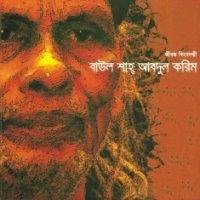
By Karim Waheed - The Daily Star - Bangladesh
Thursday, May 18, 2006
THE 90-year old 'Baul' Shah Abdul Karim has written and composed about 1500 songs. Six books of his songs -- Aftab Sangeet, Gano Sangeet, Kalnir Dheu, Dholmela, Bhatir Chithi and Kalnir Kooley -- have been published. Bangla Academy has translated 10 of his songs in English and he has been honoured with the prestigious national award -- Ekushey Padok in 2001.
Shah Abdul Karim's songs such as Maya lagaisey, Ami koolhara kolonkini and Gari choley na have attained popularity among music fans of this generation. Quite a few contemporary artistes and musicians have shot to fame rendering Abdul Karim's songs -- often re-arranged or remixed. His songs, following the trend of Sufism, stand out for their extraordinary metaphors, message of secularism and depiction of divine love in simple words; a reason why his music has a mass appeal.
As a tribute to the living legend, Sound Machine has released an album titled Jibonto Kingbodonti: Baul Shah Abdul Karim. The mixed album features renditions of Abdul Karim's familiar songs by celebrated as well as emerging artistes -- Bangla, Momotaz, Dalchhut, Maqsud, Dilruba Khan, Shandipon, Ajob, Oojaan, The London Underground and others.
The opening song Agey ki shundor din kataitham, re-arranged and performed by Oojaan gives the album a lukewarm start. This well-known song, addressing the once thriving harmony among Muslims and Hindus in the rural areas, is not slow paced but Oojan's rendition lacks the exuberance manifested in Abdul Karim's songs.
The next song, Ami tomar kaul-er gari however, sweeps one away. The song, re-arranged by Bappa Mazumdar and rendered by Momotaz, follows the genre of Dehotatwa, a sect of Murshidee. Much has been said about Momotaz and her "questionable" songs that have fetched her mass popularity but her performance in this song should be enough to demonstrate that given opportunities, she can work wonders. Her not so stereotypically melodious, yet powerful voice questions the divine will in the song.
Pradeep Kumar and The London Underground deliver a very appealing and hum-able version of Kano piritee barailarey bondhu. Pradeep's skillful vocals epitomise the eternal yearning for the beloved. The fusion number aptly uses several sounds effects and alaap.
Bangla performs Shokhi kunjo shajao. Anusheh's inimitable style and flawless rendition is nothing new to the listeners; only one predicament -- the number sounds more like the songs Bangla usually performs and less like a Shah Abdul Karim song.
Manush hoye talaash korley, re-arranged and rendered by Ajob highlights spirituality. Ajob uses the serene style of Lalon songs, which makes the song interesting and easy to the ear.
Dilruba Khan renders Ailaye na. The tune of the song sounds somewhat similar to another number in the album -- Bashonto batashey, rendered by Shandipon. Dilruba's breathy vocals and emotive expressions make her version memorable.
The album has 12 tracks in total and can be a treat for music aficionados of all cults. Different artistes, groups and musicians add their unique touch to the collection. Kudos to Sound Machine for putting together a quality production. Proceeds from the sales of the album will go to Shah Abdul Karim, who is suffering from age-related ailments.
Read More
By Karim Waheed - The Daily Star - Bangladesh
Thursday, May 18, 2006
THE 90-year old 'Baul' Shah Abdul Karim has written and composed about 1500 songs. Six books of his songs -- Aftab Sangeet, Gano Sangeet, Kalnir Dheu, Dholmela, Bhatir Chithi and Kalnir Kooley -- have been published. Bangla Academy has translated 10 of his songs in English and he has been honoured with the prestigious national award -- Ekushey Padok in 2001.
Shah Abdul Karim's songs such as Maya lagaisey, Ami koolhara kolonkini and Gari choley na have attained popularity among music fans of this generation. Quite a few contemporary artistes and musicians have shot to fame rendering Abdul Karim's songs -- often re-arranged or remixed. His songs, following the trend of Sufism, stand out for their extraordinary metaphors, message of secularism and depiction of divine love in simple words; a reason why his music has a mass appeal.
As a tribute to the living legend, Sound Machine has released an album titled Jibonto Kingbodonti: Baul Shah Abdul Karim. The mixed album features renditions of Abdul Karim's familiar songs by celebrated as well as emerging artistes -- Bangla, Momotaz, Dalchhut, Maqsud, Dilruba Khan, Shandipon, Ajob, Oojaan, The London Underground and others.
The opening song Agey ki shundor din kataitham, re-arranged and performed by Oojaan gives the album a lukewarm start. This well-known song, addressing the once thriving harmony among Muslims and Hindus in the rural areas, is not slow paced but Oojan's rendition lacks the exuberance manifested in Abdul Karim's songs.
The next song, Ami tomar kaul-er gari however, sweeps one away. The song, re-arranged by Bappa Mazumdar and rendered by Momotaz, follows the genre of Dehotatwa, a sect of Murshidee. Much has been said about Momotaz and her "questionable" songs that have fetched her mass popularity but her performance in this song should be enough to demonstrate that given opportunities, she can work wonders. Her not so stereotypically melodious, yet powerful voice questions the divine will in the song.
Pradeep Kumar and The London Underground deliver a very appealing and hum-able version of Kano piritee barailarey bondhu. Pradeep's skillful vocals epitomise the eternal yearning for the beloved. The fusion number aptly uses several sounds effects and alaap.
Bangla performs Shokhi kunjo shajao. Anusheh's inimitable style and flawless rendition is nothing new to the listeners; only one predicament -- the number sounds more like the songs Bangla usually performs and less like a Shah Abdul Karim song.
Manush hoye talaash korley, re-arranged and rendered by Ajob highlights spirituality. Ajob uses the serene style of Lalon songs, which makes the song interesting and easy to the ear.
Dilruba Khan renders Ailaye na. The tune of the song sounds somewhat similar to another number in the album -- Bashonto batashey, rendered by Shandipon. Dilruba's breathy vocals and emotive expressions make her version memorable.
The album has 12 tracks in total and can be a treat for music aficionados of all cults. Different artistes, groups and musicians add their unique touch to the collection. Kudos to Sound Machine for putting together a quality production. Proceeds from the sales of the album will go to Shah Abdul Karim, who is suffering from age-related ailments.
A Very Complicated Frontier
by Sergei Markedonov - special to Russia Profile
Wednesday, May 17, 2006
Caucasus Conflicts More Than a Clash of Civilizations
The North Caucasus is often automatically associated in people’s minds with Islamic extremism and 2005 was, indeed, a year of renewed violence as a form of political activity in the region. The tragic events of the October attack on Nalchik, the capital of Kabardino-Balkaria, signalled for many that the Russian state’s main terrorist opponents are no longer secular ethno-nationalists, fighting for an independent Chechnya, but rather Caucasian Islamic terrorists, fighting the international war on terror.
In this sense, the Russian North Caucasus is following a road already taken by countries in the Middle East and North Africa. In these areas, the main proponents of terrorism from the 1960s to the 1980s were secular ethno-nationalists, like Yasser Arafat and the Palestinian Liberation Organization, who made use of religious values and slogans as just one tool in their struggle. Beginning in the early 1980s, however, proponents of “true Islam,” like the Muslim Brotherhood and Islamic Jihad, began playing an increasingly dominant role. The North Caucasus is now experiencing a similar evolution, as the second half of the 1990s saw ethno-nationalism begin to give way to the slogans of “pure Islam.”
Throughout the region’s history, non-religious considerations have had - and continue to have - a significant influence on the formation of values, norms, institutions and ways of thinking in the region. To begin with, self-identification in the Caucasus is based on the principle of blood - identity as connected to family and kinship groups such as clans. This is both a sub-ethnic and supra-ethnic identity. Clans are often divided along geographical lines, with groups that live in the mountains claiming allegiance to each other at the expense of groups who live in the valleys or on the plains. This type of division may also apply to the differences between rural and urban dwellers or nomads and farmers. Additionally, clans may identify with other, larger political or cultural structures that break down along regional lines or particular political beliefs. Clans may determine how open a group of people would be to a modernization project or how tied they are to traditional culture. Family loyalty is stronger than any adherence to aКlarger ethnic or regional grouping, including the nation state.
These divisions all have their roots in history and are not primarily based on religious differences. There have been numerous examples in the history of the Caucasus when ethnic identity or loyalties to different states have caused confrontation between two peoples sharing the same religion. Likewise, there have been cases when religious identity has divided members of the same ethnic group or, on the contrary, united peoples speaking different languages.
Moreover, the idea of a unified and monolithic civilization (Christian or Islamic) based on a common religion is, in many respects, a myth in the context of the Caucasus. Islam in the Caucasus has many faces. There are, for example, the Sufi brotherhoods in Dagestan, Ingushetia and Chechnya. Sufism, which is derived from the Arab word “Suf,” for the wool of the rough garments worn by hermits - is a mystical current in Islam that preaches humility and withdrawal from the vain pursuits of the world. The Sufi brotherhoods in the Caucasus are known as tarikat - from the Arab word Tarik, meaning road or path, as in the road to truth. The teacher, or “murshid,” plays a crucial role in Caucasian Sufism. The most influential Tarikats in the Caucasus are Nakhsbandia and Kadiria. Former Chechen separatist president Dzhokhar Dudayev belonged to Kadiria, as did former pro-Moscow Chechen president Akhmat Kadyrov. Doku Zavgayev, another pro-Russian Chechen leader, belonged, instead, to Nakhsbandia.
More dogmatic Islamic theology is also represented in the Caucasus republics of Kabardino-Balkaria, Adygeya and Karachayevo-Cherkessia, in the form of salifia, or Wahhabism. The Wahhabis oppose the adaptation of Islam to local traditions and denounce the cult of the teacher. One of the greatest political changes in the region since the collapse of the Soviet Union is the divide that has split Muslims into followers of traditional local Islam and supporters of the Wahhabi doctrines. Both sides have proven capable of extremist views.
The periodic flare-ups in the latent interethnic conflicts in the Caucasus have involved participants of many different ethnic groups, all sharing the Islamic faith. The Kabardis and Balkars in conflict in Kabardino-Balkaria are both Muslim peoples, as are the rival Karachais and Cherkesses, the Avars and the Chechen-Akkins, the Laks and the Kumyks. Splits between the followers of different sects in Islam have developed into sometimes ruthless and violent conflicts, with the most serious in Dagestan and Chechnya.
As for Christian representatives and groupings in the Caucasus, the leaders of the Russian Orthodox Church’s 98 dioceses in the region are much more prepared to engage in dialogue with representatives of traditional local Islam than with Catholic or Protestant preachers. The most consistent follower of this line is Metropolitan Feofan (Ashurkov) of Stavropol and Vladikavkaz. This speaks of a supra-religious identity shared by the traditional faiths and based on perceptions of the historical roots of a faith in the region. In this sense, “old Islam” and the Orthodox Church stand opposed to Wahhabism and Protestant groups such as the Seventh-Day Adventists, Baptists and Jehovah’s Witnesses, as well as groups like the Hare Krishnas.
Appeals to ethnic, religious or cultural identity have always been a response to situations determined by specific historical circumstances. The peoples of the Caucasus might see themselves as representatives of religious “civilizations” (Christian, Muslim, and Buddhist) and, at the same time, as defenders of ethnic interests, citizens of a particular state, participants in modernization or defenders of traditional values. Concepts of ethnic, religious, state and social identity in the Caucasus have always been in flux.
The Caucasus has always been a region of shifting borders and identities. A listing of the various state and administrative-territorial transformations in the region through history would fill a book. The region has never ceased to be a shifting frontier area - not even during the years of Soviet hegemony. In this respect, the ethno-political and religious processes in the Caucasus cannot be reduced to the clash of civilizations scheme involving a conflict between religions. Historically, the Caucasus has been a contact zone for different ethnic, religious, ethno-religious and ethno-social groups, and the interaction between all of these different groups over various historical periods has created the unique mosaic we see today.
Read More
Wednesday, May 17, 2006
Caucasus Conflicts More Than a Clash of Civilizations
The North Caucasus is often automatically associated in people’s minds with Islamic extremism and 2005 was, indeed, a year of renewed violence as a form of political activity in the region. The tragic events of the October attack on Nalchik, the capital of Kabardino-Balkaria, signalled for many that the Russian state’s main terrorist opponents are no longer secular ethno-nationalists, fighting for an independent Chechnya, but rather Caucasian Islamic terrorists, fighting the international war on terror.
In this sense, the Russian North Caucasus is following a road already taken by countries in the Middle East and North Africa. In these areas, the main proponents of terrorism from the 1960s to the 1980s were secular ethno-nationalists, like Yasser Arafat and the Palestinian Liberation Organization, who made use of religious values and slogans as just one tool in their struggle. Beginning in the early 1980s, however, proponents of “true Islam,” like the Muslim Brotherhood and Islamic Jihad, began playing an increasingly dominant role. The North Caucasus is now experiencing a similar evolution, as the second half of the 1990s saw ethno-nationalism begin to give way to the slogans of “pure Islam.”
Throughout the region’s history, non-religious considerations have had - and continue to have - a significant influence on the formation of values, norms, institutions and ways of thinking in the region. To begin with, self-identification in the Caucasus is based on the principle of blood - identity as connected to family and kinship groups such as clans. This is both a sub-ethnic and supra-ethnic identity. Clans are often divided along geographical lines, with groups that live in the mountains claiming allegiance to each other at the expense of groups who live in the valleys or on the plains. This type of division may also apply to the differences between rural and urban dwellers or nomads and farmers. Additionally, clans may identify with other, larger political or cultural structures that break down along regional lines or particular political beliefs. Clans may determine how open a group of people would be to a modernization project or how tied they are to traditional culture. Family loyalty is stronger than any adherence to aКlarger ethnic or regional grouping, including the nation state.
These divisions all have their roots in history and are not primarily based on religious differences. There have been numerous examples in the history of the Caucasus when ethnic identity or loyalties to different states have caused confrontation between two peoples sharing the same religion. Likewise, there have been cases when religious identity has divided members of the same ethnic group or, on the contrary, united peoples speaking different languages.
Moreover, the idea of a unified and monolithic civilization (Christian or Islamic) based on a common religion is, in many respects, a myth in the context of the Caucasus. Islam in the Caucasus has many faces. There are, for example, the Sufi brotherhoods in Dagestan, Ingushetia and Chechnya. Sufism, which is derived from the Arab word “Suf,” for the wool of the rough garments worn by hermits - is a mystical current in Islam that preaches humility and withdrawal from the vain pursuits of the world. The Sufi brotherhoods in the Caucasus are known as tarikat - from the Arab word Tarik, meaning road or path, as in the road to truth. The teacher, or “murshid,” plays a crucial role in Caucasian Sufism. The most influential Tarikats in the Caucasus are Nakhsbandia and Kadiria. Former Chechen separatist president Dzhokhar Dudayev belonged to Kadiria, as did former pro-Moscow Chechen president Akhmat Kadyrov. Doku Zavgayev, another pro-Russian Chechen leader, belonged, instead, to Nakhsbandia.
More dogmatic Islamic theology is also represented in the Caucasus republics of Kabardino-Balkaria, Adygeya and Karachayevo-Cherkessia, in the form of salifia, or Wahhabism. The Wahhabis oppose the adaptation of Islam to local traditions and denounce the cult of the teacher. One of the greatest political changes in the region since the collapse of the Soviet Union is the divide that has split Muslims into followers of traditional local Islam and supporters of the Wahhabi doctrines. Both sides have proven capable of extremist views.
The periodic flare-ups in the latent interethnic conflicts in the Caucasus have involved participants of many different ethnic groups, all sharing the Islamic faith. The Kabardis and Balkars in conflict in Kabardino-Balkaria are both Muslim peoples, as are the rival Karachais and Cherkesses, the Avars and the Chechen-Akkins, the Laks and the Kumyks. Splits between the followers of different sects in Islam have developed into sometimes ruthless and violent conflicts, with the most serious in Dagestan and Chechnya.
As for Christian representatives and groupings in the Caucasus, the leaders of the Russian Orthodox Church’s 98 dioceses in the region are much more prepared to engage in dialogue with representatives of traditional local Islam than with Catholic or Protestant preachers. The most consistent follower of this line is Metropolitan Feofan (Ashurkov) of Stavropol and Vladikavkaz. This speaks of a supra-religious identity shared by the traditional faiths and based on perceptions of the historical roots of a faith in the region. In this sense, “old Islam” and the Orthodox Church stand opposed to Wahhabism and Protestant groups such as the Seventh-Day Adventists, Baptists and Jehovah’s Witnesses, as well as groups like the Hare Krishnas.
Appeals to ethnic, religious or cultural identity have always been a response to situations determined by specific historical circumstances. The peoples of the Caucasus might see themselves as representatives of religious “civilizations” (Christian, Muslim, and Buddhist) and, at the same time, as defenders of ethnic interests, citizens of a particular state, participants in modernization or defenders of traditional values. Concepts of ethnic, religious, state and social identity in the Caucasus have always been in flux.
The Caucasus has always been a region of shifting borders and identities. A listing of the various state and administrative-territorial transformations in the region through history would fill a book. The region has never ceased to be a shifting frontier area - not even during the years of Soviet hegemony. In this respect, the ethno-political and religious processes in the Caucasus cannot be reduced to the clash of civilizations scheme involving a conflict between religions. Historically, the Caucasus has been a contact zone for different ethnic, religious, ethno-religious and ethno-social groups, and the interaction between all of these different groups over various historical periods has created the unique mosaic we see today.
“Living Up to Ustad Nusrat’s Image is Tough”
Namita Kohli - Express Features Service, Delhi Newsline
Tuesday, May 16, 2006
Talk: “Living Up to Ustad Nusrat’s Image is Tough” but Rahat Ali Khan is doing just fine without his illustrious uncle.
Life has not been easy, if not tough, for Rahat Fateh Ali Khan, the nephew and prodigy of Pakistani qawwali singer Ustad Nusrat Fateh Ali Khan. He was only 24 when his uncle died, leaving him to take on the mantle of the 700-year-old musical legacy. Since then, the soft-spoken Faisalabad-based Khan has been trying to keep alive the qawwali tradition. He provided the soundtrack for Shekhar Kapur-directed The Four Feathers and his songs like Mann Ki Lagan in Paap and Jiya Dhadak Dhadak in Kalyug have made him a household name. He spoke to Namita Kohli about sufi music and his new album Charkha, The Circle of Life.
You’ve been carrying on the legacy of your illustrious uncle Nusrat Fateh Ali Khan since his death in 1997. How has the journey been?
It has only begun. Initially, it used to feel like a burden. But now things are more comfortable, though the pressure to live up to his image continues.
What projects are you working on currently?
My solo album Charkha will be out by June this year. The music will be a blend of Arabian, Latin and Spanish influences, but the beat will be ethnic. I have used Baba Bullehshah’s verses and the sufi shora for the lyrics. I also have a few proposals from Bollywood.
What about international projects?
In August, I will be touring Canada and America. I am trying to do something new by adding saxophone and guitar to my music to make it more accessible to people.
Do improvisations interfere with the essence of traditional music? Even Nusrat Khan was criticised for such experiments.
Even when we improvise, the base is always pure qawwali. Sufi music is spiritual music and it will end only when the link with the soul is absent. These days, the audience wants something different. In the West, I find that the NRI audience appreciates my music.
Are the audiences in Pakistan and India any different? Where do you enjoy performing more?
I enjoy performing in India as people understand my music. Many of the musical stalwarts are Indians and the industry here is alive. Also, I am a fan of musicians like Ustad Zakir Hussain and Pandit Shiv Kumar Sharma.
You started performing with your uncle at the age of 10. Any childhood memories?
He is always there in my sur. But I feel the vaccum sometimes. My journey to reach him will continue till I meet him.
Read More
Tuesday, May 16, 2006
Talk: “Living Up to Ustad Nusrat’s Image is Tough” but Rahat Ali Khan is doing just fine without his illustrious uncle.
Life has not been easy, if not tough, for Rahat Fateh Ali Khan, the nephew and prodigy of Pakistani qawwali singer Ustad Nusrat Fateh Ali Khan. He was only 24 when his uncle died, leaving him to take on the mantle of the 700-year-old musical legacy. Since then, the soft-spoken Faisalabad-based Khan has been trying to keep alive the qawwali tradition. He provided the soundtrack for Shekhar Kapur-directed The Four Feathers and his songs like Mann Ki Lagan in Paap and Jiya Dhadak Dhadak in Kalyug have made him a household name. He spoke to Namita Kohli about sufi music and his new album Charkha, The Circle of Life.
You’ve been carrying on the legacy of your illustrious uncle Nusrat Fateh Ali Khan since his death in 1997. How has the journey been?
It has only begun. Initially, it used to feel like a burden. But now things are more comfortable, though the pressure to live up to his image continues.
What projects are you working on currently?
My solo album Charkha will be out by June this year. The music will be a blend of Arabian, Latin and Spanish influences, but the beat will be ethnic. I have used Baba Bullehshah’s verses and the sufi shora for the lyrics. I also have a few proposals from Bollywood.
What about international projects?
In August, I will be touring Canada and America. I am trying to do something new by adding saxophone and guitar to my music to make it more accessible to people.
Do improvisations interfere with the essence of traditional music? Even Nusrat Khan was criticised for such experiments.
Even when we improvise, the base is always pure qawwali. Sufi music is spiritual music and it will end only when the link with the soul is absent. These days, the audience wants something different. In the West, I find that the NRI audience appreciates my music.
Are the audiences in Pakistan and India any different? Where do you enjoy performing more?
I enjoy performing in India as people understand my music. Many of the musical stalwarts are Indians and the industry here is alive. Also, I am a fan of musicians like Ustad Zakir Hussain and Pandit Shiv Kumar Sharma.
You started performing with your uncle at the age of 10. Any childhood memories?
He is always there in my sur. But I feel the vaccum sometimes. My journey to reach him will continue till I meet him.
Urs of Hazrat Bari Imam [RA] begins in Pakistan
By Sufi Sikandar Ghani Sheikh - Pakistan Times
Tuesday, May 16, 2006
ISLAMABAD: The centuries-old ceremonies of the Urs of great spiritualist and saint Hazrat Bari Imam [RA] began at Noorpur, close to the capital city of Islamabad on Sunday.
Sweat mingles with tears on sun-darkened faces of pilgrims who walk miles, most of them barefoot and clad in rags, destine towards the shrine Hazrat Bari Sarkar [RA] in the hills, around Islamabad every year.
These are Pakistan’s colourful saint-worshippers, adherents of the Sufi branch of Islam. Almost one Million pilgrims from home and abroad arrive to pay homage at the silver-mirrored mausoleum of 17th century Sufi saint Hazrat Shah Abdul Latif Kazmi [RA], best known as Hazrat Bari Imam [RA].
People have been coming to the shrine of the great saint for centuries.
The annual pilgrimage to Hazrat Bari Imam [RA] is undertaken over five days surrounding the anniversary of the saint’s death each May. Each night at the shrine, a large number of pilgrims twirled to rapidly beating drums. Others carried miniature golden mausoleums garlanded with yellow and green streamers and triangular flags bearing verses from the Holy Quran.
The devotees come to make or fulfil “mannats” [pledges] that they would regularly visit the shrine, feed the poor or perform another act if their prayers are answered.
“My son wanted to go to Kuwait and he just came back. I promised I’d come to the shrine of Hazrat Bari Imam [RA] and donate rice to the poor when he came back,” said Budronisa Yacoub from Lahore to 'Pakistan Times' [Daily Web Newspaper] as she arrived at the shrine on Monday.
“If I hadn’t come, I would have been anxious. I would have worried because I made a promise to Allah,” she said, wiping away a tear. “I feel relaxed now.”
As is indexed in the history, Hazrat Bari Imam [RA] was one of the great preachers of Central Asian and Arab who for centuries travelled through South Asia spreading Islam.
During the 17th century, thieves and outcasts occupied Noorpur Shahan village at the edge of Islamabad. While travelling though the area, the great saint, who had migrated to the densely thick underwood isolated terrain, now known as Islamabad from his origin, a village in Chakwal area, was stunned by the habits of those living among the natural beauty of the Margalla Hills.
He decided to stay and teach the people about Islam. Mughal Emperor Aurangzeb, who was devoted to spreading his empire, originally built the silver-mirrored shrine of Hazrat Bari Imam [RA].
It has been renovated and is now is maintained by the government. Inside the mausoleum, where the great saint rests, only men are permitted, a steady stream of worshippers enter and exit, most bending to kiss and strew rose petals on the green cloth covering the grave of Hazrat Bari Sarkar [RA].
Reciting verses from the Holy Quran, women view the grave through a glass window, which many touch and kiss while praying for the blessings of Almighty Allah.
The faithful read from one of the hundreds of the copies of the Holy Quran, the moment when one leaves after recitation. Some simply sit in silence as mark of respect for the great saint, taking a moment to say a final prayer and to collect the inspiration and strength to make the journey back home.
Read More
Tuesday, May 16, 2006
ISLAMABAD: The centuries-old ceremonies of the Urs of great spiritualist and saint Hazrat Bari Imam [RA] began at Noorpur, close to the capital city of Islamabad on Sunday.
Sweat mingles with tears on sun-darkened faces of pilgrims who walk miles, most of them barefoot and clad in rags, destine towards the shrine Hazrat Bari Sarkar [RA] in the hills, around Islamabad every year.
These are Pakistan’s colourful saint-worshippers, adherents of the Sufi branch of Islam. Almost one Million pilgrims from home and abroad arrive to pay homage at the silver-mirrored mausoleum of 17th century Sufi saint Hazrat Shah Abdul Latif Kazmi [RA], best known as Hazrat Bari Imam [RA].
People have been coming to the shrine of the great saint for centuries.
The annual pilgrimage to Hazrat Bari Imam [RA] is undertaken over five days surrounding the anniversary of the saint’s death each May. Each night at the shrine, a large number of pilgrims twirled to rapidly beating drums. Others carried miniature golden mausoleums garlanded with yellow and green streamers and triangular flags bearing verses from the Holy Quran.
The devotees come to make or fulfil “mannats” [pledges] that they would regularly visit the shrine, feed the poor or perform another act if their prayers are answered.
“My son wanted to go to Kuwait and he just came back. I promised I’d come to the shrine of Hazrat Bari Imam [RA] and donate rice to the poor when he came back,” said Budronisa Yacoub from Lahore to 'Pakistan Times' [Daily Web Newspaper] as she arrived at the shrine on Monday.
“If I hadn’t come, I would have been anxious. I would have worried because I made a promise to Allah,” she said, wiping away a tear. “I feel relaxed now.”
As is indexed in the history, Hazrat Bari Imam [RA] was one of the great preachers of Central Asian and Arab who for centuries travelled through South Asia spreading Islam.
During the 17th century, thieves and outcasts occupied Noorpur Shahan village at the edge of Islamabad. While travelling though the area, the great saint, who had migrated to the densely thick underwood isolated terrain, now known as Islamabad from his origin, a village in Chakwal area, was stunned by the habits of those living among the natural beauty of the Margalla Hills.
He decided to stay and teach the people about Islam. Mughal Emperor Aurangzeb, who was devoted to spreading his empire, originally built the silver-mirrored shrine of Hazrat Bari Imam [RA].
It has been renovated and is now is maintained by the government. Inside the mausoleum, where the great saint rests, only men are permitted, a steady stream of worshippers enter and exit, most bending to kiss and strew rose petals on the green cloth covering the grave of Hazrat Bari Sarkar [RA].
Reciting verses from the Holy Quran, women view the grave through a glass window, which many touch and kiss while praying for the blessings of Almighty Allah.
The faithful read from one of the hundreds of the copies of the Holy Quran, the moment when one leaves after recitation. Some simply sit in silence as mark of respect for the great saint, taking a moment to say a final prayer and to collect the inspiration and strength to make the journey back home.
Thousands throng Bari Imam’s shrine
Staff Reporter - Dawn.com
Monday - May 15, 2006/Rabi-us-Sani 16, 1427
Thousands of people thronged the shrine of Hazrat Shah Abdul Latif, better known as Bari Imam, on the first day of annual Urs at Noorpur Shahan Village here on Sunday.
The three-day Urs began with the beat of drum and Dhamals (dances) to pay tribute to the most famous and revered saint of Potohar region.
A ceremony of Chadarposhi was held in the shrine. National Assembly Speaker Chaudhry Amir Hussain was the chief guest on the occasion. He was accompanied by caretaker of the shrine Raja Sarfaraz.
Senate Chairman Mohammadmian Soomro will be the chief guest at the concluding ceremony on 18th.
Some 500 ‘Dalian’ (rallies), each comprising about 50 people, reached the shrine from various parts of the country. Most of the devotees travelled on foot in memory of the saint who was famous for travelling long distances on foot.
The devotees, carrying the replica of the shrine, sang devotional songs and danced to the beats of the drums.
Some of the devotees were seen collecting ‘Langar’ (food) distributed at the shrine, while others were offering prayers.
According to a rough estimate, some 200,000 people, including women, children and aged persons, visited the shrine on the first day of Urs.
The Urs of Hazrat Bari Imam has become one of the major events of the capital as thousands of devotees from all over the country take part in it every year. A number of free medical camps have been set up on the premises of the shrine to provide first aid, if required. The Capital Development Authority has provided a tanker to provide drinking water to the devotees. Hundreds of tents and sheds have been installed in the open field around the shrine for providing accommodation to the devotees, who will stay for six days.
The capital administration has also made special arrangements. Close circuit cameras, scanners and walk-through gates had been installed at the entrance and other points of the shrine to keep a vigil on terrorists.
Read More
Monday - May 15, 2006/Rabi-us-Sani 16, 1427
Thousands of people thronged the shrine of Hazrat Shah Abdul Latif, better known as Bari Imam, on the first day of annual Urs at Noorpur Shahan Village here on Sunday.
The three-day Urs began with the beat of drum and Dhamals (dances) to pay tribute to the most famous and revered saint of Potohar region.
A ceremony of Chadarposhi was held in the shrine. National Assembly Speaker Chaudhry Amir Hussain was the chief guest on the occasion. He was accompanied by caretaker of the shrine Raja Sarfaraz.
Senate Chairman Mohammadmian Soomro will be the chief guest at the concluding ceremony on 18th.
Some 500 ‘Dalian’ (rallies), each comprising about 50 people, reached the shrine from various parts of the country. Most of the devotees travelled on foot in memory of the saint who was famous for travelling long distances on foot.
The devotees, carrying the replica of the shrine, sang devotional songs and danced to the beats of the drums.
Some of the devotees were seen collecting ‘Langar’ (food) distributed at the shrine, while others were offering prayers.
According to a rough estimate, some 200,000 people, including women, children and aged persons, visited the shrine on the first day of Urs.
The Urs of Hazrat Bari Imam has become one of the major events of the capital as thousands of devotees from all over the country take part in it every year. A number of free medical camps have been set up on the premises of the shrine to provide first aid, if required. The Capital Development Authority has provided a tanker to provide drinking water to the devotees. Hundreds of tents and sheds have been installed in the open field around the shrine for providing accommodation to the devotees, who will stay for six days.
The capital administration has also made special arrangements. Close circuit cameras, scanners and walk-through gates had been installed at the entrance and other points of the shrine to keep a vigil on terrorists.
Bari Imam urs begins today
APP/Daily Times - Islamabad, Pakistan
Sunday, May 14, 2006
The five-day annual urs (death anniversary)
of Shah Latif Bari Qadri (Bari Imam) will begin today
(Sunday) in Islamabad, where the National Assembly
speaker will attend as chief guest.
Annually, thousands of people from all over the
country participate in the urs to pay homage to the
great Sufi saint who lies buried at the historical
mirror-studded shrine in Nurpur Shahan, a village at
the foot of the Margalla Hills. This year, the
Islamabad District Administration (IDA) and the
District Auqaf Directorate has made strict security
arrangements for the event.
Bari Imam, whose real name is Shah Abdul Latif Kazmi,
was born in 1617 AD (1026 Hijra). His father, Syed
Mehmood Shah, shifted his family from Jhelum district
to Baghan village (Aabpara), which was barren at the
time. Mehmood Shah began farming in the area, where he
also raised some domestic animals.
In his early years, Shah Latif helped his father in the small
establishment where he would take the animals for
grazing. When he reached the age of twelve, however,
he left his father and went to the village of Nurpur
Shahan, and later to Ghaur Ghashti (now Attock), where
he stayed for two years studying fiqh, hadith, logic,
mathematics, medicine and other disciplines, as Ghaur
Ghashti was an educational centre of its time.
To obtain spiritual knowledge and satiate his love for
Islam, Bari Imam visited many places such as Kashmir,
Badakhshan, Bukhara, Mashhad, Baghdad and Damascus,
where he met great scholars. Later, he went to Saudi
Arabia to perform Haj. Bari Imam’s spiritual mentor
was Hayatul Mir (Zinda Pir), who gave him the title of
‘Bari Imam’, which proved his link to the Syed family.
Through his Islamic lectures at Nurpur Shahan, Bari
Imam inspired thousands of Hindus to convert to Islam.
Legend has it that the Mughal emperor Aurangzeb
Alamgir had visited Nurpur Shahan to pay his respect
to Bari Imam.
Read More
Sunday, May 14, 2006
The five-day annual urs (death anniversary)
of Shah Latif Bari Qadri (Bari Imam) will begin today
(Sunday) in Islamabad, where the National Assembly
speaker will attend as chief guest.
Annually, thousands of people from all over the
country participate in the urs to pay homage to the
great Sufi saint who lies buried at the historical
mirror-studded shrine in Nurpur Shahan, a village at
the foot of the Margalla Hills. This year, the
Islamabad District Administration (IDA) and the
District Auqaf Directorate has made strict security
arrangements for the event.
Bari Imam, whose real name is Shah Abdul Latif Kazmi,
was born in 1617 AD (1026 Hijra). His father, Syed
Mehmood Shah, shifted his family from Jhelum district
to Baghan village (Aabpara), which was barren at the
time. Mehmood Shah began farming in the area, where he
also raised some domestic animals.
In his early years, Shah Latif helped his father in the small
establishment where he would take the animals for
grazing. When he reached the age of twelve, however,
he left his father and went to the village of Nurpur
Shahan, and later to Ghaur Ghashti (now Attock), where
he stayed for two years studying fiqh, hadith, logic,
mathematics, medicine and other disciplines, as Ghaur
Ghashti was an educational centre of its time.
To obtain spiritual knowledge and satiate his love for
Islam, Bari Imam visited many places such as Kashmir,
Badakhshan, Bukhara, Mashhad, Baghdad and Damascus,
where he met great scholars. Later, he went to Saudi
Arabia to perform Haj. Bari Imam’s spiritual mentor
was Hayatul Mir (Zinda Pir), who gave him the title of
‘Bari Imam’, which proved his link to the Syed family.
Through his Islamic lectures at Nurpur Shahan, Bari
Imam inspired thousands of Hindus to convert to Islam.
Legend has it that the Mughal emperor Aurangzeb
Alamgir had visited Nurpur Shahan to pay his respect
to Bari Imam.
Wednesday, October 25, 2006
First Moroccan Spanish Festival to take place in Madrid

MAP News/Morocco TIMES - Casablanca, Morocco
Friday, May 12,2006
The Spanish capital, Madrid, will host on May 19-28 the first Moroccan Spanish cultural festival, to reinforce cohabitation between the two peoples. Organised by a group of Moroccan associations in Spain, the event will take place under the theme “To Consolidate Cohabitation”.
The programme of the festival schedules round tables, Moroccan traditional and modern music concerts, fashion shows, sports competitions and activities for children.
According to the organizers, the festival aims at reinforcing cultural ties between Moroccans and Spaniards and creating a space of meeting and conviviality between the two cultures.
A large part of the festival is devoted to Moroccan music, with shows of Sufi, Gnawa, Malhoun, Rai and popular Music. Several music groups will participate in this cultural meeting, including Said Oughassal, Gnawa dar jamai, Nass El Ghiwane, Raiband and Jadwane.
The festival will be closed on May 28 with crowning moments with the Sufi group “Belkhayat” and the “Tetouani” group of Andalusian music.
The public will also have the opportunity to get to know the wonders of Moroccan fashion, through shows on May 20, 22 and 26. The organisers will spotlight the mixture of tradition and modernity of the uncontestable success Caftan.
Read More
MAP News/Morocco TIMES - Casablanca, Morocco
Friday, May 12,2006
The Spanish capital, Madrid, will host on May 19-28 the first Moroccan Spanish cultural festival, to reinforce cohabitation between the two peoples. Organised by a group of Moroccan associations in Spain, the event will take place under the theme “To Consolidate Cohabitation”.
The programme of the festival schedules round tables, Moroccan traditional and modern music concerts, fashion shows, sports competitions and activities for children.
According to the organizers, the festival aims at reinforcing cultural ties between Moroccans and Spaniards and creating a space of meeting and conviviality between the two cultures.
A large part of the festival is devoted to Moroccan music, with shows of Sufi, Gnawa, Malhoun, Rai and popular Music. Several music groups will participate in this cultural meeting, including Said Oughassal, Gnawa dar jamai, Nass El Ghiwane, Raiband and Jadwane.
The festival will be closed on May 28 with crowning moments with the Sufi group “Belkhayat” and the “Tetouani” group of Andalusian music.
The public will also have the opportunity to get to know the wonders of Moroccan fashion, through shows on May 20, 22 and 26. The organisers will spotlight the mixture of tradition and modernity of the uncontestable success Caftan.
William T. Hathaway's Summer Snow
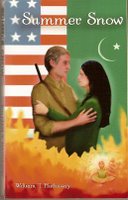
by Milo Clark - Book Review - Swans.com
Monday, March 27, 2006
Summer Snow is a relatively simple novel crafted around universal themes: cross-cultural love, first loyalties, governmental duplicities, contemporary lists of nasties, and a chase in search of an errant nuke.
William T. Hathaway is a very interesting man, too. Tested as a special operations warrior in Vietnam and Panama, he is now a strong anti-war activist.He wrote Summer Snow during a year-and-a-half in the country that forms his stage.
That stage is Kyrgyzstan, a central Asian relic of the defunct Soviet Union. History is very deep out there. Mountains and crags and roadless wilds dominate the landscape. The Silk Road that once connected Europe to the silks and spices of Asia passes through. For most of modern history, little of note to outsiders happened there. Kyrgyzstan is on top of Afghanistan and provides funnels in and out of that troubled conglomerate of tribal allegiances so recently unknown to most Americans. The only bridge into northern Afghanistan leaves from Kyrgyz soil.
The Soviets had a number of missile silos in Kyrgyzstan. It is one leftover warhead that provides focus for Summer Snow's chase.
Add in one complexity to differentiate Summer Snow. The heroine, Cholpon, imbued with requisite dark-haired, dark-eyed exotic central Asian beauty is also a devotee of Djamila, an older woman and Shakya, head of an all woman order. Djamila has fashioned a fusion of Islamic Sufism, Hindu mysticism, and Transcendental Meditation (TM). Djamila knows how to save the world. Her women are both devoted and industrious.
The American protagonist, Jeff, is a battle-worn veteran of special operations, Vietnam and such, now retired somewhat. As a rather standard, densely-headed American, a bit on the "ugly" side, he needs some convincing that Djamila's version of TM will lead those who stole the nuke to give it back and go away quietly.
There are interludes with Cholpon, naturally.
For those, such as myself, fascinated with Central Asia and its spiritual disciplines, Summer Snow is a compendium. The mix of Sufi, Hindu, and TM ideas takes some suspension of credulity at the start but then flows relatively seamlessly to the denouement.
Whether Jeff or Djamila wins Cholpon, whether TM or Delta Force returns the nuke to safe hands, whether Jeff gets "it" are questions better left to the reading of Summer Snow.
Hathaway, William T.: Summer Snow, Avatar Publications, St. Albert, Alberta, Canada, 2005, ISBN 0-9738442-3-X (paperback) - E-book (pdf): ISBN 0-9738442-4-8, Microsoft Reader: ISBN 0-97388442-5-6.
Read More
by Milo Clark - Book Review - Swans.com
Monday, March 27, 2006
Summer Snow is a relatively simple novel crafted around universal themes: cross-cultural love, first loyalties, governmental duplicities, contemporary lists of nasties, and a chase in search of an errant nuke.
William T. Hathaway is a very interesting man, too. Tested as a special operations warrior in Vietnam and Panama, he is now a strong anti-war activist.He wrote Summer Snow during a year-and-a-half in the country that forms his stage.
That stage is Kyrgyzstan, a central Asian relic of the defunct Soviet Union. History is very deep out there. Mountains and crags and roadless wilds dominate the landscape. The Silk Road that once connected Europe to the silks and spices of Asia passes through. For most of modern history, little of note to outsiders happened there. Kyrgyzstan is on top of Afghanistan and provides funnels in and out of that troubled conglomerate of tribal allegiances so recently unknown to most Americans. The only bridge into northern Afghanistan leaves from Kyrgyz soil.
The Soviets had a number of missile silos in Kyrgyzstan. It is one leftover warhead that provides focus for Summer Snow's chase.
Add in one complexity to differentiate Summer Snow. The heroine, Cholpon, imbued with requisite dark-haired, dark-eyed exotic central Asian beauty is also a devotee of Djamila, an older woman and Shakya, head of an all woman order. Djamila has fashioned a fusion of Islamic Sufism, Hindu mysticism, and Transcendental Meditation (TM). Djamila knows how to save the world. Her women are both devoted and industrious.
The American protagonist, Jeff, is a battle-worn veteran of special operations, Vietnam and such, now retired somewhat. As a rather standard, densely-headed American, a bit on the "ugly" side, he needs some convincing that Djamila's version of TM will lead those who stole the nuke to give it back and go away quietly.
There are interludes with Cholpon, naturally.
For those, such as myself, fascinated with Central Asia and its spiritual disciplines, Summer Snow is a compendium. The mix of Sufi, Hindu, and TM ideas takes some suspension of credulity at the start but then flows relatively seamlessly to the denouement.
Whether Jeff or Djamila wins Cholpon, whether TM or Delta Force returns the nuke to safe hands, whether Jeff gets "it" are questions better left to the reading of Summer Snow.
Hathaway, William T.: Summer Snow, Avatar Publications, St. Albert, Alberta, Canada, 2005, ISBN 0-9738442-3-X (paperback) - E-book (pdf): ISBN 0-9738442-4-8, Microsoft Reader: ISBN 0-97388442-5-6.
Sunday, October 22, 2006
Maverick at work!
By Jhumari Nigam-Misra - The Times of India
Thursday, May 11, 2006
If you thought it was only his hairstyle that stands out in a crowd, wait till you actually speak to Makrand Deshpande. He thinks, acts and lives differently.
An actor par excellence, a Sufi at heart and a nonconformist to the core, Deshpande happily lives in his own world of fantasy while life happens to him. And on rare occasions when someone wakes up this dreamer, he shares his love for life and more...
Destiny's will: I was a cricketer. In fact, there was a time when my parents got quite worried because I'd got into college through sports quota but I graduated as a dramatist!
There was a room next to my college gym from where you could hear all sorts of noises coming out throughout the day. I was curious so I inquired and found out about a group rehearsing for a play. Somebody asked me to take a chance and I did it. I guess I was destined to be here.
Stage talk: Theatre is my highest priority. I enjoy being a part of any healthy creation, be it through acting or directing, writing or singing. For me, life matters more than a character.
So I've never aspired to be an important figure or waited to be a 'kalakar'. I was happy being a 'seh-kalakar' also. I believe, the more you live or the way you live is the way you create. I only do work that gives me pleasure.
Filmi funda: One good thing about Bollywood is that once you are in it, you never go out. But my love for theatre has restricted me to make long commitments anywhere. Bollywood was a sweet serendipity to me. It has given me popularity, money and recognition.
I was always called a good luck actor and in fact Mukesh Bhatt actually calls me a 'lucky mascot'. I am just choosy about time and not a character. If I have time and need the money, I will surely do a film.
Love bytes: I do believe in 'love at first sight'. There is a chemistry that's like lightening. I can see a photo and feel that chemistry, but I can't explain it to you. Of course, I've fallen in love, but I don't have a follow-up theory in life. I have a time theory. If time and situation favours you, it will work.
Fixed image: You can't help it if people slot you. After all, who has the time to understand you? It doesn't bother me. People often perceive me as a serious actor, an intellect... and turn quiet on the sets, only to realise that I am the first one to have some masti.
Soul curry: I am a Sufi in my approach but also a doer. Any fantasy that I have, (I don't just dream about it...) I turn it into reality. I love to absorb life and then project it my way. Though a little moody, I am otherwise a calm, fun-loving and private person. I like to live life and not analyse it.
Read More
Thursday, May 11, 2006
If you thought it was only his hairstyle that stands out in a crowd, wait till you actually speak to Makrand Deshpande. He thinks, acts and lives differently.
An actor par excellence, a Sufi at heart and a nonconformist to the core, Deshpande happily lives in his own world of fantasy while life happens to him. And on rare occasions when someone wakes up this dreamer, he shares his love for life and more...
Destiny's will: I was a cricketer. In fact, there was a time when my parents got quite worried because I'd got into college through sports quota but I graduated as a dramatist!
There was a room next to my college gym from where you could hear all sorts of noises coming out throughout the day. I was curious so I inquired and found out about a group rehearsing for a play. Somebody asked me to take a chance and I did it. I guess I was destined to be here.
Stage talk: Theatre is my highest priority. I enjoy being a part of any healthy creation, be it through acting or directing, writing or singing. For me, life matters more than a character.
So I've never aspired to be an important figure or waited to be a 'kalakar'. I was happy being a 'seh-kalakar' also. I believe, the more you live or the way you live is the way you create. I only do work that gives me pleasure.
Filmi funda: One good thing about Bollywood is that once you are in it, you never go out. But my love for theatre has restricted me to make long commitments anywhere. Bollywood was a sweet serendipity to me. It has given me popularity, money and recognition.
I was always called a good luck actor and in fact Mukesh Bhatt actually calls me a 'lucky mascot'. I am just choosy about time and not a character. If I have time and need the money, I will surely do a film.
Love bytes: I do believe in 'love at first sight'. There is a chemistry that's like lightening. I can see a photo and feel that chemistry, but I can't explain it to you. Of course, I've fallen in love, but I don't have a follow-up theory in life. I have a time theory. If time and situation favours you, it will work.
Fixed image: You can't help it if people slot you. After all, who has the time to understand you? It doesn't bother me. People often perceive me as a serious actor, an intellect... and turn quiet on the sets, only to realise that I am the first one to have some masti.
Soul curry: I am a Sufi in my approach but also a doer. Any fantasy that I have, (I don't just dream about it...) I turn it into reality. I love to absorb life and then project it my way. Though a little moody, I am otherwise a calm, fun-loving and private person. I like to live life and not analyse it.
Sufi, so good!
By Shridevi Keshavan - Daily News and Analysis - Mumbai, India
Thursday, May 11, 2006
What comes to your mind when you hear the term ‘Sufi’? Esoteric whirling dervishes, sacred saints or Abida Parveen? Well, Sufism seems to be the flavour of the moment. From Kailash Kher’s music to Manish Malhotra’s designs, everything seems to have a Sufi influence.
“Sufism has been in existence in the communication arts for a long time now. The trend is definitely spreading but doing it just as a fad makes no sense,” says director/designer Muzaffar Ali who is working on a script on the works of the Sufi poet Rumi.
According to him, even Rabindranath Tagore and Raja Ram Mohan Roy were influenced by the tenets of Sufism. “You need to have the passion to follow it, be it music or any other art,” he says.
Sufism can be traced back to the 8th century, when Sufis were known as individuals trying to connect with God without following any particular religion. It produced a large body of poetry, with poets like Bullehshah, Rumi and Amir Khusro being hailed as the icons of Sufism. “Sufism means eternal love. You can see madness in a pure Sufi’s work — be it music, painting or any other art,” says singer Kailash Kher.
Though he is now known more for playback singing, Kailash denies diverting from his Sufi style of singing. “You have to constantly evolve. I cannot restrict my music to a dargah by using only a tabla and a harmonium. But dressing in a jeans and a t-shirt and yelling at the top of your voice doesn’t make you a Sufi singer.”
For lyricist Prasoon Joshi, the concept of Sufism is very contemporary. “Sufism suspends the idea of logic. Today, the world is moving towards individualism; the herd mentality is slowly fading. It caters to people who do not believe in religion but feel the existence of a supreme power. I think it caters to the youth. It’s like hip-hop which talks about existence and not about change.”
As far as fashion goes, Manish Malhotra’s collection for Lakme Fashion Week showed Sufi influences. “A friend of mine introduced me to Sufi music, which I find very soulful. For LFW, my collection was a complete package of free-flowing whites with Sufi sounds to go with it,” he says, adding, “though I’m not sure if it will catch on as a trend.”
Read More
Thursday, May 11, 2006
What comes to your mind when you hear the term ‘Sufi’? Esoteric whirling dervishes, sacred saints or Abida Parveen? Well, Sufism seems to be the flavour of the moment. From Kailash Kher’s music to Manish Malhotra’s designs, everything seems to have a Sufi influence.
“Sufism has been in existence in the communication arts for a long time now. The trend is definitely spreading but doing it just as a fad makes no sense,” says director/designer Muzaffar Ali who is working on a script on the works of the Sufi poet Rumi.
According to him, even Rabindranath Tagore and Raja Ram Mohan Roy were influenced by the tenets of Sufism. “You need to have the passion to follow it, be it music or any other art,” he says.
Sufism can be traced back to the 8th century, when Sufis were known as individuals trying to connect with God without following any particular religion. It produced a large body of poetry, with poets like Bullehshah, Rumi and Amir Khusro being hailed as the icons of Sufism. “Sufism means eternal love. You can see madness in a pure Sufi’s work — be it music, painting or any other art,” says singer Kailash Kher.
Though he is now known more for playback singing, Kailash denies diverting from his Sufi style of singing. “You have to constantly evolve. I cannot restrict my music to a dargah by using only a tabla and a harmonium. But dressing in a jeans and a t-shirt and yelling at the top of your voice doesn’t make you a Sufi singer.”
For lyricist Prasoon Joshi, the concept of Sufism is very contemporary. “Sufism suspends the idea of logic. Today, the world is moving towards individualism; the herd mentality is slowly fading. It caters to people who do not believe in religion but feel the existence of a supreme power. I think it caters to the youth. It’s like hip-hop which talks about existence and not about change.”
As far as fashion goes, Manish Malhotra’s collection for Lakme Fashion Week showed Sufi influences. “A friend of mine introduced me to Sufi music, which I find very soulful. For LFW, my collection was a complete package of free-flowing whites with Sufi sounds to go with it,” he says, adding, “though I’m not sure if it will catch on as a trend.”
Impact of Bangladesh on Tagore's creativity
By Ershad Kamol with Sadi Mohammed - The Daily Star - Dhaka, Bangladesh
Thursday, May 11, 2006
Rabindranath Tagore spent the prime of his life at Patishar of Rajshahi, Shilaidah of Kustia and Shahjadpur of Pabna in Bangladesh. Though he came here to oversee his zamindari, these visits had immense impact on his thought, philosophy and creativity. The Tagore songs composed in this tradition are treasures of our music.
He spent most of the time watching the unique natural beauty, interacting with the bauls and rural bards as well as writing and composing. Most of his popular writings -- from Chhinnapatra to Nobel Prize-winning book Geetanjali -- have spontaneously overflowed through powerful emotions recollected from tranquility of these regions, especially in his poems and songs.
Eminent Tagore singer Sadi Mohammed, who after completing a Master's in Music in Rabindra Sangeet from Shantiniketan is currently teaching as the head of the department of Rabindra Sangeet at Government Music College, said, “Tagore claimed himself as 'Rabi Baul'. All of his devotional songs are based on Sufism. The philosophy and tune of 'baul songs' had an immense impact on Tagore songs. However, folk music of Bengal has been presented uniquely by Tagore like the other music genres, western music, north Indian raga and more, which have been followed in his songs. And the mastery of Tagore is that when he fused the folk music genres of Bengal in his songs, it was quite distinct from the original form. He extensively used tunes and styles from baul, kirtan, shyamasangeet, sari, bhatiali and even kathakata to give his songs a unique flavour and beauty."
Rabindranath was an adherent of 'Brahmo Samaj', to whom music is a kind of devotion. This is similar to 'doctrines of bauls', as the latter also offer the mystic songs as prayer for the supreme God. Tagore's intimacy with bauls such as Gagan Harkara, a disciple of great baul Lalon Shah, Khepa baul and others generated interest in Tagore about baul songs.
And like the bauls' quest for moner manush (urge for reunification of the soul and God), Tagore has also wandered in search of the supreme creator in his devotional songs. Sadi said, "After visiting the then East Bengal in the early 20th century, Tagore was greatly influenced by the bauls, who believe that the mystic creator lives in the soul of human beings. Tagore believed that love is devotion and nature is its background. That is why love, devotion and nature are interwoven in Tagore's songs.
Read More
Thursday, May 11, 2006
Rabindranath Tagore spent the prime of his life at Patishar of Rajshahi, Shilaidah of Kustia and Shahjadpur of Pabna in Bangladesh. Though he came here to oversee his zamindari, these visits had immense impact on his thought, philosophy and creativity. The Tagore songs composed in this tradition are treasures of our music.
He spent most of the time watching the unique natural beauty, interacting with the bauls and rural bards as well as writing and composing. Most of his popular writings -- from Chhinnapatra to Nobel Prize-winning book Geetanjali -- have spontaneously overflowed through powerful emotions recollected from tranquility of these regions, especially in his poems and songs.
Eminent Tagore singer Sadi Mohammed, who after completing a Master's in Music in Rabindra Sangeet from Shantiniketan is currently teaching as the head of the department of Rabindra Sangeet at Government Music College, said, “Tagore claimed himself as 'Rabi Baul'. All of his devotional songs are based on Sufism. The philosophy and tune of 'baul songs' had an immense impact on Tagore songs. However, folk music of Bengal has been presented uniquely by Tagore like the other music genres, western music, north Indian raga and more, which have been followed in his songs. And the mastery of Tagore is that when he fused the folk music genres of Bengal in his songs, it was quite distinct from the original form. He extensively used tunes and styles from baul, kirtan, shyamasangeet, sari, bhatiali and even kathakata to give his songs a unique flavour and beauty."
Rabindranath was an adherent of 'Brahmo Samaj', to whom music is a kind of devotion. This is similar to 'doctrines of bauls', as the latter also offer the mystic songs as prayer for the supreme God. Tagore's intimacy with bauls such as Gagan Harkara, a disciple of great baul Lalon Shah, Khepa baul and others generated interest in Tagore about baul songs.
And like the bauls' quest for moner manush (urge for reunification of the soul and God), Tagore has also wandered in search of the supreme creator in his devotional songs. Sadi said, "After visiting the then East Bengal in the early 20th century, Tagore was greatly influenced by the bauls, who believe that the mystic creator lives in the soul of human beings. Tagore believed that love is devotion and nature is its background. That is why love, devotion and nature are interwoven in Tagore's songs.
Rockland peace delegation heads to Iran
By Khurram Saeed - The Journal News - Westchester, NY, U.S.A.
Monday, May 8, 2006
During the Cold War, Richard Deats led peace delegations to the Soviet Union and Eastern Europe to let ordinary people speak for themselves, instead of governments.
Now Deats is at it again.
The Nyack man will be part of a delegation leaving today for Iran sponsored by the Fellowship of Reconciliation. FOR is an Upper Nyack-based interfaith pacifist organization and Deats is the former editor of its Fellowship magazine.
"We believe in what we call people-to-people diplomacy," Deats said. "You know, when Eisenhower was president, he said, 'The people of the world want peace so much that some day the governments are going to have get out of the way and let them have it.' "
This will be FOR's second peace mission to Iran in six months. It comes at a time when tensions between the leaders of the United States and Iran are rising over Iran's nuclear power program. President Bush has threatened military action and economic sanctions, but Iranian President Mahmoud Ahmadinejad has refused to back down.
"What we need right now is to defuse the hostile rhetoric," said Deats, a Methodist minister.
Deats will be joined by 23 others for the 12-day stay in Iran. They include a leaders of various Christian denominations, an expert of Sufism, an art professor from Philadelphia, a Middle East professor and graduate students.
Hossein Alizadeh, who heads FOR's Iran Initiative, said securing passage for the travelers wasn't easy. Some in Iran, an Islamic theocracy, are suspicious of Americans entering their country and influencing their citizens, he said.
But visas were issued, and the delegation plans to meet with Christian, Jewish, Muslim and Zoroastrian leaders, college students, journalists and nongovernment organizations, including one that serves women and another that focuses on the environment.
Read More
Monday, May 8, 2006
During the Cold War, Richard Deats led peace delegations to the Soviet Union and Eastern Europe to let ordinary people speak for themselves, instead of governments.
Now Deats is at it again.
The Nyack man will be part of a delegation leaving today for Iran sponsored by the Fellowship of Reconciliation. FOR is an Upper Nyack-based interfaith pacifist organization and Deats is the former editor of its Fellowship magazine.
"We believe in what we call people-to-people diplomacy," Deats said. "You know, when Eisenhower was president, he said, 'The people of the world want peace so much that some day the governments are going to have get out of the way and let them have it.' "
This will be FOR's second peace mission to Iran in six months. It comes at a time when tensions between the leaders of the United States and Iran are rising over Iran's nuclear power program. President Bush has threatened military action and economic sanctions, but Iranian President Mahmoud Ahmadinejad has refused to back down.
"What we need right now is to defuse the hostile rhetoric," said Deats, a Methodist minister.
Deats will be joined by 23 others for the 12-day stay in Iran. They include a leaders of various Christian denominations, an expert of Sufism, an art professor from Philadelphia, a Middle East professor and graduate students.
Hossein Alizadeh, who heads FOR's Iran Initiative, said securing passage for the travelers wasn't easy. Some in Iran, an Islamic theocracy, are suspicious of Americans entering their country and influencing their citizens, he said.
But visas were issued, and the delegation plans to meet with Christian, Jewish, Muslim and Zoroastrian leaders, college students, journalists and nongovernment organizations, including one that serves women and another that focuses on the environment.
Concert with Molana lyrics
Iran-Music-US - IRNA, Islamic Republic News Agency
Sunday, May 7, 2006
The US Petersburg Symphonic Orchestra will, for the first time, perform a concert with lyrics composed of works of a renowned Iranian poet on May 12-14.
According to the English-language 'Iran Daily', the concert, with lyrics composed of works of the prominent Iranian mystic and poet Molana Jalaleddin Rumi is to be held in Pennsylvania.
The concert titled 'Essence of Love' was composed by a distinguished Iranian composer Reza Vaali who is a music instructor at Carnegie Mellon University in Pennsylvania.
Vaali was a graduate from Tehran's Academy of Music when he moved to Austria in 1972 and succeeded to receive his PhD in theoretical music and composition from Petersburg University in 1985.
He composed 'Essence of Love' in form of five alternative songs based on Molana's poems.
Molana Jalaleddin Mohammad Rumi, is a 13th century Persian poet, jurist, theologian and teacher of Sufism. (1207-1273 CE), whose works are translated in many languages.
The concert, which will be held in Heinz Hall in the center of Petersburg, is expected to be a hit among the Americans in view of the universal fame of Molana in poetry and mysticism as well as Vaali's erudition in music.
An online poetry contest is also organized by the orchestra for those who buy tickets of the event.
The objective of the contest is to honor the great Iranian poet whose poems are at the core of the event, it said.
Read More
Sunday, May 7, 2006
The US Petersburg Symphonic Orchestra will, for the first time, perform a concert with lyrics composed of works of a renowned Iranian poet on May 12-14.
According to the English-language 'Iran Daily', the concert, with lyrics composed of works of the prominent Iranian mystic and poet Molana Jalaleddin Rumi is to be held in Pennsylvania.
The concert titled 'Essence of Love' was composed by a distinguished Iranian composer Reza Vaali who is a music instructor at Carnegie Mellon University in Pennsylvania.
Vaali was a graduate from Tehran's Academy of Music when he moved to Austria in 1972 and succeeded to receive his PhD in theoretical music and composition from Petersburg University in 1985.
He composed 'Essence of Love' in form of five alternative songs based on Molana's poems.
Molana Jalaleddin Mohammad Rumi, is a 13th century Persian poet, jurist, theologian and teacher of Sufism. (1207-1273 CE), whose works are translated in many languages.
The concert, which will be held in Heinz Hall in the center of Petersburg, is expected to be a hit among the Americans in view of the universal fame of Molana in poetry and mysticism as well as Vaali's erudition in music.
An online poetry contest is also organized by the orchestra for those who buy tickets of the event.
The objective of the contest is to honor the great Iranian poet whose poems are at the core of the event, it said.
Mimetic Warfare: "Gnosticism" and "Traditionalism" as Weapons of Disinformation
By br Dr. Robert Dickson Crane - TAM The American Muslim
Sunday, May 7, 2006
Almost two thousand years ago, the entire known world, i.e., from India to Morocco, was convulsed with so-called Christian heresies. Allegedly the most vicious of them all was known in Rome and Constantinople as “gnosticism,” which taught that each individual person has access to God without going through mediation and redemption by Jesus Christ.
Many centuries later, in the 18th century after Christ a movement arose in England known eventually as philosophical “traditionalism” and in its political expression as Whigism. Its roots go back to the Glorious Revolution of 1688, when William of Orange and his wife, Mary, crossed the narrow seas between France and England to eliminate the English King Charles II and his alleged efforts to reimpose Vatican rule. It blossomed throughout the 18th century as the “Scottish Enlightenment” and laid the philosophical foundation toward the end of the century for the American Revolution and the American Constitution. The Scottish Enlightenment was the opposite of the European Enightenment because it served to revive a dying tradition of enlightened religion in human affairs rather than to introduce “enlightened” rational thought as a means to destroy the role of all religion in public life.
These two movements in the history of Western thought, so-called gnosticism and so-called traditionalism, are again being revived variously to attack Islam and to revive awareness of its contribution to Western civilization. Oddly, the ancient form of demonization known as “gnosticism” is being revived by “Paleo-Conservatives,” also known as self-proclaimed “modern traditionalists,” in their efforts to combat both Islam and Neo-Conservatism as the two twenty-first-century threats to order, justice, and liberty.
This complex phenomenon was raised but not addressed in a colloquium on The Nature of Evil published in the April, 2005, edition of the online journal, The American Muslim. This colloquium, in turn, triggered some emotional discussion of probably the best presentation of Islamic traditionalism ever drafted. This presentation, drafted by Shaykh Rashid al Ghanouchi, head of the illegal Nahda party in Tunisia, and others who no longer wish to be identified, is known as the platform of the Halaqa al Asala wa Taqadun (Circle of Tradition and Progress). The complete text is available on pages 79-81 in the chapter entitled “Ecumenical Justice Versus the Pagan Empire,” in my monograph, The Grand Strategy of Justice, Islamic Institute for Strategic Studies, Policy Paper No. 5, April 2000, P.O. Box 303, Washington, Virginia 22747.
This statement referred to the two giants of traditionalist thought, Edmund Burke and Russell Kirk, but included also Eric Voegelin and Gerhart Niemeyer as examples of traditionalist thinkers. This raised a highly controversial issue, because Voegelin is the most articulate modern thinker who condemns Gnosticism as the greatest threat to traditionalist thought. Whereas the traditionalist, Robert Strausz-Hupe, who is erroneously claimed by Daniel Pipes and other Neo-Cons as their original mentor, regarded Islam more than half a century ago as possibly America’s greatest ally against totalitarian systems, more recently key intellectuals are condemning Islam in the world today as the re-emergence of the deadly Gnostic pandemic.
In my follow-up emails to the colloquium on The Nature of Evil, I called attention to articles published in the Winter 2005 issue of Modern Age, which has been the intellectual mainstay of traditionalist thought in America ever since Russell Kirk founded it in 1957. Two articles attempt to turn gnosticism into a stalking horse as the opposite of traditionalism, when, in fact, gnosticism as I understand it is quite compatible with traditionalism and in many ways synonymous with it. These two are Michael Henry’s “Civil Theology in the Gnostic Age: Progress and Regress,” and R. V. Young’s “Harold Bloom: the Critic as Gnostic.”
My own writings on gnosticism have evolved over the decades, ever since I wrote a dissertation at Northwestern University in 1955-1956, entitled, The Political Origins of Heresy in the First Six Christian Centuries. My writings thirty and more years ago ascribed the secular utopias of Communism, Nazism, and Apocalyptic Zionism to a gnostic concept of human perfectability and to the resultant rationale for creating perfection through social engineering on earth. Further study, however, suggested to me that this negative view of Gonosticism is a direct descendent of the third-century and fourth-century efforts of Christian orthodox theologians to demonize those who denied the divinity of Christ. The charge was that these people believed salvation can come from direct knowledge of God and submission to God rather than only from joining the vicarious atonement of Jesus for one’s sins. The related charge was that such heretics deny original sin and therefore are vulnerable to utopian dreams of perfecting the material world through their own intellect rather than perfecting themselves through the grace of God.
The first charge about the direct relationship between the human person and the transcendent God is no doubt true, but the second charge of triumphalist utopianism does not accord with my understanding of gnosticism. Gnosticism in history accords with what we now call Sufism, and Sufis would be the last to reject transcendence in favor of immanence and to seek the City of God on earth.
Young writes that, “Gnosticism is a religious conspiracy theory ... based on a radical dualism ... that offers salvation on the basis of occult knowledge.” He quotes Han Jonas’ critique of gnosticism: “[In Gnosticism] the deity is absolutely Transmundane, its nature alien to that of the universe, which it neither created nor governs and to which it is the complete antithesis; to the divine realm of light, self-contained and remote, the cosmos is opposed as the realm of darkness. The world is the work of lowly powers which though they may mediately be descended from Him do not know the true God and obstruct knowledge of Him in the cosmos over which they rule.” This charge may be true concerning extremist elements in both Muslim Sufism and in the more generic phenomenon of Gnosticism, but it is totally off base in describing their classical expressions.
The evil nature of using the Gnostic analogy to demonize Islam is most strikingly brought out, as I have discussed it in many of my articles, in the assertion by Richard John Neuhaus, editor of the leading Neo-Conservative religious publication, First Things, that Muslims can have no personal relationship with God, that therefore they can have no understanding of human rights, and that accordingly they can not even understand what democracy is all about. This is a standard think-tank trick of taking the core of one’s opponents beliefs, turning them on their head, and then accusing one’s opponent of exactly the opposite of what the opponent actually believes. Such forms of deliberately reversing truth and falsehood are known as diabolism or as the Work of the Anti-Christ (the Messiah al Dajjal)..
The Gnostic disease that has caused evil in the modern world, according to anti-Islamic traditionalists (which should be recognized as an oxymoron), consists in rejecting St. Augustine’s emphasis on personal sin separating the person from God and repentance through the help of divine grace. Instead, says Young, “The Gnostics’ teaching places the origin of evil, of pain and suffering, in the conditions of the material creation; salvation involves overcoming ignorance and escaping these external conditions by finding divinity within.”
Young castigates Gnosticism further as follows: “The Gnostic finds the beginning of the path to salvation in the realization that the world is a great imposture, a prison of pain and frustration. His escape lies in recovering the intrinsic good within himself, the principle of
illumination that he shares with other enlightened spirits. ... What makes it possible for the self and God to commune so freely is that the self already is of God.” Perhaps Young is confusing panentheism with pantheism, i.e., the belief that the transcendent God is in the immanent universe with the belief that the universe is God and that nothing is transcendent.
He continues, “The ancient Gnostics, Sigmund Freud, and Harold Bloom all share a loathing of the Christian vision of reality, which sees mankind’s willful disobedience and fallen nature as the principal source of his misery and of the evil in a world created good. ... The alternative is the Gnostic and Freudian view, ... [whereby] our hope lies not in acknowledging and submitting to the moral reality of our situation, but in overcoming or even transforming it.” He then goes on to his paradigm-forming conclusion about the evils of the modern world: “Marxism is a good example of the similarity between Gnosticism and many modern ideologies.”
The impact on political thought of Gnosticism recreated as a bugbear of conservatism, is discussed in the second article, “Civil Theology in the Gnostic Age,” by Michael Henry, who teaches philosophy at St. John’s University in New York (not the St. John’s in Annapolis and Santa Fe) and is series editor of the Library of Conservative Thought of Transaction Publishers. He defines Gnosticism as “a somewhat deformed version of Christianity that seeks immanent salvation through human action in a redivinized world in which humanity is the locus of the divine.”
Henry then develops his well-based traditionalist critique of Neo-Conservatives, whose mission to perfect the world represents a “re-irruption” of Gnosticism in the concept of “enlightened liberty [consisting in] an emphasis on personal gratification and the isolation of individual desires rather than the community of shared participation in transcendence. Americans came to see themselves as the saviors of the world through their achievement of the most rational order that maximizes individual freedom and earthly happiness ... guaranteeing earthly happiness through democracy.”
He then writes, quite soundly in reference to Neo-Conservatism but quite erroneously in reference to Gnosticism, that, “As Voegelin has pointed out, positivism is another variety of Gnosticism through its reduction of reality to the immanent. ... If the public philosophy means that liberty is the possession of rights determined by the citizens’ preferences, then order is merely the absence of chaos but has no positive content or meaning. ... Having no substantial truth in itself [democracy] worships freedom, which means that it appeals to relativism and the related skepticism - which is quite the opposite of Voegelin’s characterization of the nature of man as ‘openness to transcendence’.”
Since the term “Gnosticism” is central to the apologetics of American traditionalist savants, we, as traditionalists from the Islamic tradition, should address what we have in common with the Christian traditionalists. This does not include the demonization of Gnosticism, which suggests that we need to use other terms that have less historical baggage.
Rather than throwing the baby out with the bathwater, perhaps we should change the bathtub. Whether we call the paradigm liberalism, conservatism, or neo this or paleo that, is not as important as the content of the terms we are using. I abandoned my self-description as conservative a long time ago, because most people who like this term are simply reactionary. Facetiously, I call my self a prolicon, as in lepracon, meaning progressive, liberal, conservative. But actually I am none of those.
Why abandon the term traditionalism merely because it has been hijacked by people who do not understand it and have perverted it into a neo-traditionalism, the way the neo-conservatives have perverted their origins? I have no problem with “classical liberalism,” but only if we understand that classical liberalism is similar to what I call classical traditionalism, which is quite the opposite of modern libertarianism and its opposite, neo-traditionalism.
Libertarianism refuses to recognize any transcendent framework for either human responsibilities or human rights. Classical liberalism, on the other hand, can recognize freedom as both the purpose and product of transcendent justice. The highest goal, however, as propounded throughout the Qur’an, is truth and justice.
The weakness of the so-called traditionalism of Voegelin is that he seems to reject anything similar in any religion other than Christianity, but at the same time rejects Christianity as anything more than an imperfect expression of his own ideas. His followers attack the triumphalism of the Neo-Cons but seem to replace it with their own brand.
Perhaps we need a better word to describe what classical Islam and classical Christianity share. Frithjof Schuon uses the term philosophia perennis, and this has been translated as universal traditionalism because it is the substance of what is traditional, perennial, or enduring in all religions. My suggestion is that we rescue the term traditionalism from those who would hijack it, rather than surrendering to the hijackers.
At a less philosophical level and even more profoundly the battle of the intellectual titans is really about the role of justice in the Plan of Allah. Justice divorced from the “Agenda of Allah” is self-referential and can amount to totalitarian self-worship. Worship of Allah divorced from justice is un-Islamic because it results in the same thing. This, of course, is why the third element of the Shi’i creed is so important, namely, nubuwiya, which serves to provide the wisdom necessary to maintain a mutually reinforcing balance between the first two elements.
All of this, unfortunately, has been totally missing from most Sunni thought for many centuries, which may be why the world of Sunni Islam has been so devastated by Western solypsism. Recovery and renewal are possible only by intra-faith cooperation among Muslims, which should be the basis of inter-faith cooperation with those of other religions who are being hijacked by their own forms of ultra- or neo-conservatism and ultra- or neo-liberalism.
We are engaged in mimetic warfare, which is the use of mimes in the form of words or symbols, to capture the sub-conscious of others without them knowing that they have been hijacked. The first rule of warfare is to know your enemy. The second is to know his strategy. Only then can we know better the nature good and evil.
Read More
Sunday, May 7, 2006
Almost two thousand years ago, the entire known world, i.e., from India to Morocco, was convulsed with so-called Christian heresies. Allegedly the most vicious of them all was known in Rome and Constantinople as “gnosticism,” which taught that each individual person has access to God without going through mediation and redemption by Jesus Christ.
Many centuries later, in the 18th century after Christ a movement arose in England known eventually as philosophical “traditionalism” and in its political expression as Whigism. Its roots go back to the Glorious Revolution of 1688, when William of Orange and his wife, Mary, crossed the narrow seas between France and England to eliminate the English King Charles II and his alleged efforts to reimpose Vatican rule. It blossomed throughout the 18th century as the “Scottish Enlightenment” and laid the philosophical foundation toward the end of the century for the American Revolution and the American Constitution. The Scottish Enlightenment was the opposite of the European Enightenment because it served to revive a dying tradition of enlightened religion in human affairs rather than to introduce “enlightened” rational thought as a means to destroy the role of all religion in public life.
These two movements in the history of Western thought, so-called gnosticism and so-called traditionalism, are again being revived variously to attack Islam and to revive awareness of its contribution to Western civilization. Oddly, the ancient form of demonization known as “gnosticism” is being revived by “Paleo-Conservatives,” also known as self-proclaimed “modern traditionalists,” in their efforts to combat both Islam and Neo-Conservatism as the two twenty-first-century threats to order, justice, and liberty.
This complex phenomenon was raised but not addressed in a colloquium on The Nature of Evil published in the April, 2005, edition of the online journal, The American Muslim. This colloquium, in turn, triggered some emotional discussion of probably the best presentation of Islamic traditionalism ever drafted. This presentation, drafted by Shaykh Rashid al Ghanouchi, head of the illegal Nahda party in Tunisia, and others who no longer wish to be identified, is known as the platform of the Halaqa al Asala wa Taqadun (Circle of Tradition and Progress). The complete text is available on pages 79-81 in the chapter entitled “Ecumenical Justice Versus the Pagan Empire,” in my monograph, The Grand Strategy of Justice, Islamic Institute for Strategic Studies, Policy Paper No. 5, April 2000, P.O. Box 303, Washington, Virginia 22747.
This statement referred to the two giants of traditionalist thought, Edmund Burke and Russell Kirk, but included also Eric Voegelin and Gerhart Niemeyer as examples of traditionalist thinkers. This raised a highly controversial issue, because Voegelin is the most articulate modern thinker who condemns Gnosticism as the greatest threat to traditionalist thought. Whereas the traditionalist, Robert Strausz-Hupe, who is erroneously claimed by Daniel Pipes and other Neo-Cons as their original mentor, regarded Islam more than half a century ago as possibly America’s greatest ally against totalitarian systems, more recently key intellectuals are condemning Islam in the world today as the re-emergence of the deadly Gnostic pandemic.
In my follow-up emails to the colloquium on The Nature of Evil, I called attention to articles published in the Winter 2005 issue of Modern Age, which has been the intellectual mainstay of traditionalist thought in America ever since Russell Kirk founded it in 1957. Two articles attempt to turn gnosticism into a stalking horse as the opposite of traditionalism, when, in fact, gnosticism as I understand it is quite compatible with traditionalism and in many ways synonymous with it. These two are Michael Henry’s “Civil Theology in the Gnostic Age: Progress and Regress,” and R. V. Young’s “Harold Bloom: the Critic as Gnostic.”
My own writings on gnosticism have evolved over the decades, ever since I wrote a dissertation at Northwestern University in 1955-1956, entitled, The Political Origins of Heresy in the First Six Christian Centuries. My writings thirty and more years ago ascribed the secular utopias of Communism, Nazism, and Apocalyptic Zionism to a gnostic concept of human perfectability and to the resultant rationale for creating perfection through social engineering on earth. Further study, however, suggested to me that this negative view of Gonosticism is a direct descendent of the third-century and fourth-century efforts of Christian orthodox theologians to demonize those who denied the divinity of Christ. The charge was that these people believed salvation can come from direct knowledge of God and submission to God rather than only from joining the vicarious atonement of Jesus for one’s sins. The related charge was that such heretics deny original sin and therefore are vulnerable to utopian dreams of perfecting the material world through their own intellect rather than perfecting themselves through the grace of God.
The first charge about the direct relationship between the human person and the transcendent God is no doubt true, but the second charge of triumphalist utopianism does not accord with my understanding of gnosticism. Gnosticism in history accords with what we now call Sufism, and Sufis would be the last to reject transcendence in favor of immanence and to seek the City of God on earth.
Young writes that, “Gnosticism is a religious conspiracy theory ... based on a radical dualism ... that offers salvation on the basis of occult knowledge.” He quotes Han Jonas’ critique of gnosticism: “[In Gnosticism] the deity is absolutely Transmundane, its nature alien to that of the universe, which it neither created nor governs and to which it is the complete antithesis; to the divine realm of light, self-contained and remote, the cosmos is opposed as the realm of darkness. The world is the work of lowly powers which though they may mediately be descended from Him do not know the true God and obstruct knowledge of Him in the cosmos over which they rule.” This charge may be true concerning extremist elements in both Muslim Sufism and in the more generic phenomenon of Gnosticism, but it is totally off base in describing their classical expressions.
The evil nature of using the Gnostic analogy to demonize Islam is most strikingly brought out, as I have discussed it in many of my articles, in the assertion by Richard John Neuhaus, editor of the leading Neo-Conservative religious publication, First Things, that Muslims can have no personal relationship with God, that therefore they can have no understanding of human rights, and that accordingly they can not even understand what democracy is all about. This is a standard think-tank trick of taking the core of one’s opponents beliefs, turning them on their head, and then accusing one’s opponent of exactly the opposite of what the opponent actually believes. Such forms of deliberately reversing truth and falsehood are known as diabolism or as the Work of the Anti-Christ (the Messiah al Dajjal)..
The Gnostic disease that has caused evil in the modern world, according to anti-Islamic traditionalists (which should be recognized as an oxymoron), consists in rejecting St. Augustine’s emphasis on personal sin separating the person from God and repentance through the help of divine grace. Instead, says Young, “The Gnostics’ teaching places the origin of evil, of pain and suffering, in the conditions of the material creation; salvation involves overcoming ignorance and escaping these external conditions by finding divinity within.”
Young castigates Gnosticism further as follows: “The Gnostic finds the beginning of the path to salvation in the realization that the world is a great imposture, a prison of pain and frustration. His escape lies in recovering the intrinsic good within himself, the principle of
illumination that he shares with other enlightened spirits. ... What makes it possible for the self and God to commune so freely is that the self already is of God.” Perhaps Young is confusing panentheism with pantheism, i.e., the belief that the transcendent God is in the immanent universe with the belief that the universe is God and that nothing is transcendent.
He continues, “The ancient Gnostics, Sigmund Freud, and Harold Bloom all share a loathing of the Christian vision of reality, which sees mankind’s willful disobedience and fallen nature as the principal source of his misery and of the evil in a world created good. ... The alternative is the Gnostic and Freudian view, ... [whereby] our hope lies not in acknowledging and submitting to the moral reality of our situation, but in overcoming or even transforming it.” He then goes on to his paradigm-forming conclusion about the evils of the modern world: “Marxism is a good example of the similarity between Gnosticism and many modern ideologies.”
The impact on political thought of Gnosticism recreated as a bugbear of conservatism, is discussed in the second article, “Civil Theology in the Gnostic Age,” by Michael Henry, who teaches philosophy at St. John’s University in New York (not the St. John’s in Annapolis and Santa Fe) and is series editor of the Library of Conservative Thought of Transaction Publishers. He defines Gnosticism as “a somewhat deformed version of Christianity that seeks immanent salvation through human action in a redivinized world in which humanity is the locus of the divine.”
Henry then develops his well-based traditionalist critique of Neo-Conservatives, whose mission to perfect the world represents a “re-irruption” of Gnosticism in the concept of “enlightened liberty [consisting in] an emphasis on personal gratification and the isolation of individual desires rather than the community of shared participation in transcendence. Americans came to see themselves as the saviors of the world through their achievement of the most rational order that maximizes individual freedom and earthly happiness ... guaranteeing earthly happiness through democracy.”
He then writes, quite soundly in reference to Neo-Conservatism but quite erroneously in reference to Gnosticism, that, “As Voegelin has pointed out, positivism is another variety of Gnosticism through its reduction of reality to the immanent. ... If the public philosophy means that liberty is the possession of rights determined by the citizens’ preferences, then order is merely the absence of chaos but has no positive content or meaning. ... Having no substantial truth in itself [democracy] worships freedom, which means that it appeals to relativism and the related skepticism - which is quite the opposite of Voegelin’s characterization of the nature of man as ‘openness to transcendence’.”
Since the term “Gnosticism” is central to the apologetics of American traditionalist savants, we, as traditionalists from the Islamic tradition, should address what we have in common with the Christian traditionalists. This does not include the demonization of Gnosticism, which suggests that we need to use other terms that have less historical baggage.
Rather than throwing the baby out with the bathwater, perhaps we should change the bathtub. Whether we call the paradigm liberalism, conservatism, or neo this or paleo that, is not as important as the content of the terms we are using. I abandoned my self-description as conservative a long time ago, because most people who like this term are simply reactionary. Facetiously, I call my self a prolicon, as in lepracon, meaning progressive, liberal, conservative. But actually I am none of those.
Why abandon the term traditionalism merely because it has been hijacked by people who do not understand it and have perverted it into a neo-traditionalism, the way the neo-conservatives have perverted their origins? I have no problem with “classical liberalism,” but only if we understand that classical liberalism is similar to what I call classical traditionalism, which is quite the opposite of modern libertarianism and its opposite, neo-traditionalism.
Libertarianism refuses to recognize any transcendent framework for either human responsibilities or human rights. Classical liberalism, on the other hand, can recognize freedom as both the purpose and product of transcendent justice. The highest goal, however, as propounded throughout the Qur’an, is truth and justice.
The weakness of the so-called traditionalism of Voegelin is that he seems to reject anything similar in any religion other than Christianity, but at the same time rejects Christianity as anything more than an imperfect expression of his own ideas. His followers attack the triumphalism of the Neo-Cons but seem to replace it with their own brand.
Perhaps we need a better word to describe what classical Islam and classical Christianity share. Frithjof Schuon uses the term philosophia perennis, and this has been translated as universal traditionalism because it is the substance of what is traditional, perennial, or enduring in all religions. My suggestion is that we rescue the term traditionalism from those who would hijack it, rather than surrendering to the hijackers.
At a less philosophical level and even more profoundly the battle of the intellectual titans is really about the role of justice in the Plan of Allah. Justice divorced from the “Agenda of Allah” is self-referential and can amount to totalitarian self-worship. Worship of Allah divorced from justice is un-Islamic because it results in the same thing. This, of course, is why the third element of the Shi’i creed is so important, namely, nubuwiya, which serves to provide the wisdom necessary to maintain a mutually reinforcing balance between the first two elements.
All of this, unfortunately, has been totally missing from most Sunni thought for many centuries, which may be why the world of Sunni Islam has been so devastated by Western solypsism. Recovery and renewal are possible only by intra-faith cooperation among Muslims, which should be the basis of inter-faith cooperation with those of other religions who are being hijacked by their own forms of ultra- or neo-conservatism and ultra- or neo-liberalism.
We are engaged in mimetic warfare, which is the use of mimes in the form of words or symbols, to capture the sub-conscious of others without them knowing that they have been hijacked. The first rule of warfare is to know your enemy. The second is to know his strategy. Only then can we know better the nature good and evil.
Sufi Insight
Sacred Space - The Times of India
Sunday, May 7, 2006
Not Christian, Jew or Muslim, not Hindu, Buddhist, Sufi or Zen. Not any religion, or cultural system. I am not from the East or the West, nor out of the ocean or up from the ground, not natural or ethereal, not composed of elements at all.
I do not exist, am not an entity in this world or the next, did not descend from Adam and Eve or any origin story. My place is placeless, a trace of the traceless. Neither body nor soul.
I belong to the beloved have seen the two worlds as one and that one call to and know, First, last, outer, inner, only that breath breathing human being.
Jalaluddin Rumi
Whatever you have in your mind — forget it; Whatever you have in your hand — give it; Whatever is to be your fate — face it!
Abu Sa'id
A seeker went to ask a sage for guidance on the Sufi way. The sage counselled, "If you have never trodden the path of love, go away and fall in love; then come back and see us".
Jami
Read More
Sunday, May 7, 2006
Not Christian, Jew or Muslim, not Hindu, Buddhist, Sufi or Zen. Not any religion, or cultural system. I am not from the East or the West, nor out of the ocean or up from the ground, not natural or ethereal, not composed of elements at all.
I do not exist, am not an entity in this world or the next, did not descend from Adam and Eve or any origin story. My place is placeless, a trace of the traceless. Neither body nor soul.
I belong to the beloved have seen the two worlds as one and that one call to and know, First, last, outer, inner, only that breath breathing human being.
Jalaluddin Rumi
Whatever you have in your mind — forget it; Whatever you have in your hand — give it; Whatever is to be your fate — face it!
Abu Sa'id
A seeker went to ask a sage for guidance on the Sufi way. The sage counselled, "If you have never trodden the path of love, go away and fall in love; then come back and see us".
Jami
Sufism - Its Origin and Impact on Indian Islam
By Asghar Ali Engineer - TAM The American Muslim
Thursday, May 4, 2006
Sufism has recently gained in popularity outside Muslim circles, particularly Sufi music. Sufi music is attracting attention internationally. Sufi music congregations are taking place in several western countries, particularly in USA. Maulana Rumi, a great Sufi saint has become tremendously popular in USA in post-9/11 situation when Islam is being targeted as religion of jihad.
What is Sufism and when did it originate? What are its doctrines? What is its relation with orthodox Islam? Does it reconcile with it or not? These are some important questions we will take up in this article.
Sufism, some scholars maintain during the Prophet’s (PBUH) life- time itself. It is not something different from Islam or different from Islamic teachings. It is more a question of attitude than teachings. Then the question arises is it in any way different from Islam and if so, in what respect?
Due to historical circumstances of Islam’s origin, it got associated with state power and some even began to theorise that political power cannot be separated from Islam. The two must go together. Thus struggles for political power unfortunately became part of Islamic state and this created a sense of alienation among many Muslims who did not see approvingly of these kept themselves aloof from power struggles and were instead drawn to spiritual side of Islam.
The Prophet (PBUH) of Islam himself was a unique combination of statecraft and spiritualism. For him statecraft was not meant for domination or exploitation but for providing just rule. However, this could not be expected of other Muslim rulers. Lust for power became their goal. Thus in a way Sufism originated with the Prophet himself as spiritual aspect dominated his life.
In fact some scholars have suggested that the word Sufism has its origin in suffa – a piece of rock – on which some of his followers used to sit outside his mosque and discuss religious matters. Some consider them as the first Sufis who were deeply concerned about spiritual aspects of life and were known in Islamic history as ahl-i-suffa.
Some Sufis were also concerned with just governance and setting up just social order in keeping with the Qur’anic teachings and hence participated in political struggles for this purpose but not in a struggle for political power. However, most of the Sufi saints maintained their distance from political Islam and concentrated on spiritual side.
As Sufis had maintained distance from political Islam, there were also differences with orthodox Ulama who concentrated on Shari’ah Islam i.e. legal Islam. The orthodox Ulama were so rigid that anyone who deviated from Shari’ah (i.e. from a particular legal school) was considered as kafir. Thus to these Ulama legal Islam was central, not spiritual Islam. Though many Sufis followed Shari’ah their emphasis was spiritual, not legal. Thus Sufis chose spiritual rather than political or legal Islam.
Since Sufis were concerned with spiritual more than legal, they were much more open to other spiritual traditions. Religion ultimately results in forming a community of believers and hence it leads to formation of an identity whereas spiritualism is not confined to any narrow boundary and does not result in identity formation. Sufis never hesitated in accepting other spiritual traditions.
In India too Sufis who mainly came from Central Asian regions whole-heartedly accepted Indian spiritual tradition and cultural practices. Many of them like Baba Farid preferred to write in local languages instead of Arabic or Persian. They even adopted local rituals and tradition. This made them quite popular among people and that is why they attracted Hindu masses.
Since these Sufi saints preferred to be in the company of poor and weaker sections of society instead of courtiers and upper class nobles, and they did not observe religious boundaries, they could acquire much popularity and they came to be deeply venerated by the masses both Muslim as well as Hindu. It is due to them that many low caste Hindus converted to Islam as they found more dignity and acceptability at their hands.
The Sufis became bridge between Hindus and Muslims and brought about the birth of composite culture at lower rungs of society. The Sufis of Chishti silsila (chain) believed in the doctrines of wahdat al-wujud (unity of Being) and sulh-i-kul (total peace, peace with all) and both these doctrines are quite helpful in building bridges between the communities. In fact the doctrine of wahdat al-wujud demolished all barriers between communities as real Being is One and all human beings are manifestation of this Real Being.
Sulh-i-kul (total peace and peace with all) was another doctrine that brought about cordial relations with all communities. No doubt than Sufis commanded respect from all communities and their dargahs (hospices) and their mausoleums became centres of attraction for people of all communities, especially the poor and downtrodden. The Sufi mausoleums even today attract large number of Hindus along with Muslims, be it dargah of Ajmer Sharif or dargah of Baba Gesu Daraz or that of Nizamuddin Awliya in Delhi.
Sufi Music
The orthodox Ulama considered music as haram (forbidden) but music was an integral part of Sufi Islam. The Sufis developed a special genre of music known as qawwali. Khusrau, the celebrated disciple of Nizamuddin Awliya composed qawwalis and Nizamuddin would listen to these qawwalis and fall into a trance. Khusrau was a great poet as well as musician. Qawwali became the powerful instrument of inducing spiritual trance. It is so soothing to the human soul. It transports one into inner world.
More the Sufis acquired popularity, more they came to be opposed by the orthodox Ulama. In fact orthodox Ulama considered them to be heretics. Moreover the Ulama jockeyed for positions in king’s court and maintained their distance from the poorer masses denouncing them as ‘impure’ and bad Muslims. They held these Sufi saints responsible for keeping them ‘impure’ and polluted with un-Islamic way of life. They also denounced the doctrine of wahdat al-wujud (Unity of Being) as un-Islamic as it demolished religious boundaries between Muslims and Non-Muslims.
Also, the Wahabi Islam, founded by Abdul Wahab in 18th century in what is now known as Saudi Arabia (Najd), opposed Sufi Islam and denounced it as kufr (unbelief) and all those Muslims who visit Sufi mausoleums as kafirs. Abdul Wahab played same role in Arabia as in 19th century India, played by founder of Arya Samaj Dayananda Saraswati. Dayanand denounced idol worship and gave slogan for back to Vedas. Abdul Wahab, denounced visit to dargahs and mausoleums and gave slogan for back to the Qur’an.
Thus there is direct clash between Wahabis and Sufis. Wahabi doctrines are rigid, narrow and lay stress on ‘purity’ and denounce any deviation for rigid dogmas as kufr. It is interesting to note that poor masses never accepted narrowly interpreted Wahabi Islam but readily accepted Sufi Islam with all its openness and liberality. Thus Sufi dargahs, as pointed out above, till today remain shared sacred spaces.
Since Sufi Islam lays stress on spiritualism, rather than on rigid dogmas it is becoming more acceptable in western countries despite their hatred of political Islam. The Sufi music because of its strong appeal to heart and soul is becoming so popular. As bhakti always attracted lower caste Hindus throughout ages in history, Sufism appealed to the poorer masses.
The fast and tense pace of life in modern societies makes sufism a soothing balm for the soul. Consumerism of modern capitalist society brings more tension rather than happiness in life. Instant pleasure of modern consumerism cannot provide inner and lasting happiness. Thus Sufism becomes popular both for idle classes in modern society as well as to poor suffering masses.
To both these classes Sufism acts as a soothing balm and much more so the Sufi music. Sufi singers like Abida Parveen and Nusrat Fatehally have made Sufi singing tremendously popular and their cassettes and CDs sell by thousands in the market. There are also groups like Junun from Pakistan, which combine Sufi music with today’s pop appeal.
In USA Maulana Rum’s Mathnavi (long epic poem) is selling briskly. Rumi is a Sufi poet and his poetry is full of spirituality and wisdom. Maulana Rumi was a great scholar and an Alim but one spiritual encounter with Shams Tabriz, a wandering Sufi from Persia, transformed Rumi completely. Rumi gave up his high status as an alim and began to roam around madly in love with Shams Tabriz and it was in this state of total involvement with Shams Tabriz he composed his Mathnavi.
Thus Sufi Islam which is opposite of political and legal Islam, is much more appealing to the people than rigid, doctrinaire orthodox Islam. And it is this spiritual appeal of Sufi music, which stirs our soul.
Read More
Thursday, May 4, 2006
Sufism has recently gained in popularity outside Muslim circles, particularly Sufi music. Sufi music is attracting attention internationally. Sufi music congregations are taking place in several western countries, particularly in USA. Maulana Rumi, a great Sufi saint has become tremendously popular in USA in post-9/11 situation when Islam is being targeted as religion of jihad.
What is Sufism and when did it originate? What are its doctrines? What is its relation with orthodox Islam? Does it reconcile with it or not? These are some important questions we will take up in this article.
Sufism, some scholars maintain during the Prophet’s (PBUH) life- time itself. It is not something different from Islam or different from Islamic teachings. It is more a question of attitude than teachings. Then the question arises is it in any way different from Islam and if so, in what respect?
Due to historical circumstances of Islam’s origin, it got associated with state power and some even began to theorise that political power cannot be separated from Islam. The two must go together. Thus struggles for political power unfortunately became part of Islamic state and this created a sense of alienation among many Muslims who did not see approvingly of these kept themselves aloof from power struggles and were instead drawn to spiritual side of Islam.
The Prophet (PBUH) of Islam himself was a unique combination of statecraft and spiritualism. For him statecraft was not meant for domination or exploitation but for providing just rule. However, this could not be expected of other Muslim rulers. Lust for power became their goal. Thus in a way Sufism originated with the Prophet himself as spiritual aspect dominated his life.
In fact some scholars have suggested that the word Sufism has its origin in suffa – a piece of rock – on which some of his followers used to sit outside his mosque and discuss religious matters. Some consider them as the first Sufis who were deeply concerned about spiritual aspects of life and were known in Islamic history as ahl-i-suffa.
Some Sufis were also concerned with just governance and setting up just social order in keeping with the Qur’anic teachings and hence participated in political struggles for this purpose but not in a struggle for political power. However, most of the Sufi saints maintained their distance from political Islam and concentrated on spiritual side.
As Sufis had maintained distance from political Islam, there were also differences with orthodox Ulama who concentrated on Shari’ah Islam i.e. legal Islam. The orthodox Ulama were so rigid that anyone who deviated from Shari’ah (i.e. from a particular legal school) was considered as kafir. Thus to these Ulama legal Islam was central, not spiritual Islam. Though many Sufis followed Shari’ah their emphasis was spiritual, not legal. Thus Sufis chose spiritual rather than political or legal Islam.
Since Sufis were concerned with spiritual more than legal, they were much more open to other spiritual traditions. Religion ultimately results in forming a community of believers and hence it leads to formation of an identity whereas spiritualism is not confined to any narrow boundary and does not result in identity formation. Sufis never hesitated in accepting other spiritual traditions.
In India too Sufis who mainly came from Central Asian regions whole-heartedly accepted Indian spiritual tradition and cultural practices. Many of them like Baba Farid preferred to write in local languages instead of Arabic or Persian. They even adopted local rituals and tradition. This made them quite popular among people and that is why they attracted Hindu masses.
Since these Sufi saints preferred to be in the company of poor and weaker sections of society instead of courtiers and upper class nobles, and they did not observe religious boundaries, they could acquire much popularity and they came to be deeply venerated by the masses both Muslim as well as Hindu. It is due to them that many low caste Hindus converted to Islam as they found more dignity and acceptability at their hands.
The Sufis became bridge between Hindus and Muslims and brought about the birth of composite culture at lower rungs of society. The Sufis of Chishti silsila (chain) believed in the doctrines of wahdat al-wujud (unity of Being) and sulh-i-kul (total peace, peace with all) and both these doctrines are quite helpful in building bridges between the communities. In fact the doctrine of wahdat al-wujud demolished all barriers between communities as real Being is One and all human beings are manifestation of this Real Being.
Sulh-i-kul (total peace and peace with all) was another doctrine that brought about cordial relations with all communities. No doubt than Sufis commanded respect from all communities and their dargahs (hospices) and their mausoleums became centres of attraction for people of all communities, especially the poor and downtrodden. The Sufi mausoleums even today attract large number of Hindus along with Muslims, be it dargah of Ajmer Sharif or dargah of Baba Gesu Daraz or that of Nizamuddin Awliya in Delhi.
Sufi Music
The orthodox Ulama considered music as haram (forbidden) but music was an integral part of Sufi Islam. The Sufis developed a special genre of music known as qawwali. Khusrau, the celebrated disciple of Nizamuddin Awliya composed qawwalis and Nizamuddin would listen to these qawwalis and fall into a trance. Khusrau was a great poet as well as musician. Qawwali became the powerful instrument of inducing spiritual trance. It is so soothing to the human soul. It transports one into inner world.
More the Sufis acquired popularity, more they came to be opposed by the orthodox Ulama. In fact orthodox Ulama considered them to be heretics. Moreover the Ulama jockeyed for positions in king’s court and maintained their distance from the poorer masses denouncing them as ‘impure’ and bad Muslims. They held these Sufi saints responsible for keeping them ‘impure’ and polluted with un-Islamic way of life. They also denounced the doctrine of wahdat al-wujud (Unity of Being) as un-Islamic as it demolished religious boundaries between Muslims and Non-Muslims.
Also, the Wahabi Islam, founded by Abdul Wahab in 18th century in what is now known as Saudi Arabia (Najd), opposed Sufi Islam and denounced it as kufr (unbelief) and all those Muslims who visit Sufi mausoleums as kafirs. Abdul Wahab played same role in Arabia as in 19th century India, played by founder of Arya Samaj Dayananda Saraswati. Dayanand denounced idol worship and gave slogan for back to Vedas. Abdul Wahab, denounced visit to dargahs and mausoleums and gave slogan for back to the Qur’an.
Thus there is direct clash between Wahabis and Sufis. Wahabi doctrines are rigid, narrow and lay stress on ‘purity’ and denounce any deviation for rigid dogmas as kufr. It is interesting to note that poor masses never accepted narrowly interpreted Wahabi Islam but readily accepted Sufi Islam with all its openness and liberality. Thus Sufi dargahs, as pointed out above, till today remain shared sacred spaces.
Since Sufi Islam lays stress on spiritualism, rather than on rigid dogmas it is becoming more acceptable in western countries despite their hatred of political Islam. The Sufi music because of its strong appeal to heart and soul is becoming so popular. As bhakti always attracted lower caste Hindus throughout ages in history, Sufism appealed to the poorer masses.
The fast and tense pace of life in modern societies makes sufism a soothing balm for the soul. Consumerism of modern capitalist society brings more tension rather than happiness in life. Instant pleasure of modern consumerism cannot provide inner and lasting happiness. Thus Sufism becomes popular both for idle classes in modern society as well as to poor suffering masses.
To both these classes Sufism acts as a soothing balm and much more so the Sufi music. Sufi singers like Abida Parveen and Nusrat Fatehally have made Sufi singing tremendously popular and their cassettes and CDs sell by thousands in the market. There are also groups like Junun from Pakistan, which combine Sufi music with today’s pop appeal.
In USA Maulana Rum’s Mathnavi (long epic poem) is selling briskly. Rumi is a Sufi poet and his poetry is full of spirituality and wisdom. Maulana Rumi was a great scholar and an Alim but one spiritual encounter with Shams Tabriz, a wandering Sufi from Persia, transformed Rumi completely. Rumi gave up his high status as an alim and began to roam around madly in love with Shams Tabriz and it was in this state of total involvement with Shams Tabriz he composed his Mathnavi.
Thus Sufi Islam which is opposite of political and legal Islam, is much more appealing to the people than rigid, doctrinaire orthodox Islam. And it is this spiritual appeal of Sufi music, which stirs our soul.
Saturday, October 21, 2006
Apolitical Sufis at Peace in Uzbekistan
May 2006 by By Igor Rotar, Forum 18 News Service. This is an excerpt from a longer article on Religion in Uzbekistan.
In Kokand (in the Uzbek section of the Fergana [Farghona] valley) there is an unregistered kanaka (Sufi monastery), where the leader of the Sufi Nakshbandi tarikat in Uzbekistan, Sheikh Ibrahim, teaches his murids (Sufi pupils). "We don't have any problems with the authorities," Sheikh Ibrahim told Forum 18 last November. "We are poets and mystics and are quite uninterested in political issues. Anyone who is interested in politics is not a Sufi follower. The state understands that we don't represent any danger to it, and doesn't touch us."
Forum 18 has established that the authorities generally do not prevent Sufi believers from meeting in private apartments to perform the zikr (a ritual dance). "After the terrorist attacks in March and April, many Sufi believers were called in to the NSS offices and asked about our meetings. But we were left in peace once they understood that we are removed from politics," Sabir Tokhirov, a surgeon and a Sufi follower, told Forum 18 on 28 March in the southern town of Karshi [Qarshi]. One explanation for the authorities' tolerant attitude towards Sufism is that this movement, in which regional customs are quite closely intertwined, is a reasonably effective alternative to fundamentalism – the main "enemy" of the authorities.
Read More
In Kokand (in the Uzbek section of the Fergana [Farghona] valley) there is an unregistered kanaka (Sufi monastery), where the leader of the Sufi Nakshbandi tarikat in Uzbekistan, Sheikh Ibrahim, teaches his murids (Sufi pupils). "We don't have any problems with the authorities," Sheikh Ibrahim told Forum 18 last November. "We are poets and mystics and are quite uninterested in political issues. Anyone who is interested in politics is not a Sufi follower. The state understands that we don't represent any danger to it, and doesn't touch us."
Forum 18 has established that the authorities generally do not prevent Sufi believers from meeting in private apartments to perform the zikr (a ritual dance). "After the terrorist attacks in March and April, many Sufi believers were called in to the NSS offices and asked about our meetings. But we were left in peace once they understood that we are removed from politics," Sabir Tokhirov, a surgeon and a Sufi follower, told Forum 18 on 28 March in the southern town of Karshi [Qarshi]. One explanation for the authorities' tolerant attitude towards Sufism is that this movement, in which regional customs are quite closely intertwined, is a reasonably effective alternative to fundamentalism – the main "enemy" of the authorities.
Subscribe to:
Posts (Atom)

 Posts


